%2Ffile%2Fattachments%2Forphans%2FEDITORS_CHOICE_Apartheid_museum_11a_886396.jpg)
Apartheid Museum Draws 800 Daily Visitors to Learn History
The Apartheid Museum in Johannesburg welcomes 800 visitors each day, many of them young people discovering their country's painful past for the first time. Through powerful exhibits spanning from the 1886 gold rush to the 1994 transition to democracy, the museum transforms historical education into an emotional journey that connects past struggles to present responsibilities.
Young visitors walk through the Apartheid Museum in Johannesburg and see footage of teenagers just like them fighting in the streets during the 1980s uprisings. For many, it's the first time they truly understand what their grandparents lived through.
The museum opened in 2001 and has become one of South Africa's most important educational sites. Curator Emilia Potenza says she's often surprised by how little young South Africans know about apartheid, despite it ending just three decades ago.
"When they see that they could have been one of those kids on the street, protesting and fighting against the apartheid system, it becomes very real," Potenza explains. The graphic films and photographs showing mass uprisings leave visitors visibly moved.
The museum tells a story that stretches far beyond apartheid itself, beginning with the 1886 discovery of gold in Johannesburg. That discovery created a system built on cheap Black labor that would eventually evolve into rigid, brutal segregation controlling every aspect of life.
Inside the museum walls, visitors confront the harsh reality of a system that denied basic human rights to anyone not considered white. Personal accounts, photographs, and films document both the suffering and the incredible resistance that ultimately brought apartheid to its knees.
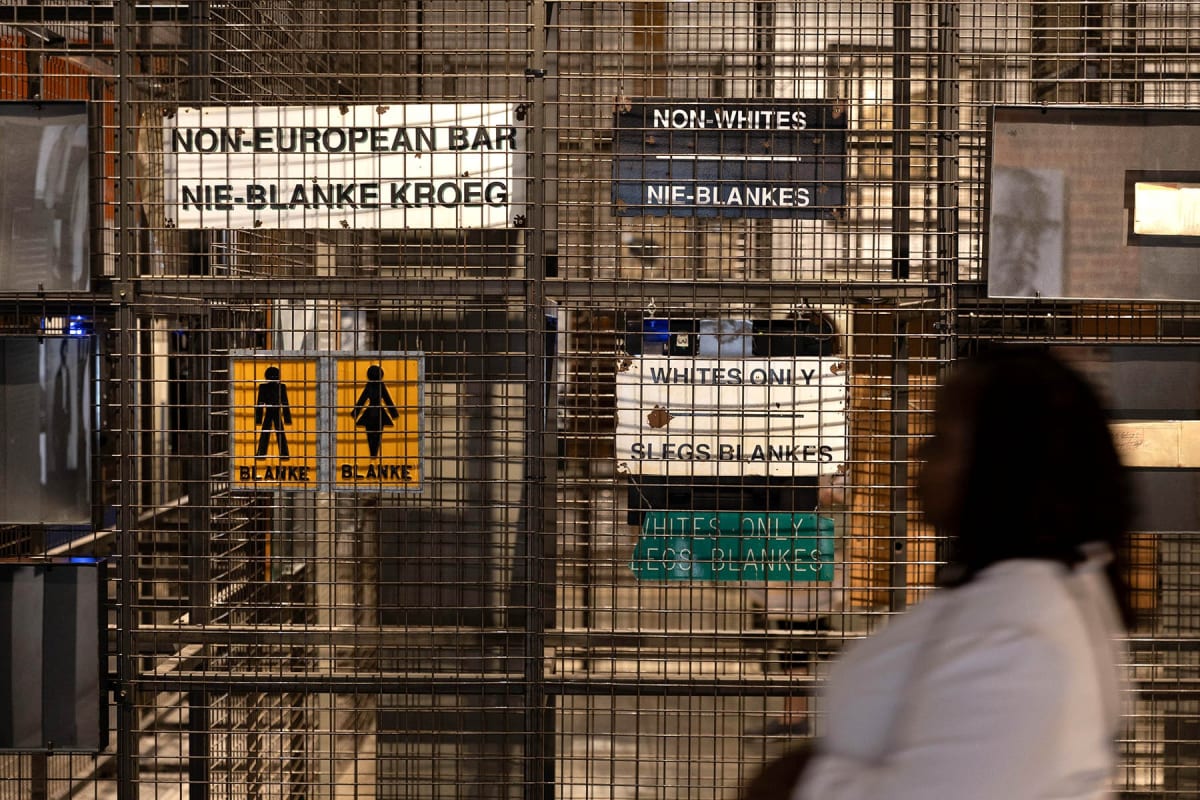
The Ernest Cole Hall displays everyday life under apartheid through powerful photography. Overcrowded classrooms and segregated public spaces show how South Africa became what Potenza calls "a land of signs" where everything was divided by race.
Why This Inspires
The museum doesn't just preserve painful history. It transforms shame, anger, and pain into determination to build a better future.
White South African visitors often leave with renewed commitment to fighting inequality. Black South African visitors connect their present freedoms to the sacrifices of previous generations. International tourists gain understanding of both how far the country has come and how much work remains.
This weekend, in honor of Human Rights Day, the privately run museum opened its doors free to all South Africans. The gesture reflects Potenza's belief that remembering 1960's Sharpeville Massacre isn't enough—true commemoration means recognizing the ongoing responsibility that comes with freedom.
Students and schoolchildren make up the majority of the museum's visitors, with international tourists close behind. Each group leaves with the same challenge: to ensure the injustices displayed on those walls never happen again.
The museum proves that confronting difficult history doesn't have to be purely painful—it can be transformative.
More Images
%2Ffile%2Fattachments%2Forphans%2FApartheid_museum_08a_841282.jpg)
%2Ffile%2Fattachments%2Forphans%2FApartheid_museum_04a_731958.jpg)
%2Ffile%2Fattachments%2Forphans%2FApartheid_museum_15a_413897.jpg)
Based on reporting by Daily Maverick
This story was written by BrightWire based on verified news reports.
Spread the positivity!
Share this good news with someone who needs it
%2Ffile%2Fattachments%2F2997%2FStudentslistentoateacheratCwebeniJuniorSecondaryschoolonFebruary22024inCwebeniaruralvillageoutsidePortStJohnsSouthAfrica_751896.jpg)
%2Ffile%2Fattachments%2Forphans%2FVince-EMPD-dismiss-Mkhwanazi2_265592.jpg)