Architect Paralyzed in 2007 Shapes the Future of Exoskeletons
After a construction accident left Robert Woo paralyzed from the chest down, he became the world's most influential exoskeleton test pilot. For 15 years, his feedback has helped thousands of people with paralysis walk again.
When 6 tonnes of steel crashed through a construction trailer roof in 2007, Robert Woo asked doctors to let him die. The architect couldn't imagine living paralyzed from the chest down, unable to teach his two young sons how to play ball.
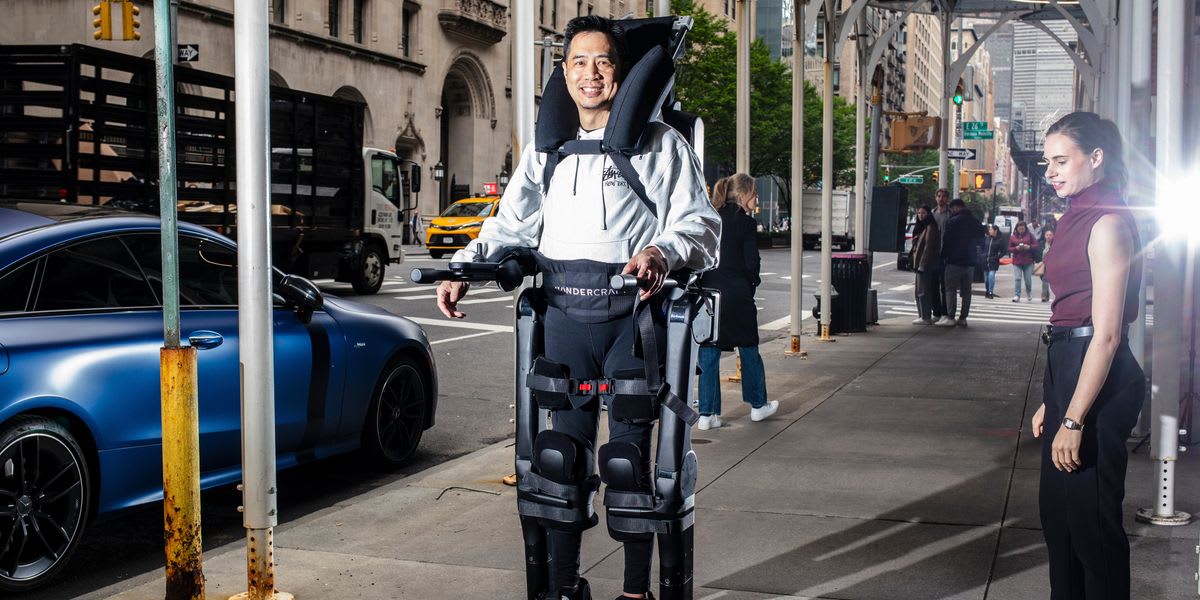
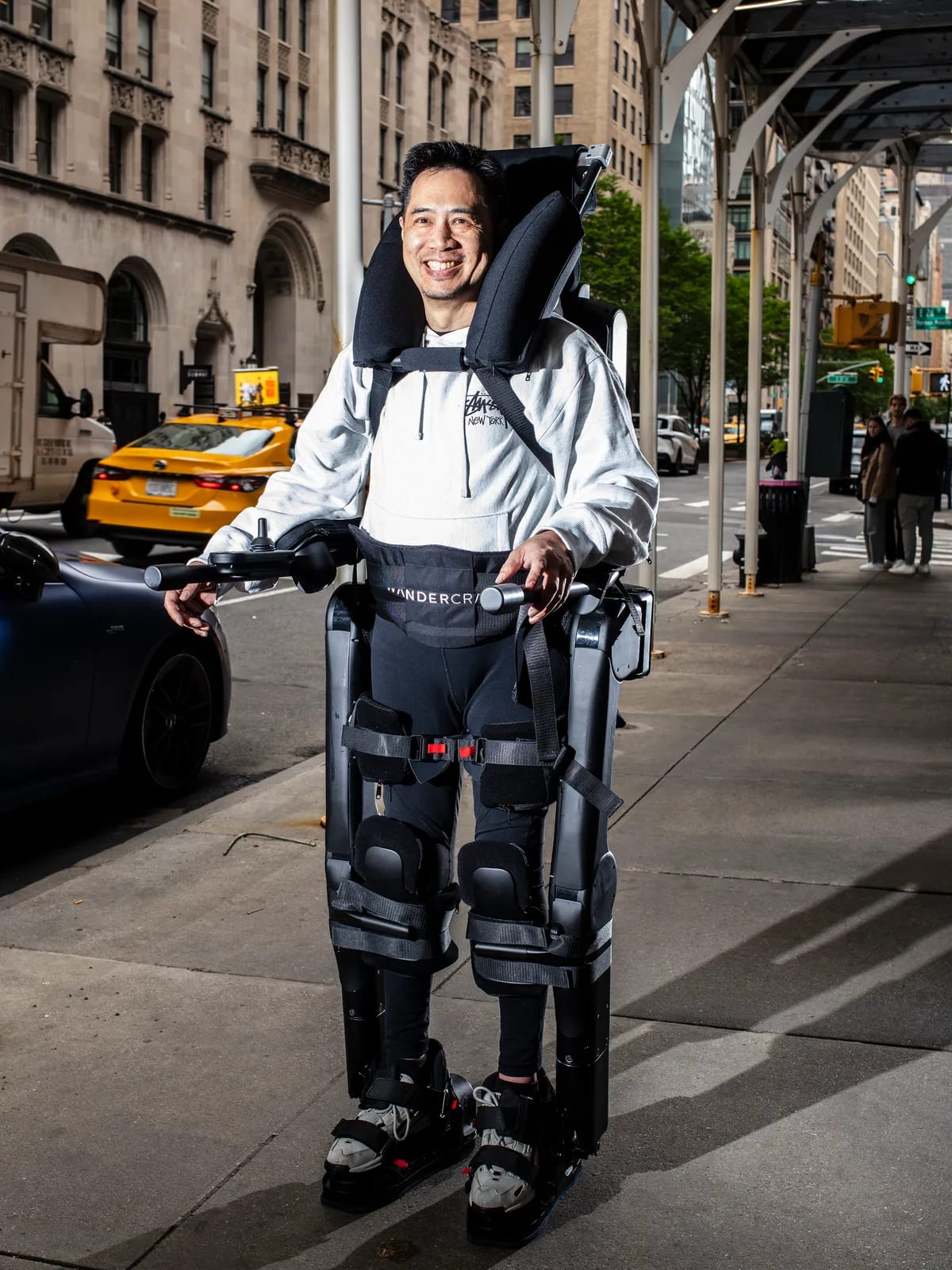
Today, Woo walks across Manhattan showrooms in robotic legs, looking like a real-life Iron Man. His journey from despair to hope has transformed not just his own life, but the entire field of exoskeleton technology.
Woo was working alone on December 14, 2007, when a crane failure sent steel plummeting onto his trailer at a Goldman Sachs construction site. Rescue workers pulled him from the rubble in 18 minutes. Any longer and he wouldn't have survived with one lung crushed and the other punctured.
The next 15 years brought a dramatic plot twist. Woo became the world's premier exoskeleton test pilot, trying every major model and providing detailed feedback from inside the machines. His architectural design skills combined with his lived experience made him invaluable to developers.
"He's a super-mega user of exoskeletons: very enthusiastic, very athletic," says researcher Saikat Pal. "He's the perfect subject."
Last May, Woo demonstrated Wandercraft's latest exoskeleton, one of the first that doesn't require arm braces or crutches. The 176-pound battery-powered suit handled both propulsion and balance while Woo steered with a joystick. A kid pressed his face against the window, staring in awe at the cyborg inside.
That wonder mirrors what Woo's sons felt when they first saw him in an early exoskeleton in 2011. "Their first comment was, 'Oh, Daddy's in an Iron Man suit,'" Woo remembers. When they asked when he'd start flying, he replied with perfect dad humor: "Well, I've got to learn how to walk first."
Woo placed the first order for an FDA-approved home-use exoskeleton. He learned what it meant to be Iron Man around the house, navigating real-world challenges that lab tests never revealed.
The Ripple Effect
Mount Sinai Hospital now dedicates its entire bionics program to Woo, complete with a commemorative plaque. His soft-spoken persistence has paved the way for thousands of people with spinal cord injuries and other forms of paralysis who now benefit from exoskeletons in rehab clinics and homes.
Angela Riccobono, director of rehabilitation neuropsychology at Mount Sinai, puts it simply: "Our bionics program started with Robert Woo."
From asking to die to helping thousands walk again, Woo proved that our response to tragedy can define us far more than the tragedy itself.
More Images
Based on reporting by IEEE Spectrum
This story was written by BrightWire based on verified news reports.
Spread the positivity!
Share this good news with someone who needs it