Arizona Ants May Run 'Cleaning Stations' Like Reef Fish
Scientists spotted tiny ants grooming larger harvester ants in Arizona, mirroring the famous "cleaning stations" where fish help each other on coral reefs. This surprising behavior could reveal a whole new way ants cooperate in nature.
Just like fish lining up at underwater cleaning stations on coral reefs, ants in Arizona may have their own version of a car wash.
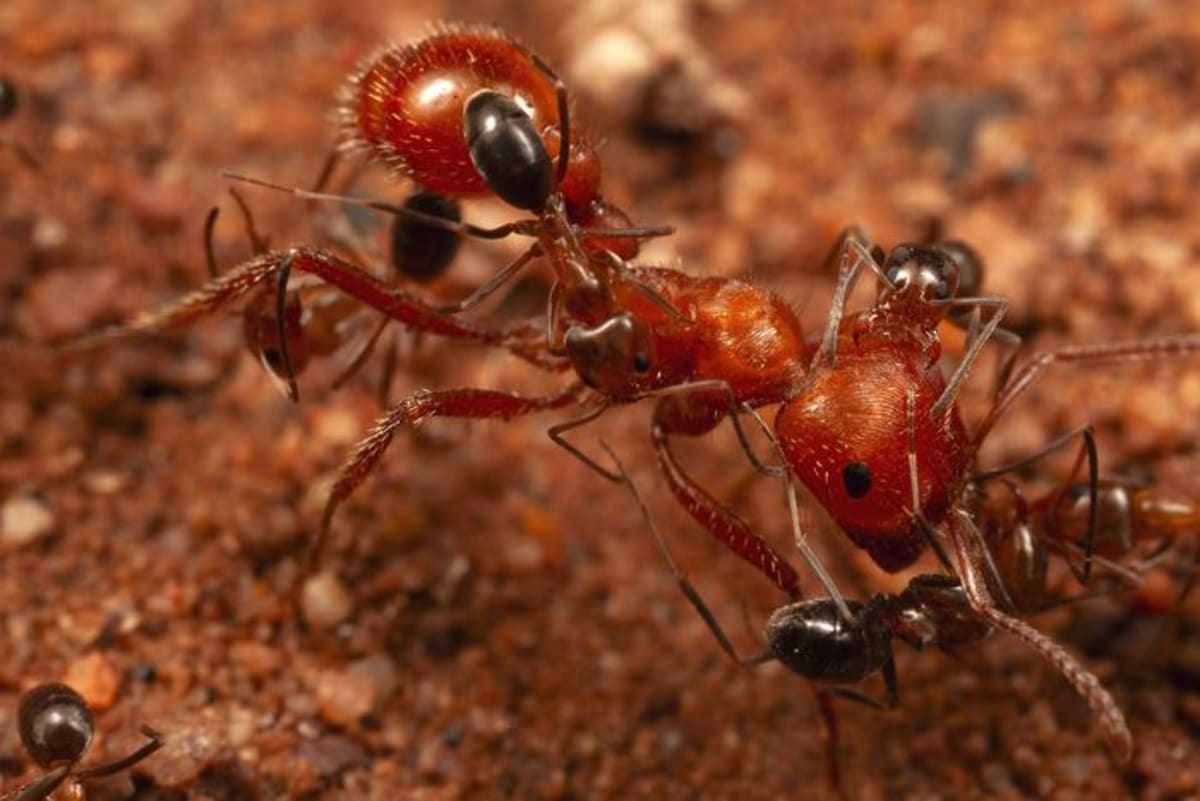
Entomologist Mark Moffet was watching harvester ants collect seeds in the Chiricahua Mountains when he noticed something strange. Several workers stood completely still, covered with smaller cone ants.
At first, Moffett thought he was witnessing an ant battle. But when he zoomed in with his camera, he saw the tiny cone ants gently licking and nibbling the larger harvester ants instead of fighting them.
The cone ants even inspected the harvester ants' open jaws, which could easily crush them. Moffett watched this happen to at least 90 different harvester ant workers.
The most amazing part? Harvester ants appeared to seek out this treatment, approaching cone ant nests and waiting to be cleaned. It looked exactly like reef fish queuing up for cleaner fish to remove their parasites.
Scientists are still figuring out what each species gains from this arrangement. The cone ants might be feasting on invisible seed dust coating the harvester ants, getting a carbohydrate-rich snack in return for their cleaning services.
The harvester ants could benefit by having this seed dust removed, since it might carry harmful microbes. Other possibilities include the exchange of helpful bacteria, protective pheromones, or antifungal substances that cone ants naturally produce.
Why This Inspires
This discovery shows that nature still holds countless mysteries, even in well-studied creatures like ants. What looks like random insect behavior could actually be sophisticated cooperation that helps both species thrive.
Moffett's observation came from simply paying attention during a routine field study. Sometimes the biggest scientific breakthroughs start with curiosity and a willingness to look closer at what seems ordinary.
Daniel Kronauer, an ant biologist at Rockefeller University who wasn't involved in the research, called it "a pretty unique observation" that could spark entirely new research directions. Moffett hopes an eager PhD student will take on the challenge of proving whether this truly is mutualism, where both species benefit.
The next time you see ants marching across your sidewalk, remember they might be running their own invisible service stations.
More Images

Based on reporting by Mongabay
This story was written by BrightWire based on verified news reports.
Spread the positivity!
Share this good news with someone who needs it