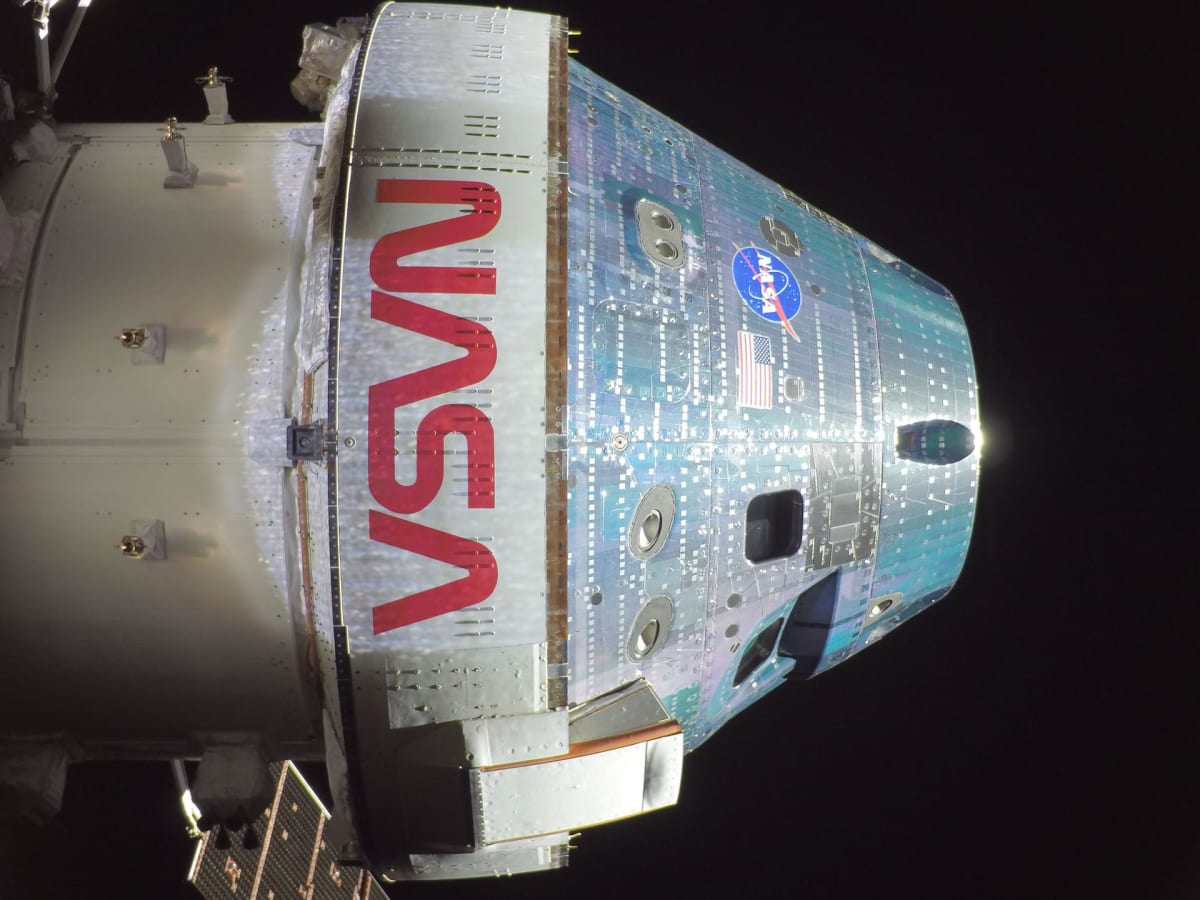
Artemis 2 Astronauts Study the Moon Like Never Before
Four astronauts are making history as the first humans in 52 years to see the far side of the moon with their own eyes, and their observations could unlock lunar secrets. Despite a minor toilet hiccup, the crew is preparing for a breathtaking 53-minute solar eclipse behind the moon.
For the first time in over half a century, human eyes are gazing upon the far side of the moon, and what the Artemis 2 astronauts see could change what we know about our nearest neighbor.
As the Orion spacecraft cruises toward its April 6 lunar flyby, astronaut Christina Koch captured the crew's awe perfectly. "Something about you senses that is not the moon I am used to seeing," she said after viewing the far side for the first time.
NASA scientists are banking on a uniquely human superpower: our ability to spot subtle details that cameras miss. When Apollo 17 astronaut Harrison Schmitt noticed orange soil on the lunar surface in 1972, that simple observation revealed the moon had volcanic activity far more recently than anyone thought possible.
The Artemis 2 team is hunting for similar surprises, especially across regions of the far side never before seen by human observers. Scientists are asking the crew to let their eyes adjust and call out any unusual colors or features that catch their attention.
One target has everyone particularly excited: Mare Orientale, a massive impact basin straddling the boundary between the near and far sides. "The crew is really excited about that target," said Kelsey Young, the mission's science flight operations lead.
But the real showstopper comes during the flyby itself. For 53 minutes, the sun will disappear behind the moon, creating a natural eclipse that will reveal parts of the sun's corona normally hidden from view. The astronauts will make observations of solar activity that simply aren't possible from Earth or robotic spacecraft.
Why This Inspires
This mission proves that even in our age of high-resolution satellite imagery, there's still no substitute for human curiosity and observation. The Lunar Reconnaissance Orbiter can capture sharper images, but it can't describe what it feels like to witness ancient lunar features or notice the unexpected details that lead to scientific breakthroughs.
The spacecraft itself is performing beautifully. Controllers even canceled two planned course corrections because Orion's trajectory has been so accurate.
There was one earthly problem to solve: a frozen wastewater vent line on the toilet. Flight controllers simply rotated the spacecraft to let the sun warm that section, melting the ice blockage just like similar issues were handled on shuttle missions.
"Just having this crew describe visuals of the moon will give you goosebumps," Young said.
As four astronauts prepare for humanity's closest lunar approach in generations, they're reminding us that exploration isn't just about technology or data points. It's about the irreplaceable wonder of human eyes seeing something extraordinary for the very first time.
More Images



Based on reporting by SpaceNews
This story was written by BrightWire based on verified news reports.
Spread the positivity!
Share this good news with someone who needs it
%2Fhttps%3A%2F%2Ftf-cmsv2-smithsonianmag-media.s3.amazonaws.com%2Ffiler_public%2F4e%2F9f%2F4e9f0fe8-aa48-438a-b88f-3a29cd71107e%2Fhttps___wwwfrontiersinorg_files_articles_1758862_xml-images_fmats-13-1758862-g001.jpeg)
%2Fhttps%3A%2F%2Ftf-cmsv2-smithsonianmag-media.s3.amazonaws.com%2Ffiler_public%2F8e%2F83%2F8e837bc6-e2b3-4bb6-bb1c-4f1287b45a6f%2Fcastillo-39-rincon_de_los_signos.jpg)