Artemis II Crew Breaks Apollo 13's Human Distance Record
Four astronauts just traveled farther from Earth than any human in history, smashing a record that stood for over 50 years. The Artemis II crew is completing humanity's first moon mission in half a century, paving the way for a new generation of lunar exploration.
📺 Watch the full story above
Four astronauts aboard NASA's Artemis II spacecraft just made history by traveling farther from Earth than any human ever has. At 1:57 p.m. ET on Monday, they surpassed the Apollo 13 mission's record of 248,655 miles from home, a milestone that stood untouched for more than five decades.
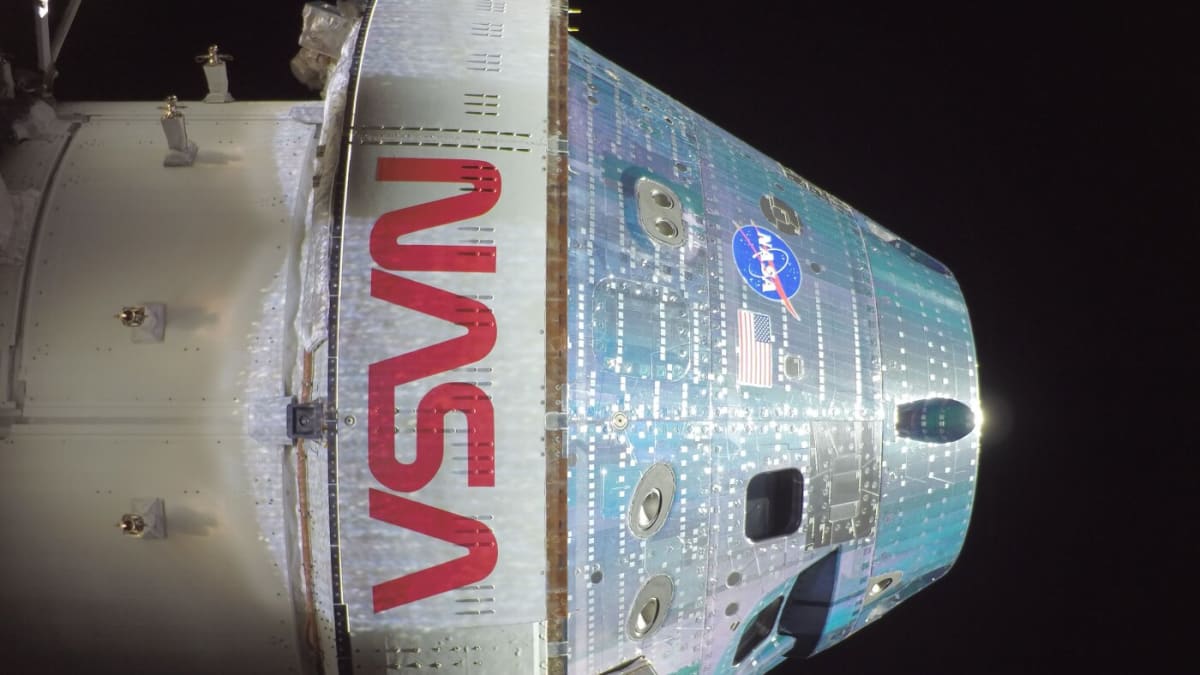
The crew launched from Kennedy Space Center last week aboard the Orion capsule, riding atop a massive SLS rocket. Their mission: complete the first human loop around the moon since the Apollo era ended in the 1970s.
At 7:02 p.m., the astronauts reached their maximum distance of 252,760 miles from Earth. That's roughly the distance of driving around the equator 10 times.
The team isn't just breaking records. During their closest approach to the moon at 4,070 miles above the surface, the crew is conducting real science that satellites can't replicate.
NASA scientists identified 35 geological features for the astronauts to observe and photograph. Working in pairs, they're describing color variations on the lunar surface in real time to Mission Control in Houston, helping scientists understand the composition of minerals that are hard to detect from satellite images alone.
"This is something that human eyes are just incredibly good at teasing out nuances about," said Artemis II lunar science lead Kelsey Young. The crew will even pass over two historic landing sites from Apollo 12 and 14.
The mission is testing critical systems for future moon missions. Pilot Victor Glover practiced manual control of Orion for future rendezvous with lunar landing vehicles, and the crew tested life support systems, spacesuits, and even the first deep space toilet.
The Ripple Effect
This mission is doing more than testing hardware. It's laying the groundwork for humanity's return to the lunar surface as early as 2028, when astronauts may land at the moon's south pole.
The observations from this unique vantage point will help future crews know what to expect during landing missions. One target site the crew is photographing is a potential landing area for an uncrewed payload mission.
After circling the far side of the moon, where communication with Earth will be blocked for 40 minutes, the crew heads home. They're scheduled to splash down in the Pacific Ocean off San Diego on Friday evening, completing a journey that reopens the frontier of human space exploration.
More than 50 years after we last ventured to the moon, we're going back with better technology, more knowledge, and a renewed sense of wonder about what humans can achieve when we reach for the stars.
More Images
Based on reporting by NPR Science
This story was written by BrightWire based on verified news reports.
Spread the positivity!
Share this good news with someone who needs it