Artemis II Crew Captures Stunning Moonlit View of Earth
Astronauts returning from the Moon photographed Earth glowing in moonlight, revealing city lights across three continents and shimmering auroras at both poles. The breathtaking image shows our planet as a dynamic solar system body in ways never captured before.
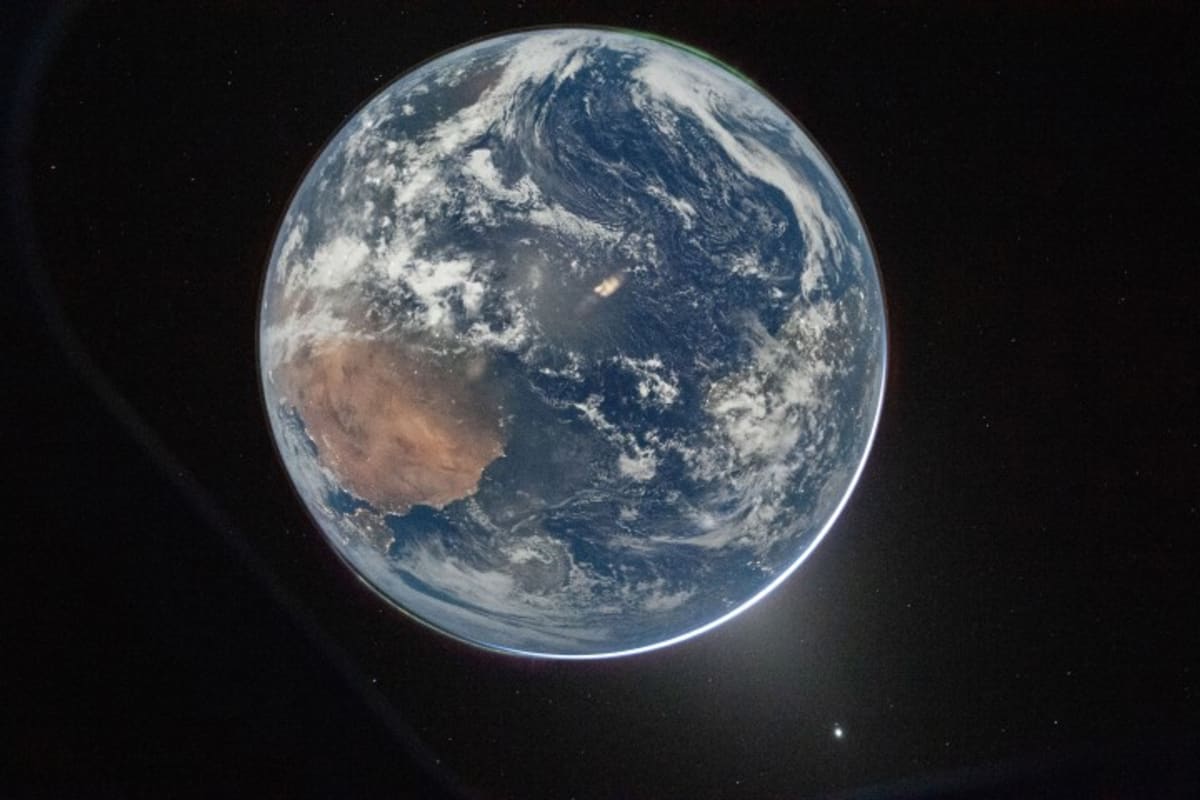
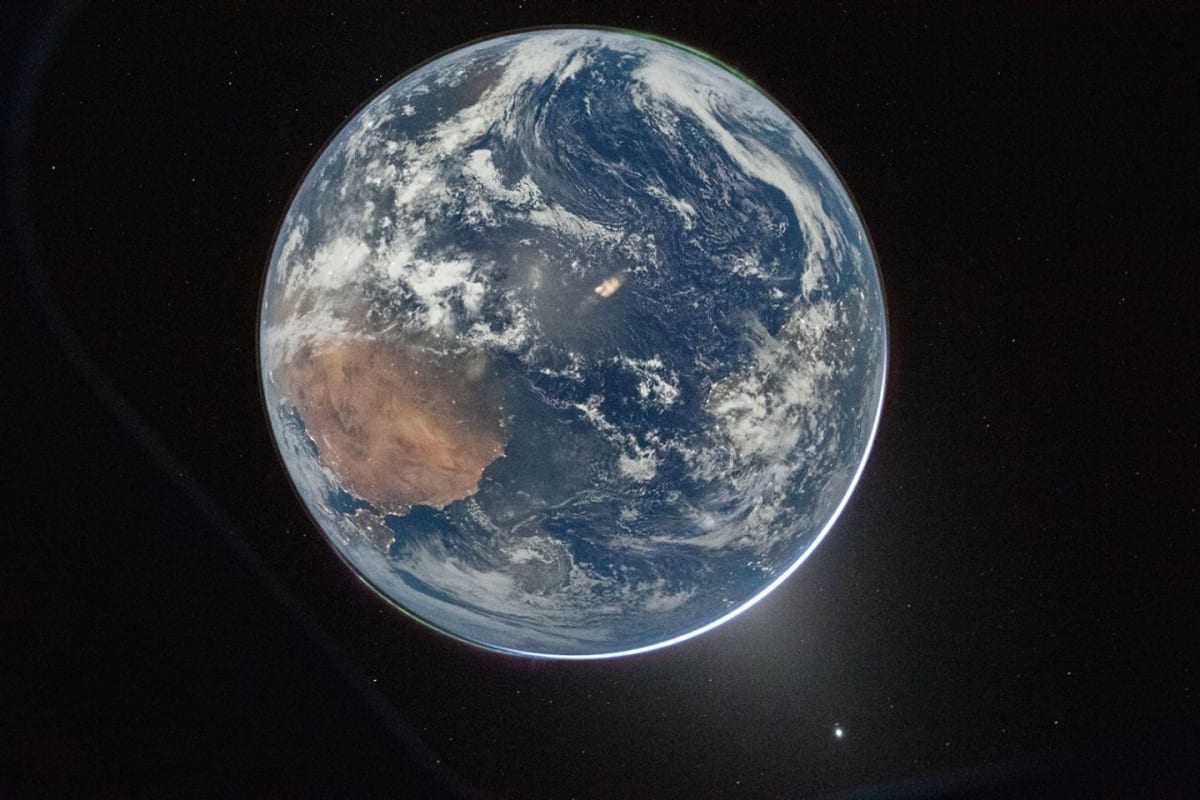
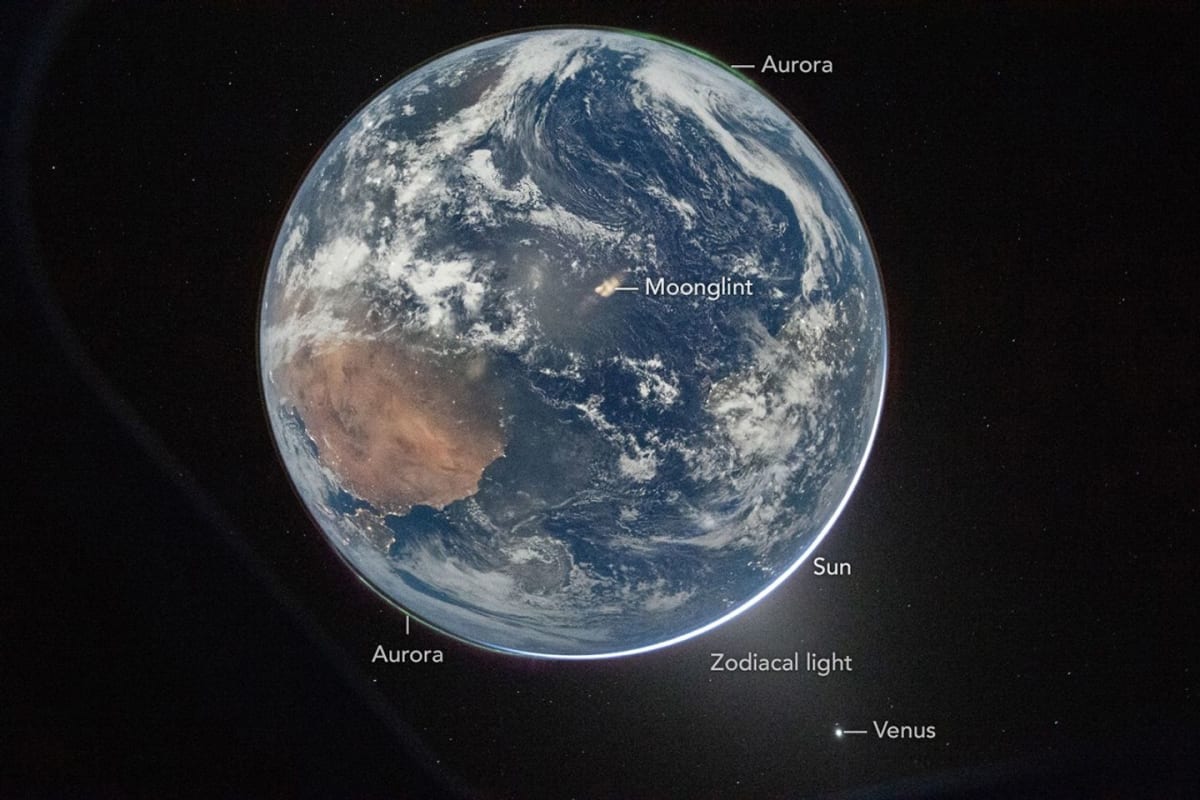
One of the first photos beamed back from NASA's Artemis II mission in April 2026 stopped scientists in their tracks. An astronaut aboard the Orion spacecraft captured Earth's full disk bathed in moonlight, revealing glowing city lights, green auroras, and our planet's place in the solar system all in a single frame.
The crew snapped the photo after completing their burn toward the Moon. From their vantage point, Earth eclipsed the Sun, leaving only a sliver of bright light peeking around the bottom edge.
What makes this image remarkable is what's visible in the darkness. Digital camera technology and a full Moon's illumination combined to reveal stunning details that are normally invisible from space.
Green auroras shimmer around both poles, created by charged particles from the Sun dancing through Earth's upper atmosphere. City lights sparkle across Spain, Portugal, northern Africa, sub-Saharan Africa, and Brazil, painting a map of human civilization on the planet's surface.
The astronauts cranked their camera's light sensitivity to 51,200 ISO (typical daytime photos use just 100 or 200) to capture these nighttime features. The result is a perspective no one has seen before: a full-disk view showing Earth as both a home to billions and a dynamic planet interacting with solar winds and cosmic dust.
Venus appears as a bright dot in the corner, while zodiacal light (sunlight reflecting off interplanetary dust, possibly from Mars) creates a fuzzy glow beside our planet. Every element tells a story about Earth's neighborhood in space.
Why This Inspires
Cindy Evans, a senior exploration scientist at NASA's Johnson Space Center, was working in the Science Evaluation Room when the image first arrived. "I love the image so much because it was taken with Earth in moonshine, and shows Earth as a solar system body, a dynamic planet interacting with the solar wind, and a place harboring life," she said.
The photo bridges NASA's dual missions of human exploration and Earth science. Miguel Román, Deputy Director for Atmospheres and Data Systems at NASA's Goddard Space Flight Center, studies artificial light at night as a measure of human activity. He sees this image as a glimpse of Earth science's future possibilities.
While astronauts on the International Space Station regularly photograph Earth at night from low orbit, and satellites track nighttime lights for scientific records, this Artemis II photo stands alone. It's the first human-captured full-disk view showing city lights, auroras, and celestial phenomena together in moonlight.
This single photograph reminds us that space exploration isn't just about reaching new destinations but about seeing home with fresh eyes.
More Images


Based on reporting by Google News - Science
This story was written by BrightWire based on verified news reports.
Spread the positivity!
Share this good news with someone who needs it