Artemis II Crew Returns After Breaking Deep Space Record
Four astronauts just became the humans who've traveled farthest from Earth in history, completing the first crewed moon mission in over 50 years. Their 10-day journey covered nearly 700,000 miles and paves the way for permanent lunar bases.
On Saturday, four astronauts stepped off a plane in Houston and into the record books as the humans who have ventured farthest from our planet in history. The Artemis II crew completed a stunning 10-day lunar mission that traveled 694,481 miles and brought humanity back to the moon after a half-century absence.
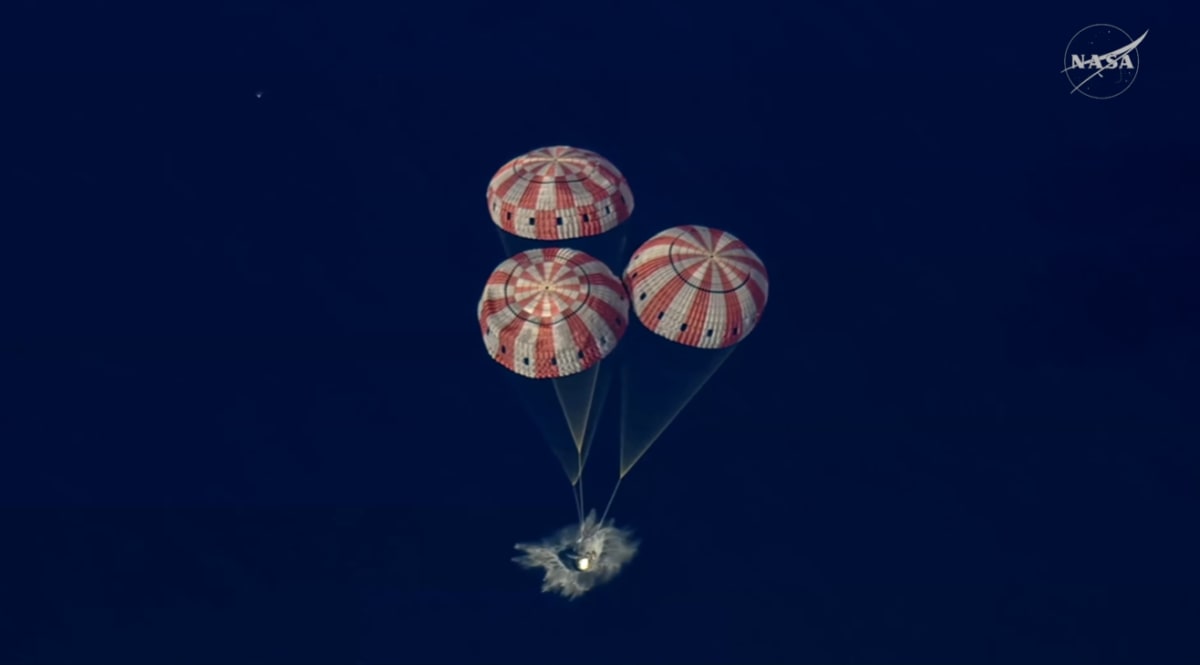
Commander Reid Wiseman, Pilot Victor Glover, Mission Specialist Christina Koch, and Canadian astronaut Jeremy Hansen splashed down safely in the Pacific Ocean on April 10, greeted by cheering families and NASA teams. Their spacecraft, Orion, had just shattered the deep-space distance record set by Apollo 13 in 1970, reaching 252,756 miles from Earth.
The mission marked historic firsts: Koch became the first woman, Glover the first person of color, and Hansen the first non-U.S. citizen to leave low Earth orbit. But the crew's most treasured moment came during their lunar flyby, when they captured a breathtaking "Earthset" photo showing our blue planet sinking behind the moon's gray horizon.
"It was the most special thing that will ever happen in my life," Wiseman told the crowd at Johnson Space Center. The mission wasn't just about breaking records. It was a critical test of the technology that will carry humans back to the lunar surface.
The crew spent 10 days validating Orion's communication, navigation, and life-support systems. Engineers identified minor issues, including a malfunctioning space toilet that will be redesigned before longer missions. The heat shield performed beautifully during the fiery 25,000 mph reentry, protecting the crew as planned.
The Ripple Effect
This successful mission sets the stage for an ambitious lunar future. Artemis III will test commercial lunar landers in Earth orbit by mid-2027. Artemis IV, targeted for early 2028, aims to land humans at the moon's South Pole, where water ice could support permanent settlements.
By late 2028, NASA plans to begin construction on a permanent Moon Base and the Lunar Gateway station. These aren't distant dreams anymore. They're the logical next steps after a mission that proved we can safely send humans into deep space again.
"Before you launch, it feels like it's the greatest dream on Earth," Wiseman reflected. "Now, it feels like the beginning of something much bigger."
After 50 years away, humanity is truly going back to stay.
More Images

Based on reporting by Google: space mission success
This story was written by BrightWire based on verified news reports.
Spread the positivity!
Share this good news with someone who needs it