Artist Creates Visual Land Acknowledgement for 600 Teachers
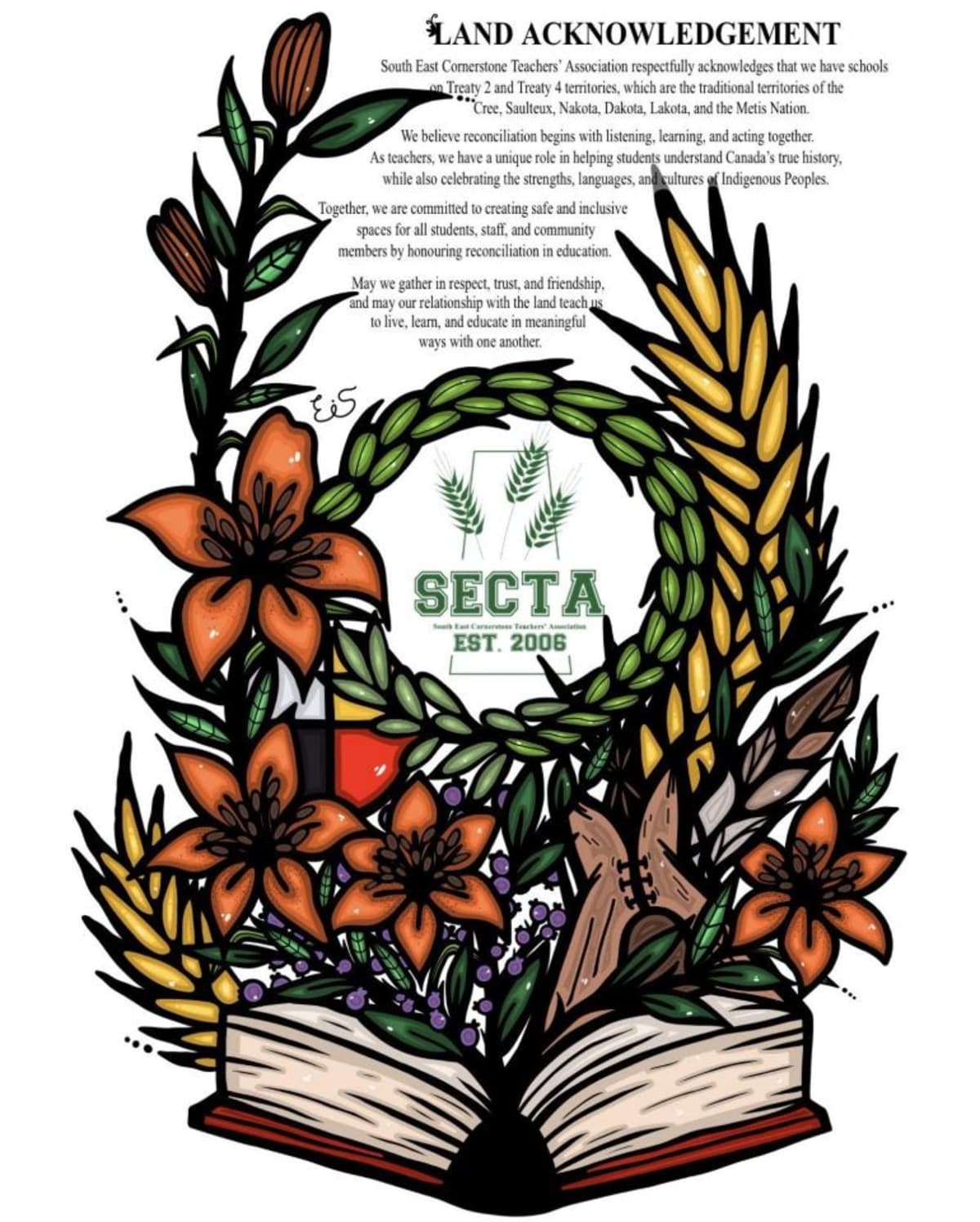
A White Bear First Nation artist has created a visual land acknowledgement that will reach nearly 600 teachers and countless students across southeast Saskatchewan. The artwork weaves Indigenous symbols with personal meaning to spark curiosity and conversation in classrooms.
When Emilee Steffensen sits down to create art, she thinks about the stories people need to see, not just read. The Oxbow-born member of White Bear First Nation recently completed a visual land acknowledgement for schools across southeast Saskatchewan, believing that Indigenous teachings resonate more deeply when presented through art.
"I've always been taught that the way to Indigenous hearts is through art," Steffensen explained. "Sometimes an image can help people feel and understand something deeper than words alone."
The South East Cornerstone Teachers' Association collaborated with Steffensen to bring the artwork to nearly 600 teachers. SECTA President Whitney Paul-Joseph describes the creative process as "humbling and heartfelt," hoping staff will use the piece as inspiration they can grow as a team and adapt into meaningful acknowledgements within their own schools.
Steffensen's creative process began with imagining what would make students curious enough to ask questions. She spent hours visualizing each symbol and element, thinking about what young people might see when they walk past it in their school hallways.
Among the many elements woven into the design, the Prairie Lily holds the deepest personal meaning for Steffensen. Saskatchewan's provincial flower was also her grandmother's favorite, and including it honors the woman who inspired her artistic journey.
"Since she is no longer here with us, including it in a lot of my artwork is like a way for me to keep a part of her with me," Steffensen shared. "She was an artist herself, so every time I create and include the Prairie Lily, it feels like her spirit is with me."
A framed copy already hangs in one school, sparking conversations while plans are finalized for a formal unveiling with Steffensen and SECTA representatives.
The Ripple Effect
Steffensen hopes the artwork creates belonging for Indigenous students while opening learning opportunities for everyone else. When students see Indigenous culture represented in their schools, it sends a powerful message about whose stories matter.
But she's clear that awareness alone isn't enough. "Reconciliation and education is important, but it also needs to lead to reconciliation," she said, emphasizing that learning must develop into respect, understanding, and meaningful change.
The partnership made natural sense to SECTA members who had already seen Steffensen's cultural projects prominently featured throughout the Carlyle area. Supporting a local Indigenous artist whose work resonates in nearby communities meant the collaboration would carry authentic weight.
Steffensen envisions teachers and students pausing each time they pass the artwork, reflecting on whose land they stand on and what that means for how they move through the world. Her hope is simple but powerful: that the piece becomes a daily reminder that reconciliation is something we continue to learn about and practice through our actions.
Based on reporting by Google News - Reconciliation
This story was written by BrightWire based on verified news reports.
Spread the positivity!
Share this good news with someone who needs it