%2Ffile%2Fattachments%2F2987%2FGUMAIN_724304.jpg)
Artists Transform Historic Joburg Trial Site Into Green Oasis
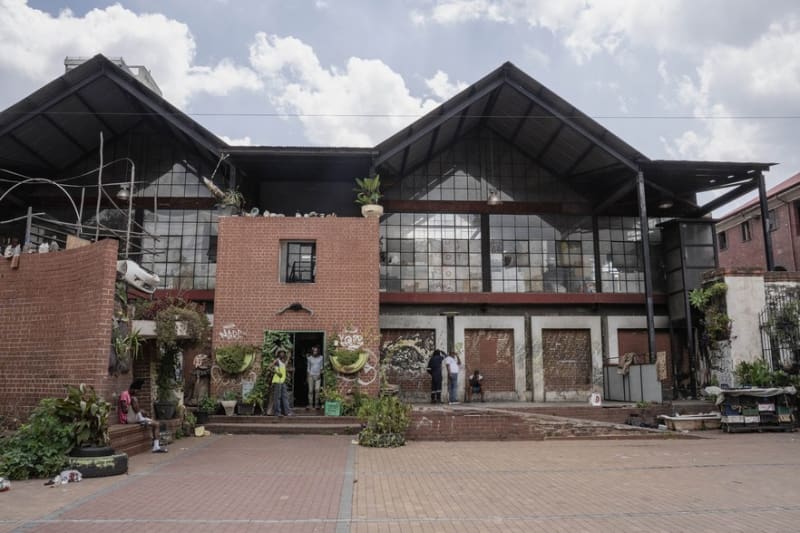
The Drill Hall, where Nelson Mandela faced treason charges in 1956, is being reborn as a thriving cultural space filled with trees and recycled art. A collective of Johannesburg artists is healing the abandoned building with plants and creativity.
Where South Africa's apartheid government once prosecuted freedom fighters, pineapples now grow from recycled bottles and fruit trees line the walls.
The historic Drill Hall in Johannesburg's city center, site of the famous 1956 Treason Trial that charged Nelson Mandela and 155 others, sat abandoned and scarred for years. Now, artists from the collective Exotically Divine Pulse are transforming it into something beautiful.
Led by artist Kganyapa Kganyapa, the group has planted rows of fruit trees along the boundary wall facing the busy Noord Taxi Rank in Hillbrow. Inside the corridors, bright artworks made entirely from recycled materials bring color to spaces that once held only decay.
At the entrance, an installation of mannequin legs sprouts with plants, inspired by watching women wait for taxis outside. The piece honors the building's later history as a prosthetic limb factory.
"We view planting trees and the creations that follow as a form of activism," says Kganyapa. "Lots of unfortunate events happened in this building, so we are planting everywhere to give the walls a chance to breathe."
Built in 1904 on the site of a former "non-whites" prison, the Drill Hall witnessed pivotal moments in South Africa's struggle for freedom. After hosting the Treason Trial and serving as a prosthetic factory, it received a R10 million renovation in 2004 to become a public cultural space.
But the building fell into disrepair again and was left empty. Two fatal fires marked its darkest period before the artists arrived.
Today, the space serves multiple communities. Artist David Gara creates intricate model ships from recycled materials while living on a small mattress on the balcony. His work was featured at the 2023 Brixton Light Festival.
The artists share the building with homeless residents and waste recyclers, navigating a delicate balance. "We try to respect everyone and ensure that the building remains what it was set out to be," Kganyapa explains. "But we also don't want people sleeping on the street."
The Ripple Effect
The transformation goes beyond beautification. By reclaiming the space with greenery and art, the collective is preventing the building from being hijacked while creating an informal cultural hub in Johannesburg's inner city.
Artist Ayanda Dludla sees even greater potential. "We just need the people who are responsible for the building to come to the table and work with us," she says.
The artists aren't waiting for official permission to bring life back to a place that witnessed both oppression and hope. They're planting it themselves, one tree and one artwork at a time.
More Images
%2Ffile%2Fattachments%2F2987%2FGU2_794733.jpg)
%2Ffile%2Fattachments%2F2987%2FGU3_122530.jpg)
%2Ffile%2Fattachments%2F2987%2FGU4_609735.jpg)
Based on reporting by Daily Maverick
This story was written by BrightWire based on verified news reports.
Spread the positivity!
Share this good news with someone who needs it
%2Ffile%2Fattachments%2Forphans%2FMLJoburg-91_220988.jpg)
%2Ffile%2Fattachments%2Forphans%2FIMG_20260823_131033_256493.jpg)