Assam Women Turn Invasive Weed Into Thriving Business
Women in Assam are transforming water hyacinth, one of the world's most invasive aquatic weeds, into beautiful handcrafted products while helping protect rhino habitats. The initiative is giving families steady income and helping restore a wildlife sanctuary after 40 years.
Women living near Assam's Laokhowa-Burhachapori Wildlife Sanctuary are weaving invasive water plants into a new source of income and hope for their communities.
The International Rhino Foundation partnered with local conservation group Aaranyak to train two groups of women in crafting household items from water hyacinth. This fast-growing aquatic weed chokes freshwater ecosystems, blocking sunlight and oxygen from reaching life below the water surface.
The project started in 2023 with a simple goal: improve economic conditions for families living near the sanctuary to help sustain its recent restoration. Much of the 114 square kilometer wildlife area was reclaimed from agricultural encroachment starting in February 2023, allowing one-horned rhinos to return after disappearing in the 1980s.
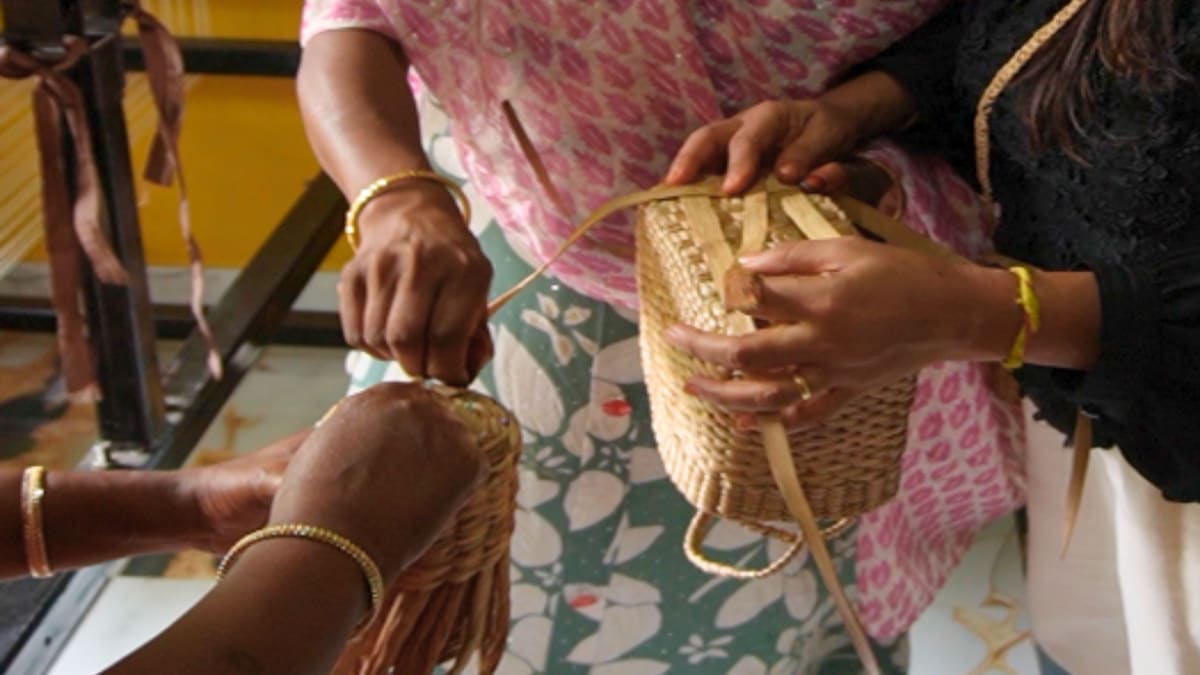
Master trainer Anjuma Begum helped launch two self-help groups, Pragati and Bonani, in nearby villages. Women learned to transform the abundant weed into dining mats, baskets, bags, purses, serving bowls, tissue boxes, mobile phone holders, flower vases, and hats.
The timing has been perfect for these families. Women can earn steady monthly income while still managing their household responsibilities, creating flexibility that traditional jobs couldn't offer.
Business organizations linked to the project purchase the handcrafted items, ensuring consistent sales. After receiving advanced training, the women have mastered techniques that produce increasingly sophisticated and market-ready products.
The Ripple Effect
The initiative is creating wins beyond individual families. Kaziranga National Park Director Sonali Ghosh supported the project because it addresses the bigger challenge of securing wildlife habitats through community engagement.
Rajib Hazarika, Divisional Forest Officer of Nagaon Wildlife Division, says initiatives like this strengthen coordination between forest departments and local communities. When people living near protected areas have economic opportunities, they become partners in conservation rather than competitors for resources.
The sanctuary itself is flourishing. The restored landscape now supports rhinos, tigers, barking deer, fishing cats, leopard cats, civets, wild boar, 225 bird species, and dozens of fish, reptile, and amphibian species.
By turning an environmental problem into an economic solution, these women are proving that conservation and community prosperity can grow together.
Based on reporting by The Hindu
This story was written by BrightWire based on verified news reports.
Spread the positivity!
Share this good news with someone who needs it