Asteroids Throw 'Cosmic Snowballs' at Each Other, NASA Finds
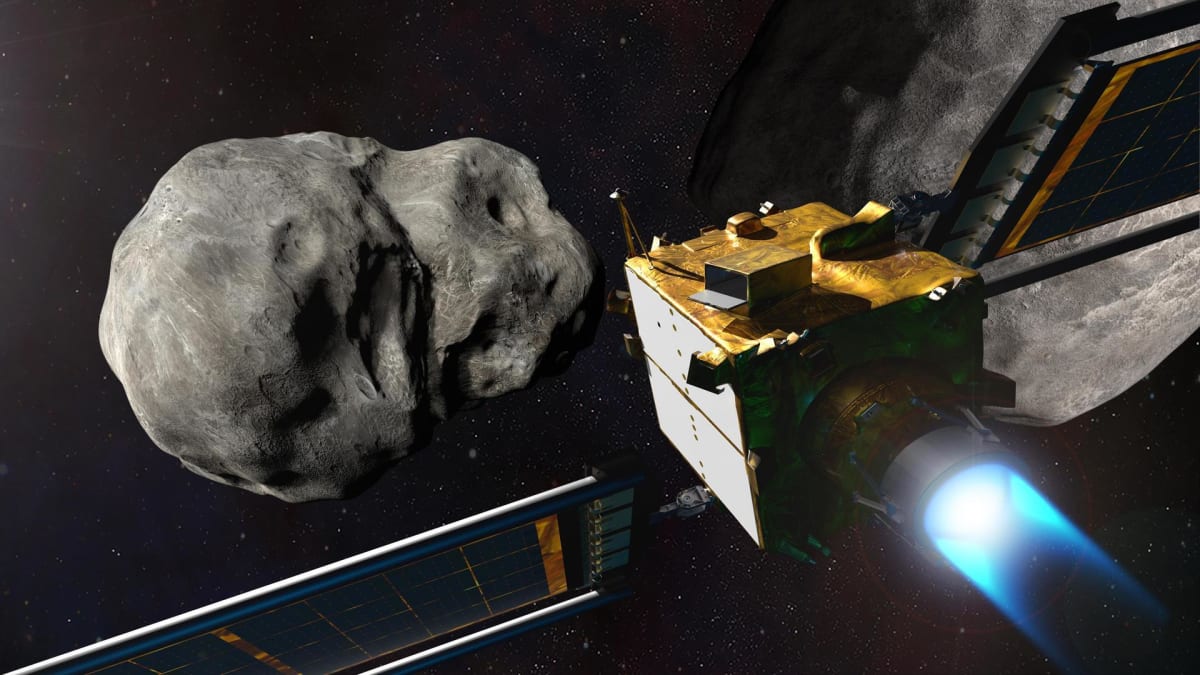
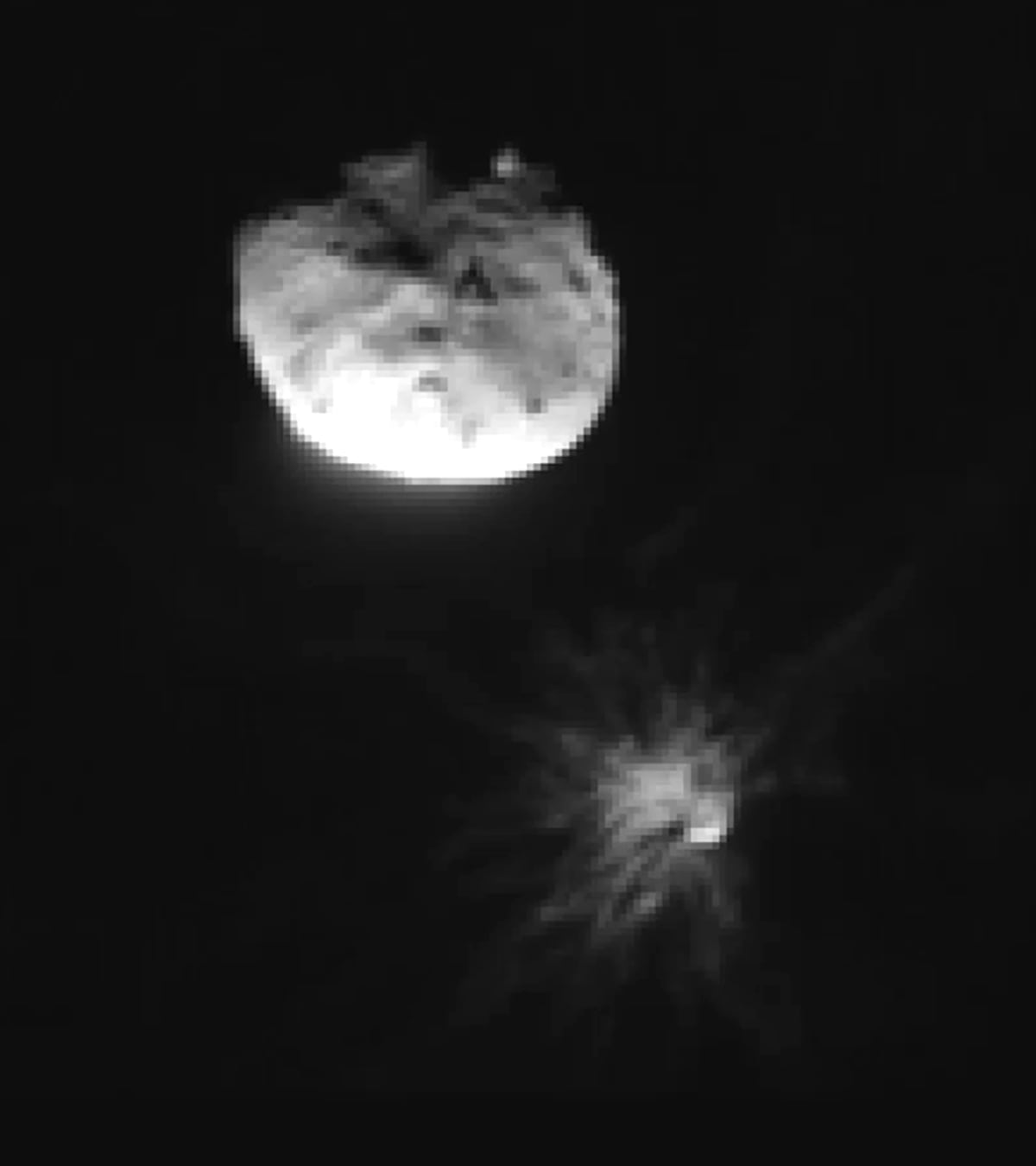
NASA's asteroid defense mission captured the first proof that space rocks gently toss debris at each other like cosmic snowballs, reshaping surfaces over millions of years. The discovery came from images taken seconds before the spacecraft deliberately crashed into an asteroid in 2022.
Scientists studying images from NASA's spacecraft just discovered something delightful: asteroids are slowly pelting each other with space debris like the universe's gentlest snowball fight.
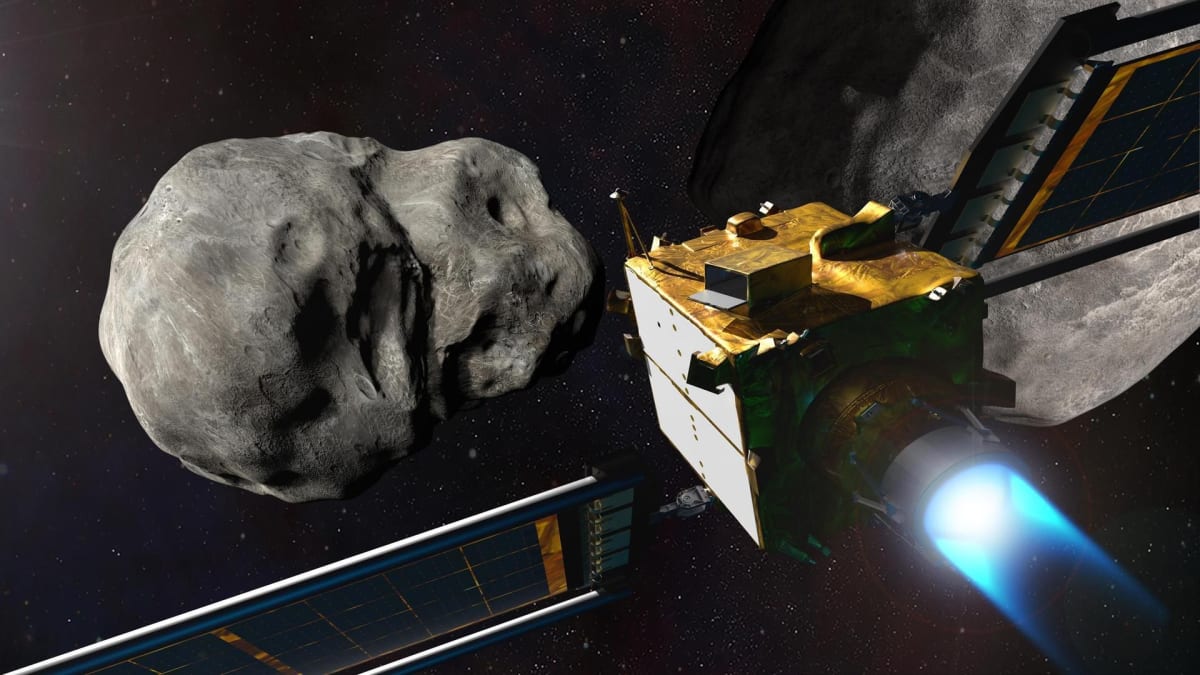
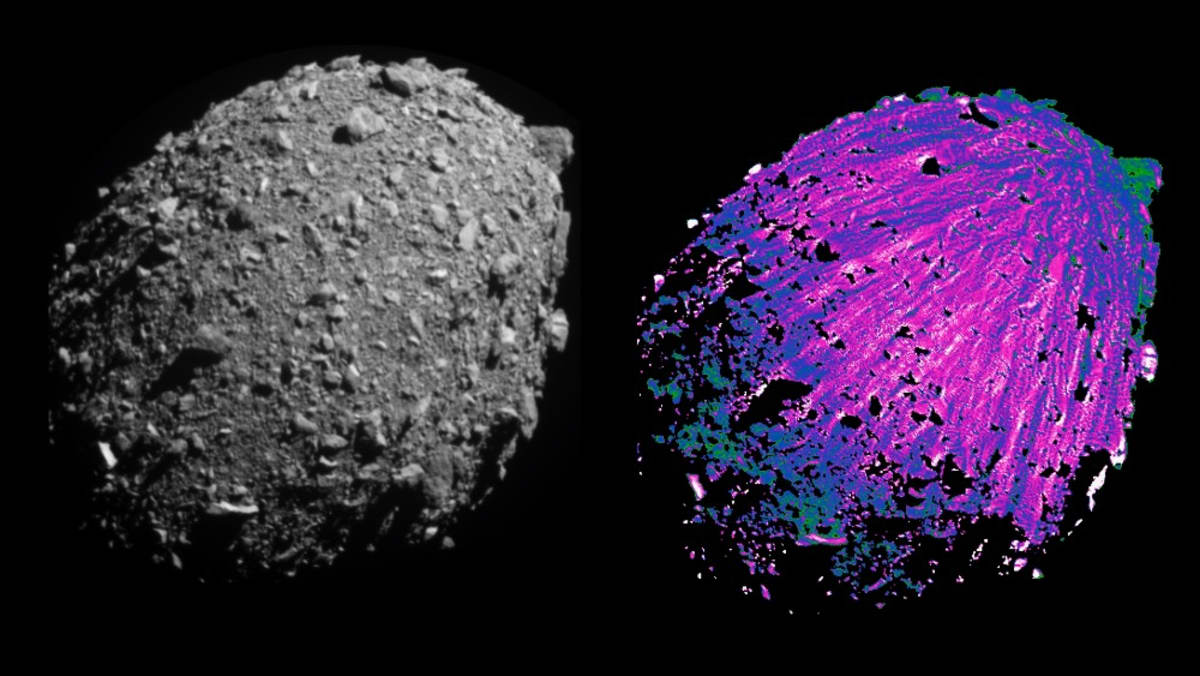
The Double Asteroid Redirection Test (DART) mission captured mysterious fan-shaped streaks across the surface of Dimorphos, a small asteroid moon, just moments before deliberately crashing into it in late 2022. Researchers initially thought their camera was broken.
"At first, we thought something was wrong with the camera," said lead scientist Jessica Sunshine from the University of Maryland. But the streaks were real: evidence of gentle impacts from material drifting between Dimorphos and its larger companion asteroid, Didymos.
The debris travels at just 12 inches per second, moving so slowly that it creates deposits instead of craters when it lands. Think of tossing a handful of snow rather than throwing a fastball.
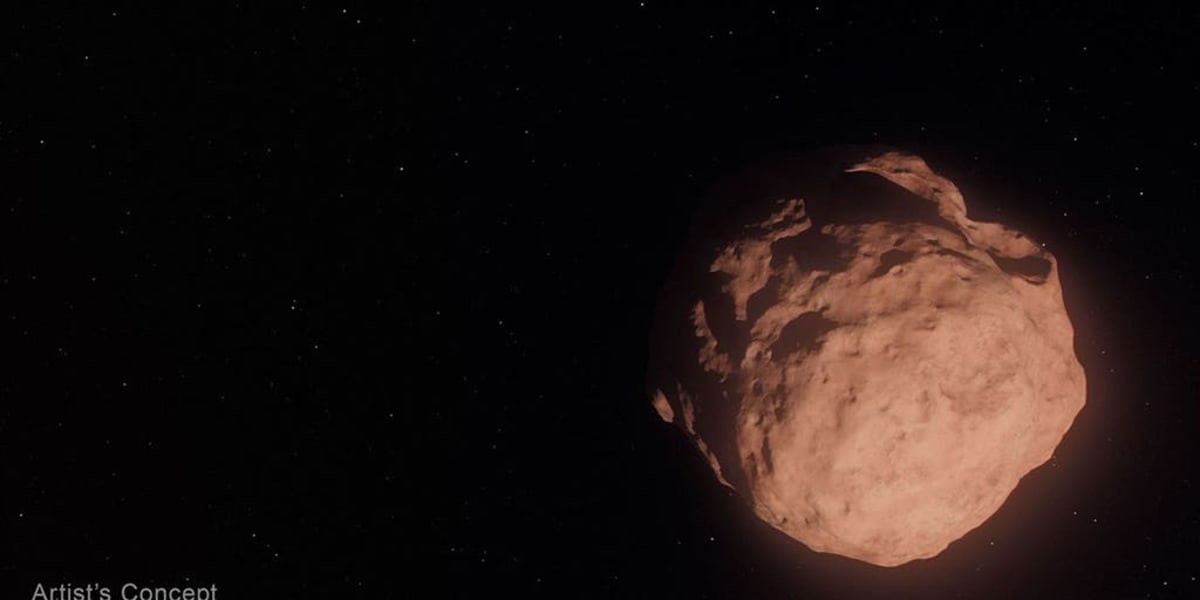
About 15% of near-Earth asteroids exist as binary pairs, with a smaller rock orbiting a larger companion. Sunlight gradually speeds up their rotation until loose material breaks free and drifts through space between them, reshaping their surfaces over time.
The research team developed sophisticated imaging techniques to remove shadows and correct lighting, revealing the streaks clustered around Dimorphos's equator. That's exactly where computer models predicted the cosmic snowballs from Didymos would land.
Why This Inspires
This discovery shows how much beauty exists in unexpected places. While DART's main mission was testing planetary defense technology (it successfully nudged Dimorphos's orbit), it also revealed asteroids engaged in their own slow dance of transformation.
The mission achieved its primary goal too: it altered not just Dimorphos's orbit around Didymos, but shifted the entire binary system's path around the sun by about 1.7 inches per hour. That tiny change could mean the difference between a hazardous asteroid hitting or missing Earth.
Europe's Hera spacecraft will visit the transformed Dimorphos this December to see what it looks like after the impact. Scientists are eager to learn whether the delicate fan-shaped streaks survived the collision, or if the cosmic snowball fight has created entirely new patterns.
Even 200 million miles away, the universe finds gentle ways to reshape itself.
More Images

Based on reporting by Space.com
This story was written by BrightWire based on verified news reports.
Spread the positivity!
Share this good news with someone who needs it