Astronauts Return to Moon After 50 Years
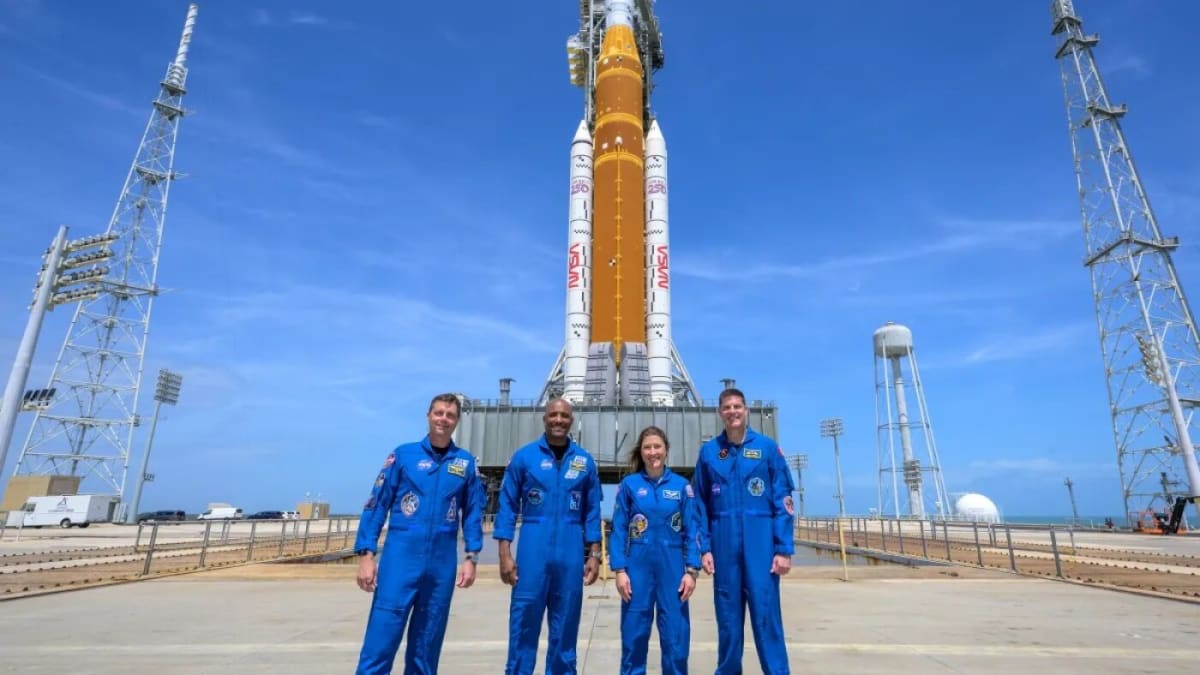
Four astronauts just launched on humanity's first moon mission in over half a century, marking a giant leap forward for space exploration. The nearly 10-day Artemis II journey will test critical systems and conduct groundbreaking science as we prepare to return humans to the lunar surface.
For the first time since your grandparents were young, humans are heading back to the moon.
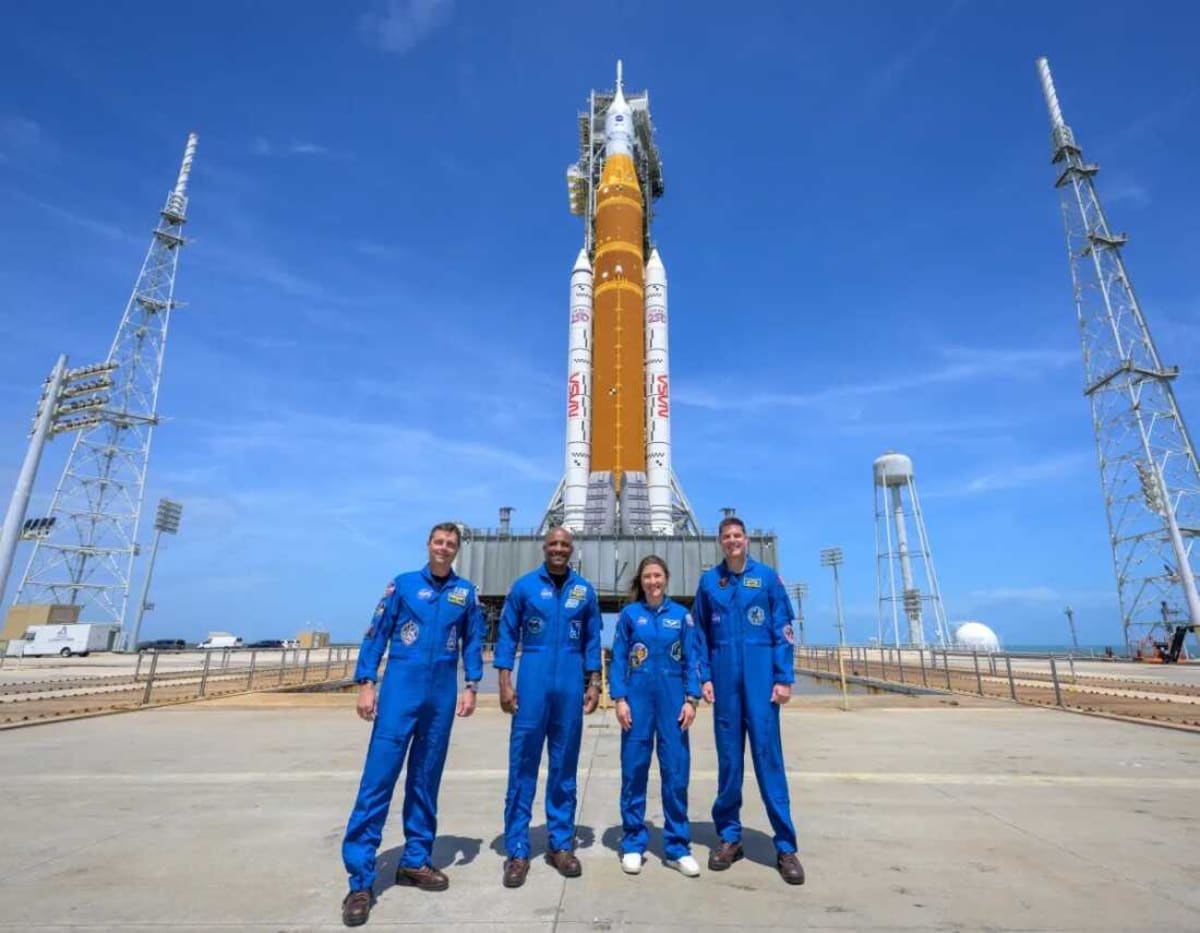
NASA astronauts Reid Wiseman, Victor Glover, Christina Koch, and Canadian Space Agency astronaut Jeremy Hansen launched Wednesday from Kennedy Space Center in Florida. Their rocket left thick vapor trails across the clear blue sky as it carried them toward a destination no human has visited in over 50 years.
The four crew members are now traveling 230,000 miles on a path that will take them around the moon and back home. Unlike the Apollo missions that orbited close to the lunar surface, this crew will pass about 5,000 miles above it, giving them views no human has ever seen before.
"When they pass by the far side of the moon, it'll look like a basketball held at arm's length," said mission scientist Barbara Cohen. The crew will see and photograph parts of the moon that have never been viewed by human eyes.
Just hours after launch, pilot Victor Glover took manual control of the Orion spacecraft to test how it handles in deep space. This skill will be crucial for future missions that need to dock with lunar landers in orbit.
"Overall guys, this flies very nicely," Glover told the ground team after the test. The feedback gives engineers confidence that astronauts can take control if automated systems ever fail.
The astronauts themselves are part of the science experiment. Because they're traveling farther into deep space than any human before them, researchers are studying how their bodies respond to increased radiation and the challenges of extended spaceflight.
Their cells have been placed on tiny chips throughout the capsule to track changes in real time. This data will help protect future crews on longer missions to the lunar surface and eventually Mars.
Why This Inspires
This mission represents more than just a return to the moon. It's proof that humanity can dream big, work together across nations, and push the boundaries of what's possible.
The diversity of the crew itself makes history. Victor Glover is the first Black astronaut to travel to the moon, and Christina Koch will be the first woman to make the journey.
Their success will pave the way for permanent lunar bases, deeper space exploration, and discoveries we can't yet imagine. The mission also carries small satellites from Germany, South Korea, Saudi Arabia, and Argentina, showing how space exploration now unites countries around shared goals.
After nearly 10 days in space, the crew will return home traveling at 25,000 miles per hour. Their safe splashdown will mark the successful completion of a critical test flight that brings us one step closer to walking on the moon again.
The stars have never been closer.
More Images


Based on reporting by NPR Science
This story was written by BrightWire based on verified news reports.
Spread the positivity!
Share this good news with someone who needs it