Astronomer Who Decoded Stars Gets Blue Plaque Honor
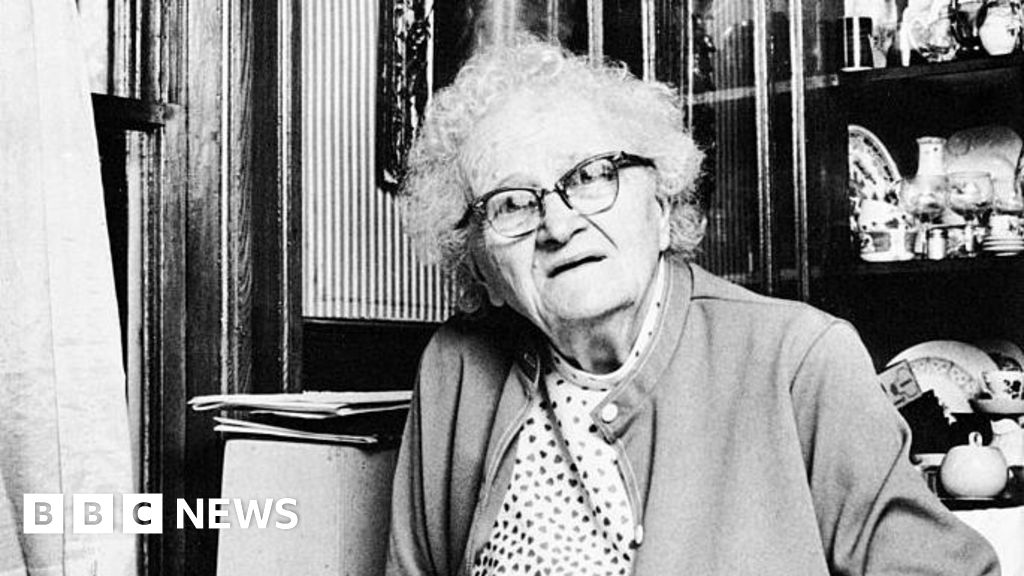
Cecilia Payne-Gaposchkin discovered what stars are truly made of, changing our understanding of the universe forever. Now, her childhood London home bears a blue plaque celebrating her groundbreaking achievements.
A blue plaque now marks the London home where a young woman began a journey that would unlock the secrets of the stars themselves.
Cecilia Payne-Gaposchkin has been honored with an English Heritage blue plaque at 70 Lansdowne Road in Notting Hill, where she lived as a teenager. It was from this address that she won a scholarship to Cambridge, launching one of astronomy's most remarkable careers.
In 1925, Payne-Gaposchkin made a discovery that fundamentally changed how we understand the universe. Her doctoral thesis proposed that stars are composed primarily of hydrogen and helium, a finding initially met with skepticism from established scientists who thought she must be wrong.
She wasn't. Her calculations proved correct, revolutionizing our knowledge of stellar composition and the cosmos itself.
Payne-Gaposchkin faced barriers at every turn as a woman in early 20th century science. Despite her brilliance, Harvard initially refused to grant her a PhD simply because of her gender. She persisted anyway, eventually becoming the first woman to earn a doctorate in astronomy from Harvard and later the first female full professor at the university.
By age 27, she had already become the youngest astronomer ever to earn a star of distinction in American Men of Science. Over her career, she published hundreds of scientific papers on stellar atmospheres and variable stars, cementing her status as one of the 20th century's most significant astronomers.
Why This Inspires
Payne-Gaposchkin's story shows how determination can overcome even the most rigid obstacles. She pursued truth about the universe while simultaneously breaking down walls that excluded women from science.
Her discovery didn't just add to human knowledge. It fundamentally rewrote what we thought we knew about the building blocks of stars and galaxies.
Today's measurements of hydrogen and helium ratios in the Milky Way match her 1925 calculations with stunning accuracy. Every time astronomers study stellar composition, they're building on her foundation.
Senior historian Howard Spencer called her "a scientist of exceptional brilliance and determination," noting that her London home represents where "she began to develop the knowledge and ambition that would take her to the forefront of modern astronomy."
The blue plaque joins those honoring other pioneering astronomers, including Sir Arthur Eddington, who encouraged her early career, and the scientific couple Walter and Annie Maunder.
Payne-Gaposchkin proved that the most profound discoveries can come from those brave enough to trust their findings, even when the establishment doubts them.
More Images


Based on reporting by BBC Science
This story was written by BrightWire based on verified news reports.
Turn Today’s Good News Into Action
Generate a simple, meaningful 2-minute act of kindness you can do today and log your ripple effect.
Spread the positivity!
Share this good news with someone who needs it
