Astronomers Capture Largest Ever Image of Milky Way Center
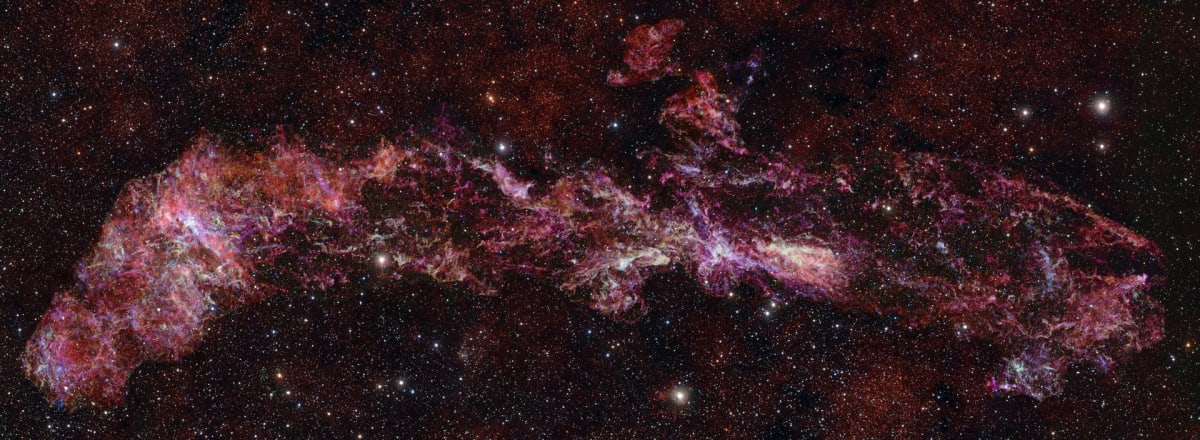
Over 160 scientists from 70 institutions worldwide just revealed the most detailed picture ever taken of our galaxy's mysterious heart, spanning 650 light-years. The breakthrough image could unlock secrets about how life began in our corner of the universe.
📺 Watch the full story above
Scientists have captured the most detailed portrait ever of the Milky Way's central region, revealing a cosmic chemistry lab that might explain how life emerged in our galaxy.
The massive image, created using the Atacama Large Millimeter/submillimeter Array in Chile, shows 650 light-years of space packed with dense clouds, gas filaments, and star nurseries. The view covers an area as wide as three full moons side by side.
More than 160 astronomers from 70 institutions across six continents collaborated on this project called the ALMA CMZ Exploration Survey. They spent years peering through the dust and gas that usually blocks our view of the galactic center.
The image reveals the Central Molecular Zone, where temperatures and pressures reach extremes unlike anywhere else nearby. This region hosts some of the most massive stars ever discovered, living fast and dying in spectacular supernova explosions.
What makes this discovery exciting goes beyond pretty pictures. The dataset shows everything from massive gas structures dozens of light-years across down to tiny clouds surrounding individual baby stars.
Scientists can now trace how cold gas flows along cosmic filaments, clumps together, and births new stars in conditions far more chaotic than the calmer outer edges of our galaxy. Understanding star formation in this extreme environment helps explain how galaxies grew and evolved when the universe was young.
The Ripple Effect
This research reaches beyond one spectacular image. The detailed chemical signatures captured by the team include simple compounds like silicon monoxide and complex organic molecules such as hydrocarbons, the building blocks of life.
The Central Molecular Zone sits just 26,000 light-years away, making it the only galactic nucleus close enough to study in such fine detail. What astronomers learn here applies to distant galaxies across the universe.
Ashley Barnes, an astronomer at the European Southern Observatory, calls it "a place of extremes, invisible to our eyes, but now revealed in extraordinary detail." The team can now test whether star formation theories that work in quiet galactic suburbs still apply in the chaotic downtown.
Principal investigator Steven Longmore notes the region shares features with galaxies in the early universe, where stars formed amid constant turbulence and violence. Solving mysteries here means understanding how galaxies everywhere came to life.
Even the scientists were surprised by the complexity their observations revealed. When next-generation telescopes come online, including the Extremely Large Telescope, they'll dive even deeper into this cosmic wonderland.
The journey into the heart of our galaxy has only just begun.
Based on reporting by Google News - Science
This story was written by BrightWire based on verified news reports.
Spread the positivity!
Share this good news with someone who needs it