Astronomers Discover Cloud-9: A Cosmic Fossil That Unlocks Universe's Secrets
Scientists have made an extraordinary discovery 14 million light-years from Earth: Cloud-9, a "galaxy that wasn't," offering an unprecedented window into the universe's earliest days. This groundbreaking find promises to revolutionize our understanding of how galaxies form and what dark matter truly is.
The universe has just given astronomers an incredible gift: a cosmic time capsule that could unlock some of the greatest mysteries about how our universe came to be.
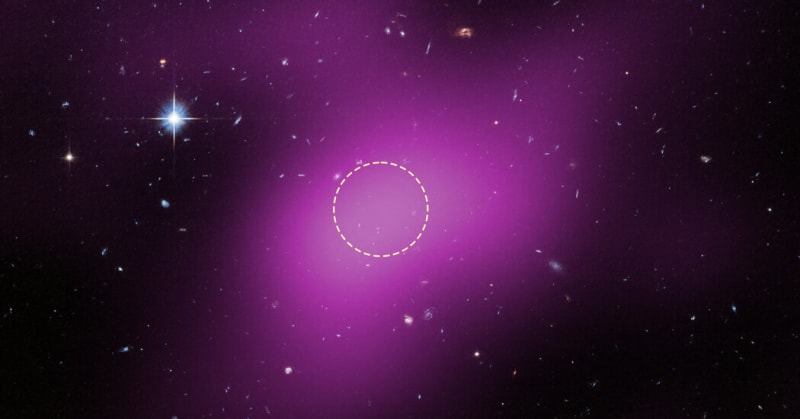
Astronomers announced this week the discovery of Cloud-9, a remarkable celestial object located about 14 million light-years from Earth. What makes this finding so thrilling is what Cloud-9 isn't: despite having all the ingredients to become a galaxy, it never quite made it. The object contains vast clouds of hydrogen gas wrapped in dark matter, but completely lacks the one thing galaxies are known for: stars.
"There's nothing like this that we've found so far in the universe," explained Rachael Beaton, an astronomer at the Space Telescope Science Institute, during a presentation at the American Astronomical Society meeting in Phoenix. She affectionately described it as "basically a galaxy that wasn't."
This discovery represents something scientists have long theorized but never confirmed: a RELHIC, which stands for Reionization-Limited H I Cloud. These are essentially failed galaxies, primordial fossils that have survived since nearly the beginning of time itself. Think of Cloud-9 as a snapshot of what the universe looked like in its infancy, a piece of cosmic history preserved for billions of years.
The journey to confirming Cloud-9's unique nature was itself a testament to international scientific collaboration. Chinese astronomers first spotted the object in 2023 using the Five-hundred-meter Aperture Spherical Telescope. Follow-up observations using the Green Bank Telescope in West Virginia and the Very Large Array in New Mexico strengthened the evidence. Finally, NASA's Hubble Space Telescope provided the confirmation scientists needed in 2025.
Gagandeep Anand, who led the Hubble analysis, discovered that Cloud-9 contains dark matter about five billion times as massive as our sun, surrounding about a million solar masses of hydrogen gas. Remarkably, despite having enough material to form stars, it simply never did.
Why This Inspires
This discovery opens exciting new possibilities for understanding the fundamental nature of our universe. Cloud-9 offers scientists a rare opportunity to study dark matter, the mysterious invisible substance that makes up most of the universe's mass but has never been directly observed. By studying objects like Cloud-9, astronomers can better understand what conditions are necessary for galaxies to form and why some regions of space develop differently than others.
Even more inspiring is what this means for future discoveries. Dr. Anand believes Cloud-9 is just the beginning. "This is just the first one we've found," he said optimistically. "There have got to be others like it."
Priyamvada Natarajan, an astrophysicist at Yale who wasn't involved in the research, called the discovery "very tantalizing" and emphasized its potential for testing different theories about dark matter and identifying other hidden structures in the universe.
The serendipitous name Cloud-9 came from it being the ninth cloud found associated with a nearby spiral galaxy, but it feels fitting for such an uplifting discovery. This cosmic treasure proves that the universe still has wonderful surprises in store for those curious enough to look up and explore. As scientists plan for even more sensitive telescopes to find similar objects, we're reminded that every answer in science leads to new, exciting questions worth pursuing.
Based on reporting by Google News - Scientists Discover
This story was written by BrightWire based on verified news reports.
Spread the positivity! 🌟
Share this good news with someone who needs it
More Good News


DAILY MORALE
Why did the dog apply for a job at the bank?
EXPLORE INTEL
MISSION DIRECTIVE
The greatest thing you'll ever learn is just to love and be loved in return.
Moulin Rouge (from the film, popularized by Ewan McGregor)