Astronomers Discover Supernova That Will Reappear in 60 Years
Scientists using the James Webb Space Telescope spotted a supernova whose light is taking multiple paths through space, with some images arriving now and others delayed by six decades. This cosmic phenomenon could finally help solve one of astronomy's biggest mysteries about how fast the universe is expanding.
Astronomers just watched a star explode that will explode again in 2085, at least from our viewpoint here on Earth.
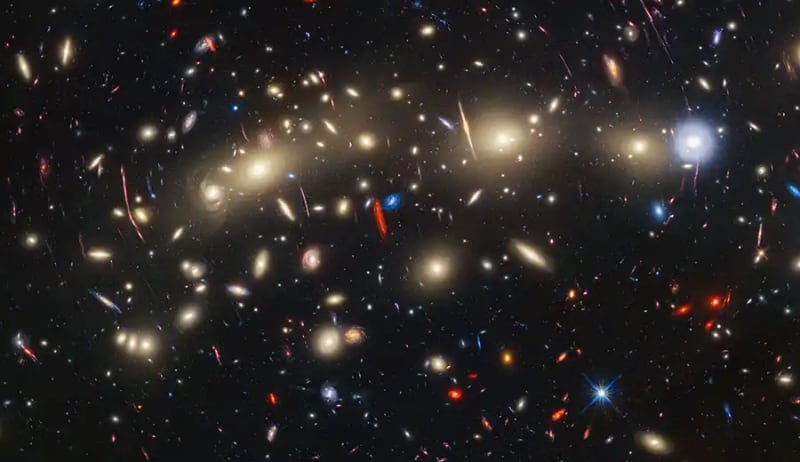
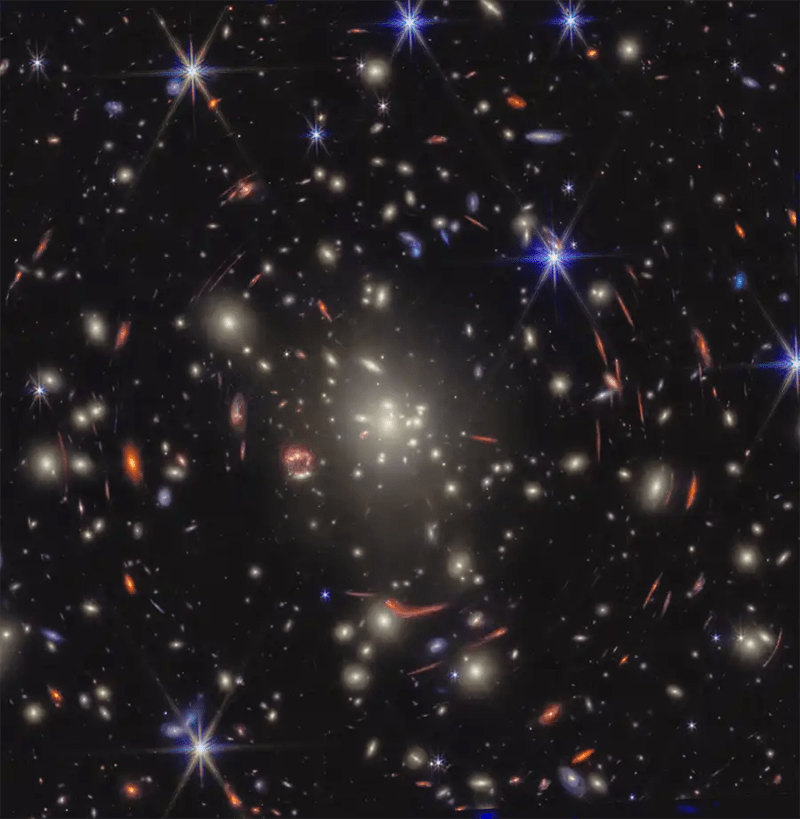
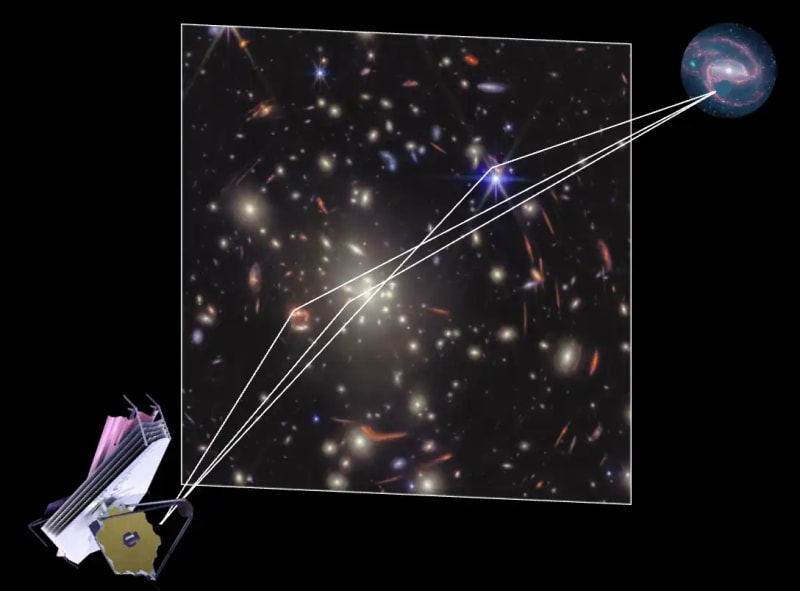
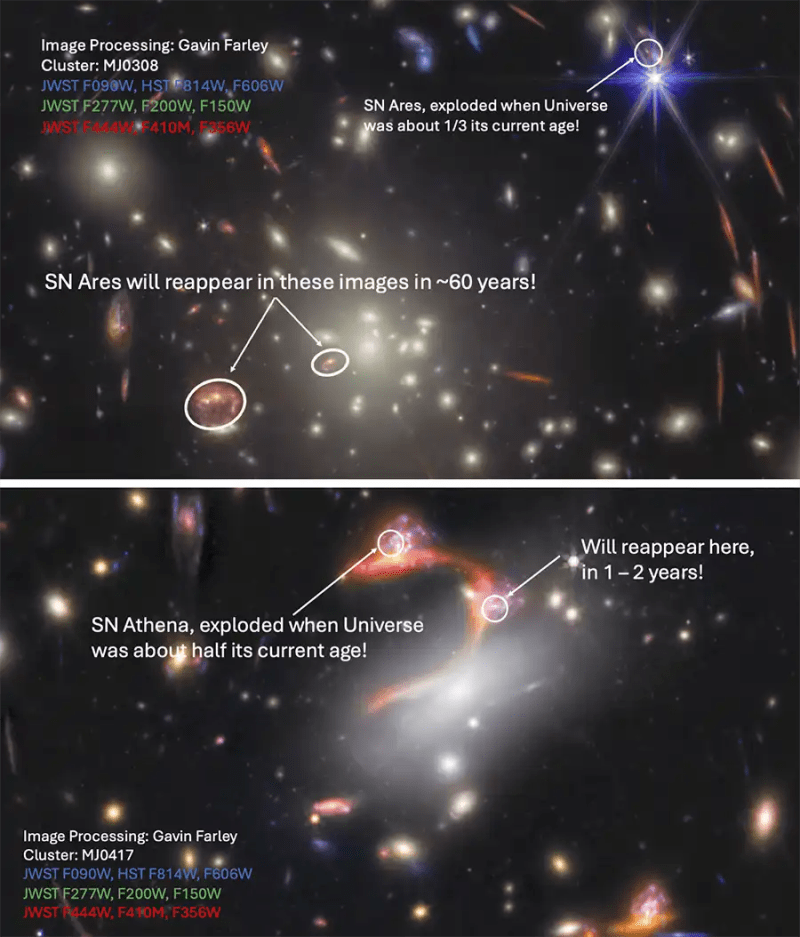
The James Webb Space Telescope captured light from Supernova Ares, a massive stellar explosion that happened when the universe was only a third of its current age. But this isn't just another distant supernova. A galaxy cluster sitting between us and the explosion acts like a giant cosmic lens, bending the supernova's light into multiple paths that arrive at different times.
Think of it like watching the same firework from different mirrors. Some light took the express route and already reached Webb's detectors. Other photons are taking the scenic path, bending around the galaxy cluster on a journey that will take 60 more years to complete.
Conor Larison from the Space Telescope Science Institute announced the discovery at the American Astronomical Society meeting in Phoenix. His team found Ares through the VENUS program, which will image 60 galaxy clusters to use them as natural magnifying glasses for the distant universe.
The real excitement isn't just about watching a rerun in six decades. These time-delayed images could help astronomers crack a problem that's been frustrating them for years: figuring out exactly how fast the universe is expanding right now.
Different measurement methods keep giving different answers, and the gap is too big to ignore. Some measurements suggest the universe is expanding at one speed, while other techniques point to a noticeably different rate.
Why This Inspires
Supernova Ares offers something truly special. When all its images finally arrive, the time delay measurement will be 100 times more precise than anything astronomers have today.
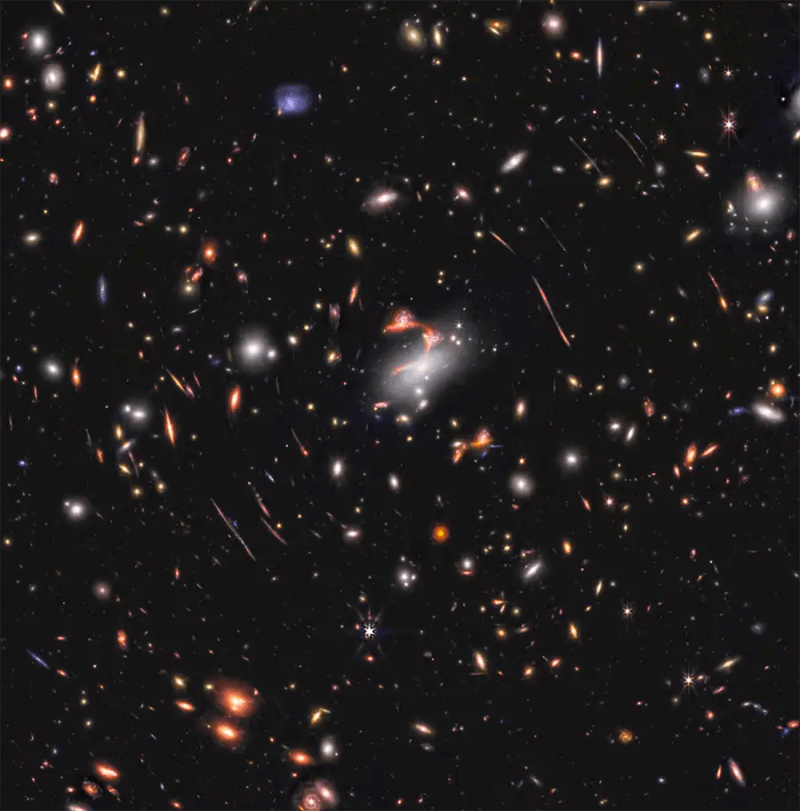
The team isn't stopping with Ares. They've already found another lensed supernova called Athena, which should reveal another image in just a year or two. Plus, they've spotted four more lensed supernovae whose images are all already visible.
It's a numbers game now. Find enough of these cosmic time capsules, maybe around 20 total, and astronomers will finally have the precision they need to settle the expansion rate question once and for all.
The idea for this kind of observation goes back to 1964, when astronomer Sjur Refsdal first suggested it was possible. It took 50 years to find the first real example, fittingly named Supernova Refsdal in his honor.
Now, with Webb's powerful infrared vision scanning 60 galaxy clusters, these discoveries are accelerating. Each new lensed supernova adds another piece to the cosmic puzzle.
"We don't necessarily know what the cosmological question of the day will be in 60 years," Larison said. But when those delayed photons from Supernova Ares finally arrive in 2085, they'll carry answers to questions we're asking right now about the nature of our expanding universe.
More Images
Based on reporting by Sky & Telescope
This story was written by BrightWire based on verified news reports.
Spread the positivity!
Share this good news with someone who needs it