%2Fhttps%3A%2F%2Ftf-cmsv2-smithsonianmag-media.s3.amazonaws.com%2Ffiler_public%2F29%2F49%2F29493038-7959-49c5-9352-ef74ea574dc7%2Foriginal_1.webp)
Astronomers Spot 3 Giant Black Holes in Early Universe
Scientists just discovered three supermassive black holes sharing the same galaxy from when the universe was barely a billion years old. This cosmic first is rewriting what we know about how these mysterious giants grew so quickly after the Big Bang.
For the first time ever, astronomers have spotted a galaxy containing not one, not two, but three supermassive black holes orbiting near each other in the early universe.
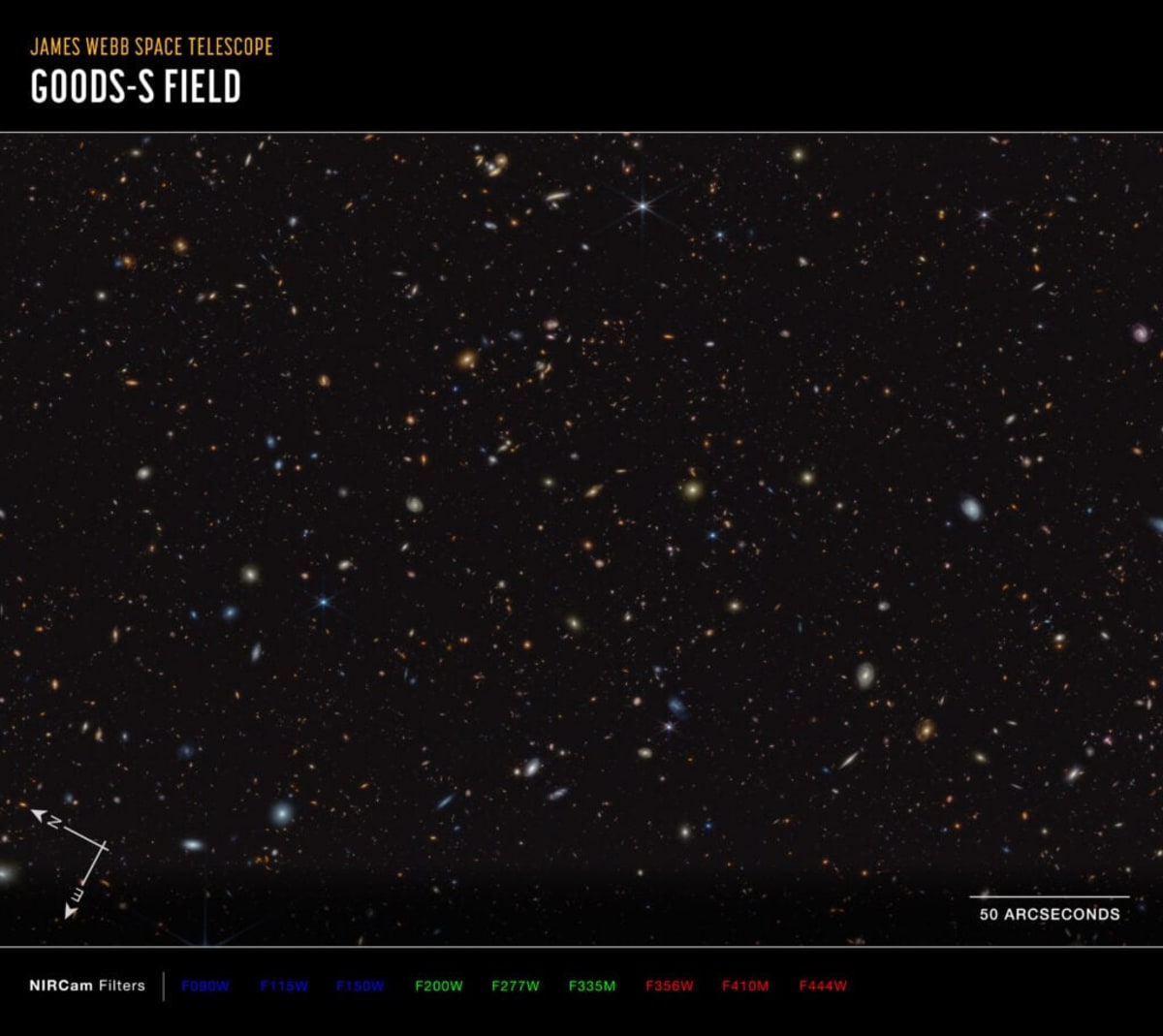
The galaxy, called J0148-4214, existed when the cosmos was just a billion years old. Scientists using the James Webb Space Telescope peered back 12.5 billion years in time to witness this cosmic trio, proving that black holes were merging and growing faster than anyone expected.
Hannah Übler and her team at the Max Planck Institute for Extraterrestrial Physics in Germany were hunting for double black holes when they stumbled upon something far more exciting. The light patterns from the galaxy's center showed hydrogen atoms racing at speeds that could only mean one thing: multiple black holes were lurking in the heart of this ancient galaxy.
Two of these behemoths sit just 620 light-years apart and will likely merge within a few hundred million years. The largest contains the mass of 80 million suns, while its smaller neighbor weighs in at 600,000 suns. A third black hole, containing two million suns worth of mass, orbits about 5,500 light-years away.
Here's where it gets really interesting. The smallest black hole is consuming matter faster than current theories say is even possible. This discovery suggests that black holes in the early universe had a secret weapon for rapid growth: merging with each other instead of slowly feeding on gas.
Why This Inspires
This finding opens a window into the universe's wild youth, when cosmic collisions happened frequently and black holes grew at breakneck speeds. It shows that even in the chaotic early cosmos, nature found efficient ways to build the massive structures we see today.
The discovery proves that our universe's most mysterious objects have been dancing together since nearly the beginning of time. As telescopes improve, scientists expect to find more of these cosmic gatherings, each one revealing new secrets about how our universe evolved from chaos into the structured cosmos we call home.
Sometimes looking backward in time shows us just how dynamic and creative our universe has always been.
More Images
%2Fhttps%3A%2F%2Ftf-cmsv2-smithsonianmag-media.s3.amazonaws.com%2Ffiler_public%2F29%2F49%2F29493038-7959-49c5-9352-ef74ea574dc7%2Foriginal_1.webp)
%2Fhttps%3A%2F%2Ftf-cmsv2-smithsonianmag-media.s3.amazonaws.com%2Ffiler_public%2F29%2F49%2F29493038-7959-49c5-9352-ef74ea574dc7%2Foriginal_1.webp)
%2Fhttps%3A%2F%2Ftf-cmsv2-smithsonianmag-media.s3.amazonaws.com%2Faccounts%2Fheadshot%2FSara_-_Headshot_thumbnail.png)
Based on reporting by Smithsonian
This story was written by BrightWire based on verified news reports.
Spread the positivity!
Share this good news with someone who needs it