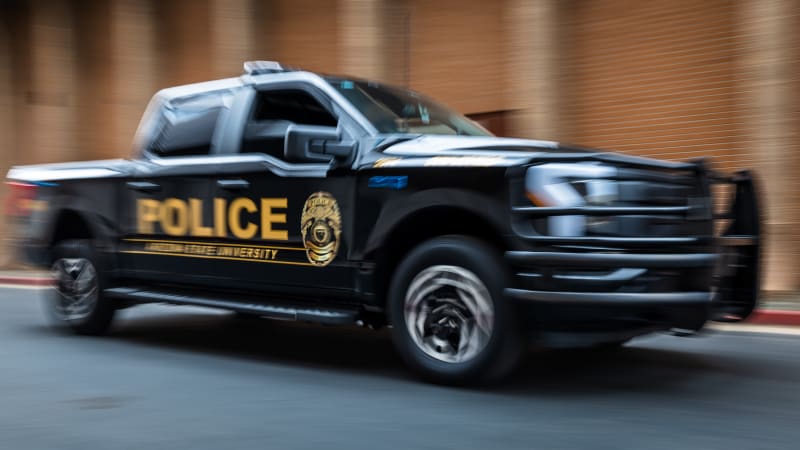
ASU Police Test Electric Trucks in Blazing Arizona Heat
Arizona State University police are putting two electric patrol trucks through a six-month trial to see if EVs can handle the demanding reality of 24/7 law enforcement in extreme heat. The results could reshape police fleets nationwide.
Arizona State University's police department is betting that electric patrol trucks can handle the toughest test imaginable: round-the-clock police work in desert heat that regularly tops 110 degrees.
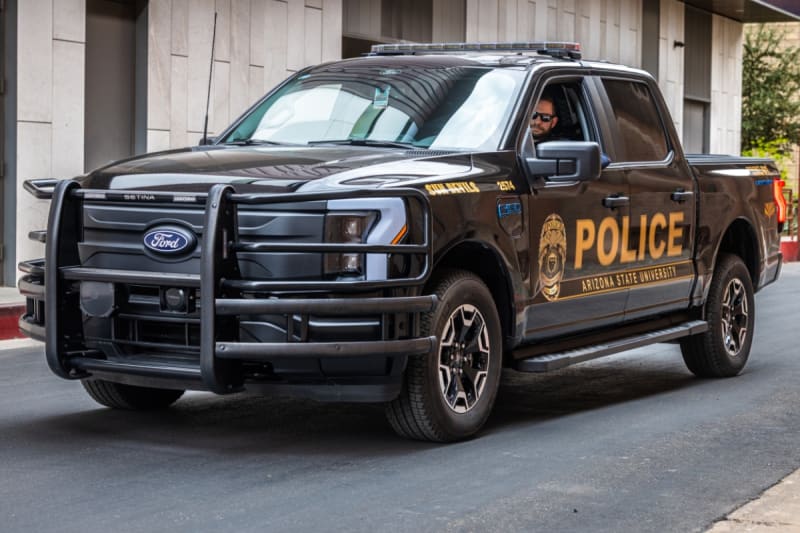
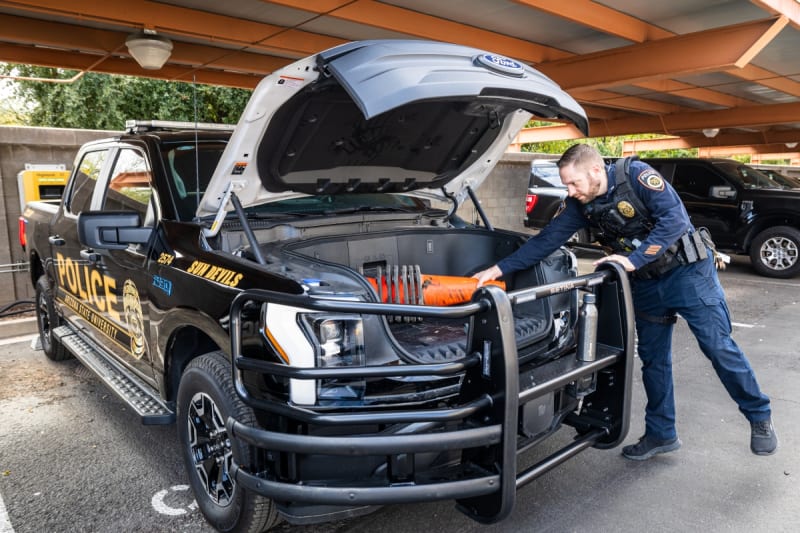
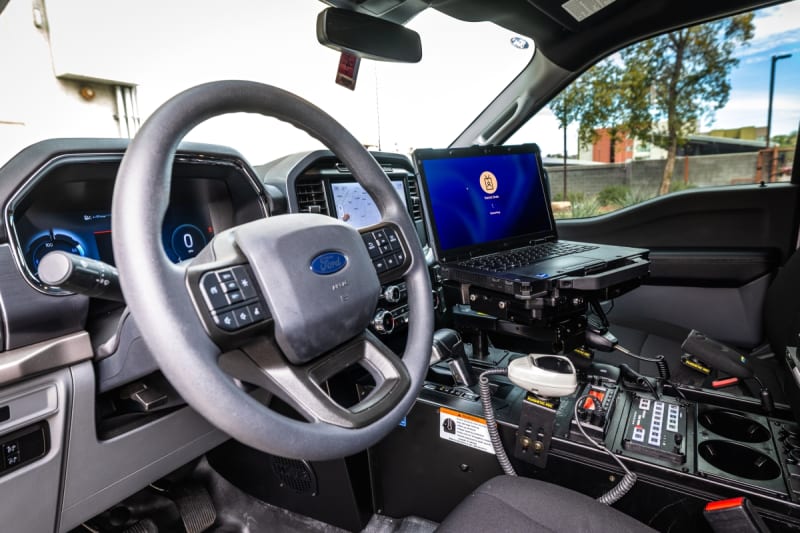
For the next six months, two fully equipped electric trucks will work alongside traditional patrol vehicles on ASU's Tempe campus. Officers will use a Ford F-150 Lightning and Chevrolet Silverado EV for everything they'd do in gas-powered vehicles: responding to emergencies, making traffic stops, and transporting detainees.
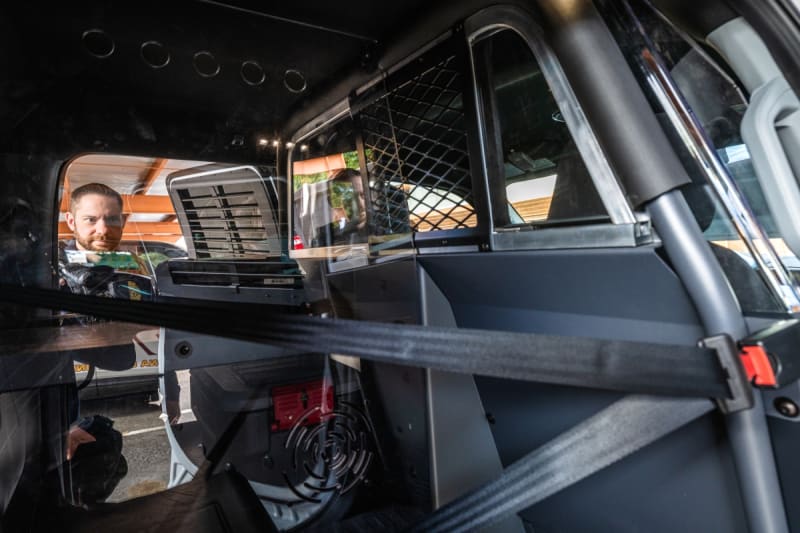
Each truck comes loaded with emergency lights, sirens, computers, radios, medical kits, and defibrillators. The F-150 Lightning even has a prisoner transport compartment and fresh department graphics, making it look exactly like any other patrol vehicle.
This isn't ASU Police's first electric rodeo. The department already uses electric motorcycles, e-bikes, and two electric SUVs for administrative tasks like investigations and travel between campuses. But this pilot marks their first dive into full-time frontline patrol work.
Commander Tony Momon says they're asking the hard questions. Can the trucks handle the constant power drain from all that emergency equipment? Will they keep up with gas-powered counterparts? And most critically, how will they perform when Arizona's brutal summer arrives?
That extreme heat makes ASU's campus the perfect testing ground. Few places in America push vehicles harder than the Phoenix area in July and August. If electric patrol trucks can survive here, they can likely work anywhere.
The campus itself adds another layer of real-world challenge. Officers navigate constant stop-and-go traffic, heavy pedestrian and bike traffic, and large campus events. It's like policing a small city, giving researchers data that applies far beyond university settings.
The Ripple Effect
This pilot could influence how police departments across the country build their fleets for decades to come. Law enforcement agencies spend millions annually on vehicles and fuel, and most are watching experiments like ASU's closely.
Electric vehicles promise dramatically lower maintenance costs since they have fewer moving parts than gas engines. They're quieter, which could improve community relations during patrols. And departments could save thousands per vehicle yearly on fuel alone.
But police work demands reliability above all else. A patrol vehicle can't run out of charge during an emergency, and officers need confidence their trucks will perform when seconds count. That's exactly what this pilot will measure.
ASU Police will track everything: battery performance and range, durability under stress, how charging fits into shift schedules, and whether the trucks can truly match their gas-powered partners. The data they collect will help departments nationwide make informed decisions about going electric.
The future of police patrol might just be silent, emission-free, and surprisingly powerful.
More Images
Based on reporting by Google News - Electric Vehicle
This story was written by BrightWire based on verified news reports.
Spread the positivity!
Share this good news with someone who needs it