
Atom-Thin Material Could Revolutionize Chip Manufacturing
Scientists at Penn State discovered a super-thin material that outperforms traditional chip-making tools, potentially solving one of tech's biggest manufacturing challenges. The breakthrough happened by accident when researchers couldn't etch the material as expected.
Making computer chips smaller just got a major boost from an unexpected discovery that could change how we manufacture everything from smartphones to sensors.
Scientists at Pennsylvania State University found that chromium oxychloride, a material just atoms thick, dramatically outperforms conventional materials used to create the tiny circuits inside computer chips. The team published their findings in Nature Materials, offering hope for an industry struggling with increasingly difficult manufacturing demands.
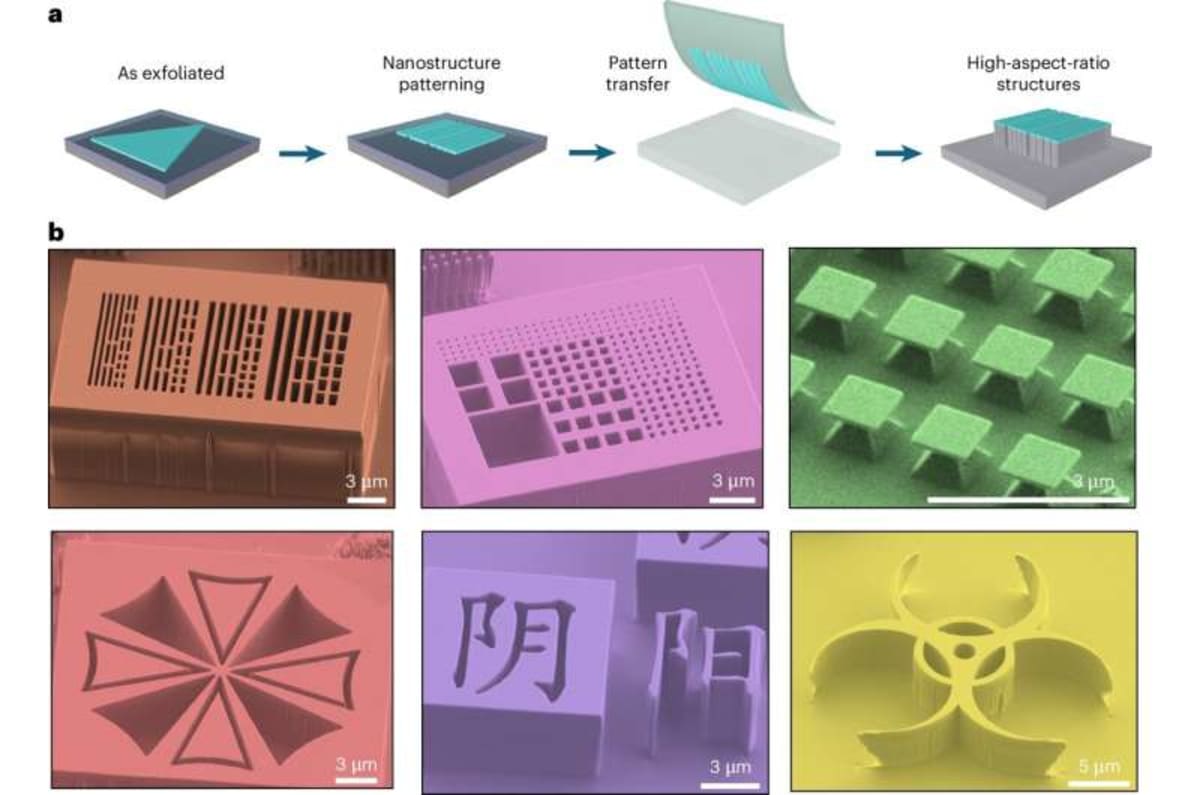
"As chips get smaller, the manufacturing process becomes much more demanding," said Saptarshi Das, Penn State professor of engineering science and mechanics. The challenge lies in a crucial step called patterning, where engineers carve nanoscale structures into materials using protective masks that must survive extremely harsh conditions.
The discovery happened by pure chance. The research team was trying to etch chromium oxychloride for an entirely different project when they realized they couldn't break it down. That surprise led them to test just how resistant the material really was.
What they found exceeded expectations. The material's layered structure, which doctoral candidate Ziheng Chen compared to lasagna, creates a protective shield when exposed to the harsh plasma used in chip manufacturing. Instead of eroding like traditional masks, it forms a chemically inert layer that protects everything underneath.
The material offers another game-changing advantage over conventional masks. Engineers can pattern it separately and transfer it onto delicate materials like flexible plastics or glass, opening doors for new types of electronics and sensors that weren't previously possible.
Why This Inspires
This breakthrough addresses a real bottleneck in technology. Semiconductor manufacturers have relied on the same mask materials for years, but those traditional options struggle as chips shrink and designs grow more complex.
The Penn State team also discovered an unexpected bonus. Unlike conventional masks that become rougher under plasma exposure, chromium oxychloride's surface actually becomes smoother. That smoothness translates directly into sharper, more precise chip features and better end products.
The discovery shows how scientific breakthroughs often come from unexpected places. What started as a failed experiment turned into a solution that could help manufacture the next generation of faster, more efficient electronics.
This atom-thin material might just be the key to unlocking smaller, more powerful technology for everyone.
More Images



Based on reporting by Phys.org - Technology
This story was written by BrightWire based on verified news reports.
Spread the positivity!
Share this good news with someone who needs it