Australia Gets $1.9B Solar Farm with 900 Jobs Coming
A massive renewable energy project near Darwin will create 900 jobs and power green hydrogen production. The 2.7 gigawatt solar farm paired with battery storage marks one of Australia's largest clean energy investments.
Australia is getting a clean energy powerhouse that could transform how the nation produces and stores renewable power.
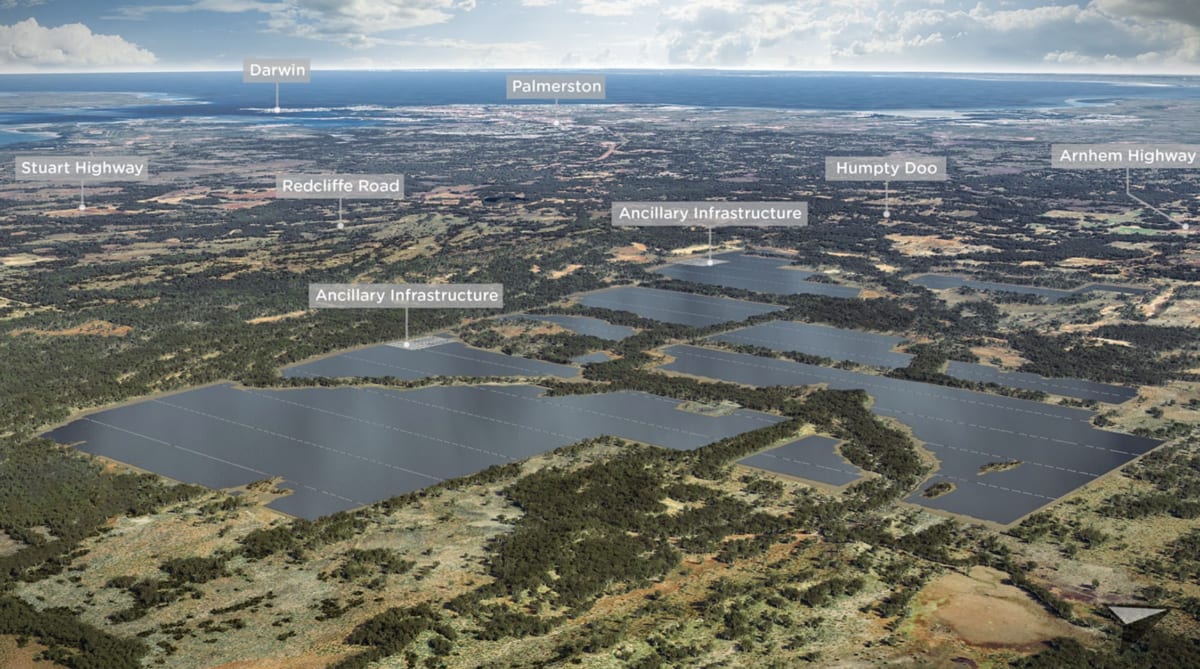
French energy company TotalEnergies and renewable producer Eren Groupe just submitted plans for a $1.9 billion solar and battery project near Darwin. The Wak Wak facility will sprawl across 3,400 hectares about 30 miles south of the city, generating enough clean electricity to power industrial operations and future green hydrogen production.
The project centers on a 2.7 gigawatt solar farm paired with 6 gigawatt hours of battery storage. That battery capacity will smooth out the natural ups and downs of solar generation, ensuring steady power delivery even when clouds roll in or the sun sets.
Construction could start in 2027 if approvals go through. The developers plan to build in phases, with the first stage delivering up to 900 megawatts of generating capacity.
The solar farm will feed power to the Middle Arm industrial precinct through new high voltage transmission lines. Eventually, that renewable energy will power a planned green hydrogen hub capable of producing more than 80,000 tonnes of hydrogen annually for both Australian and international markets.
The Ripple Effect
Beyond clean electrons, this project brings 900 construction jobs to the Northern Territory. Workers will install solar panels, build battery systems, and connect transmission infrastructure over multiple years.
The clean power will first serve existing Darwin region industries before expanding to hydrogen production. That staged approach means immediate benefits for local businesses while building toward Australia's green hydrogen export ambitions.
Even the construction phase prioritizes sustainability. The developers plan to use temporary solar panels and batteries to power the build itself, supplementing with diesel generators only during initial setup.
Green hydrogen produced at the connected Darwin H2 Hub could replace fossil fuels in shipping, aviation, and heavy industry. Each tonne of green hydrogen made with renewable power instead of natural gas prevents roughly 10 tonnes of carbon emissions.
This facility represents exactly the kind of large scale renewable infrastructure Australia needs to meet climate goals while creating economic opportunity in regional areas.
More Images
Based on reporting by PV Magazine
This story was written by BrightWire based on verified news reports.
Spread the positivity!
Share this good news with someone who needs it