Australia Strikes Hidden Hydrogen Gold in Ancient Rock
Scientists in Western Australia discovered that the region's massive iron deposits naturally produce clean hydrogen when hot water meets magnetite deep underground. This breakthrough could unlock a new renewable energy source that doesn't require fossil fuels.
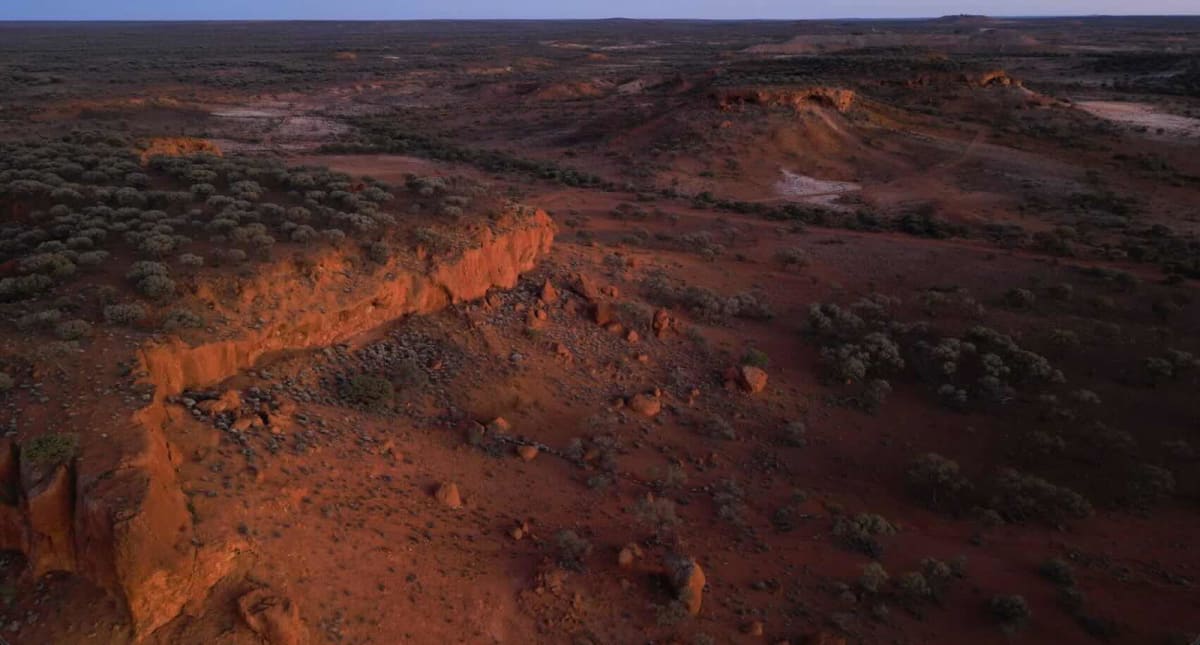
Beneath the rusty red soil of Western Australia lies an unexpected treasure that could help power our clean energy future.
Researchers at Edith Cowan University have discovered that the region's ancient iron deposits are quietly producing hydrogen through a natural chemical reaction. When hot water interacts with magnetite, an iron-rich mineral abundant in the area, it creates molecular hydrogen without any human intervention or fossil fuel inputs.
The Pilbara region, famous for its striking red landscape, contains some of the world's largest banded iron formations. These geological giants have been sitting there for billions of years, and scientists are just now realizing their energy potential.
Lead researcher Kaveh Moghanirahimi and his team recreated underground conditions in their lab by heating magnetite samples to 200 degrees Celsius under extreme pressure. They maintained these experiments for nearly two months, watching nature's chemistry unfold.
"Australia could be sitting on a massive, untapped energy reserve," said Associate Professor Alireza Keshavarz. The findings show something remarkable: the same processes happening in their lab are occurring right now, deep beneath Australian soil.
The secret ingredient turns out to be water flow. Having magnetite alone isn't enough. Water must continuously reach fresh mineral surfaces through cracks, pores, and underground pathways to keep the hydrogen production going.
This discovery led the team to an even more exciting possibility. They identified ways to inject solutions into these iron formations to stimulate hydrogen generation artificially. Essentially, the right geological sites could become natural hydrogen factories.
The Ripple Effect
This breakthrough comes at a crucial time. Most hydrogen today is produced using fossil fuels, which defeats the purpose of switching to cleaner energy. Geological hydrogen offers a truly clean alternative that works with nature instead of against it.
The implications stretch beyond Australia. Similar iron formations exist around the world, potentially creating a global network of natural hydrogen sources. As countries race to reduce emissions, this research opens an entirely new pathway.
Western Australia's mining expertise could pivot from extracting resources to harvesting them sustainably. The infrastructure, geological knowledge, and workforce already exist to make this transition possible.
Professor Stefan Iglauer emphasized that their work "helps bridge the gap between laboratory experiments and real geological systems." Moving from controlled lab conditions to actual production sites remains the challenge ahead.
The research is still early, and commercial viability depends on whether hydrogen can be recovered economically at scale. But the foundation is solid, and the resource is enormous.
If successful, those ancient red rocks could become powerhouses for clean energy, transforming not just Australia's energy landscape but offering hope for sustainable hydrogen worldwide.
Based on reporting by Google News - Renewable Energy Breakthrough
This story was written by BrightWire based on verified news reports.
Spread the positivity!
Share this good news with someone who needs it