Australian Engineers Create Floating Titanium That Won't Sink
Scientists have solved a decades-old puzzle by creating 3D-printed titanium that floats even after cracking or breaking. The breakthrough could revolutionize how we build ocean structures, from buoys to marine platforms.
Australian engineers just cracked a challenge that's stumped materials scientists for years: making super-strong metal that floats, even when damaged.
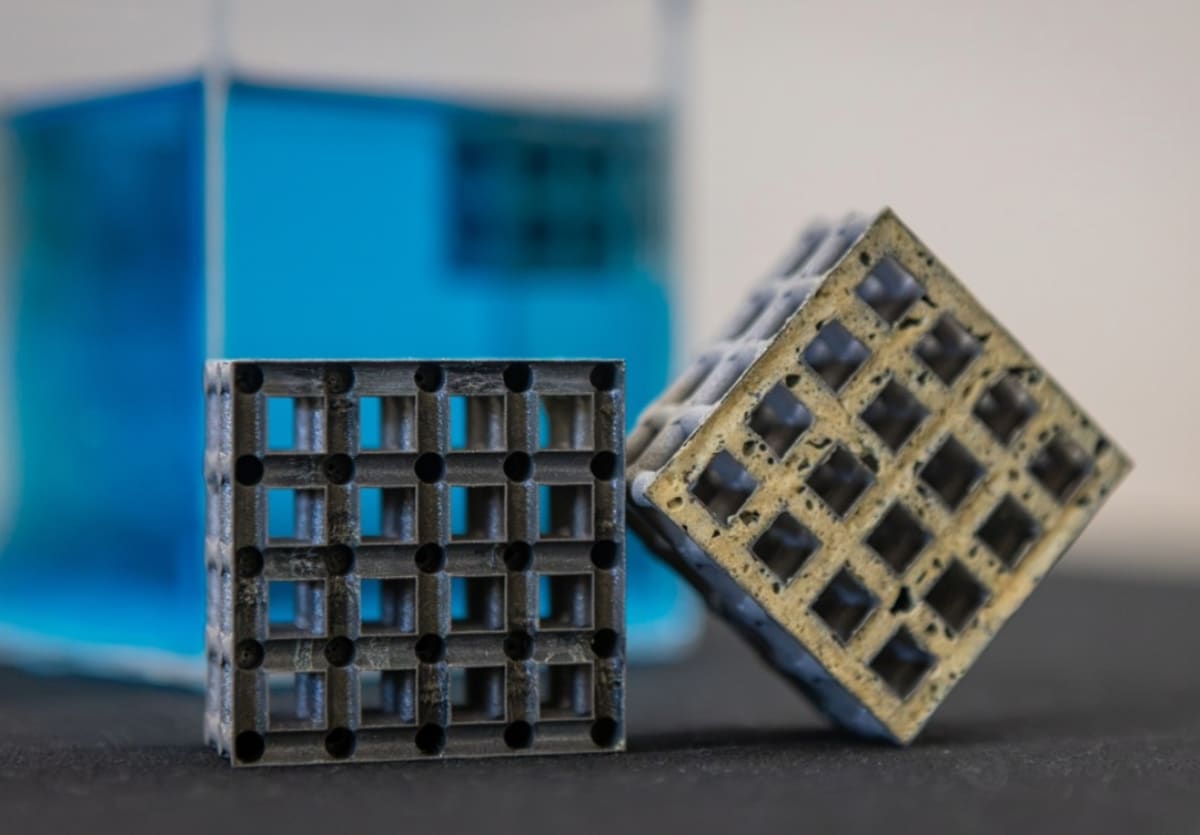
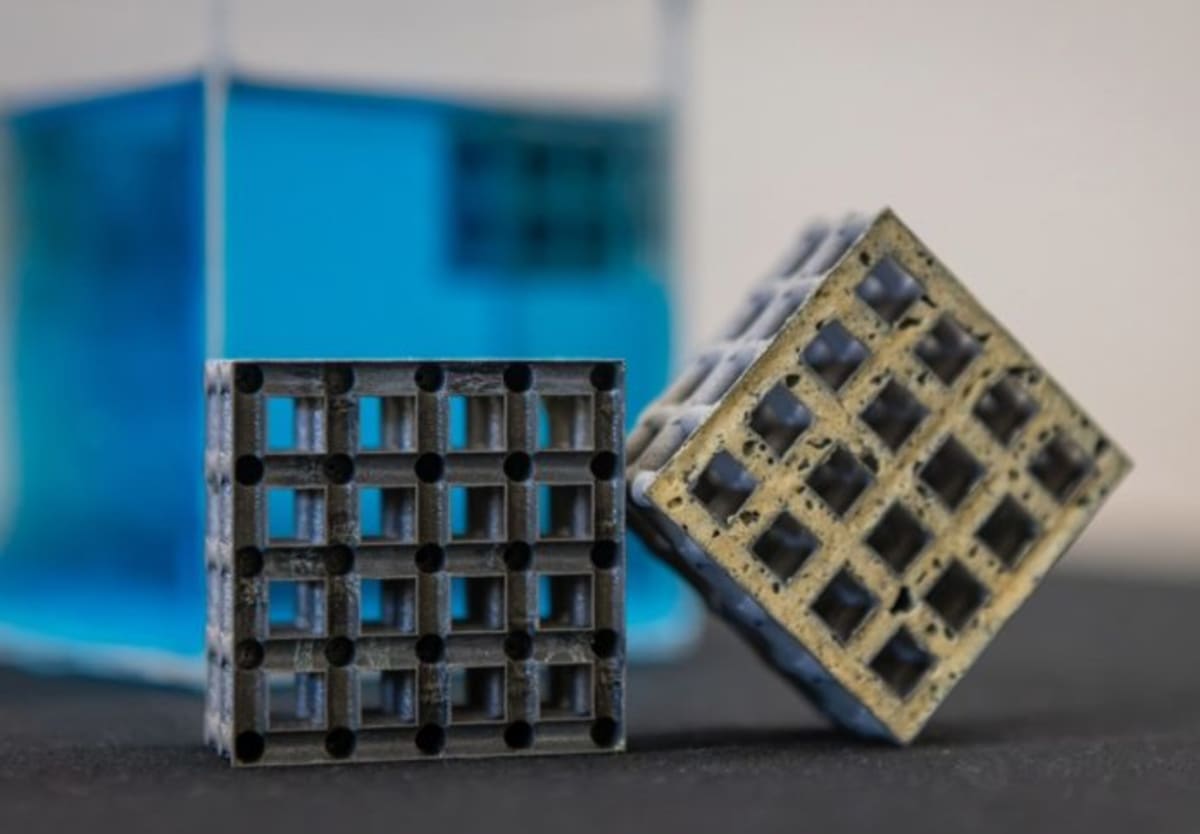
Researchers at RMIT University in Melbourne developed a 3D-printed titanium material that stays afloat in water while remaining 70% stronger than stainless steel. The secret lies in its clever design: hollow titanium struts filled with polyurethane foam, arranged in an interconnected lattice pattern.
Dr. Jordan Noronha, who led the research team, explains the problem they solved. Metal lattices can be incredibly light, but their open spaces let water rush in, causing them to sink instantly.
The team's hybrid structure changes everything. By filling only the hollow struts with foam, they created tiny sealed cells that trap gas and block water from flooding the material.
The titanium lattice passed some serious tests. Samples floated in freshwater for over two months without losing buoyancy. When researchers submerged it in seawater from Port Phillip Bay for two weeks, it lost just 0.15% of its mass and less than 1% of its strength.
Even more impressive: the material kept floating after researchers deliberately cracked it, broke connection points, and fractured an entire layer. The foam's sealed cells prevented water from taking over the structure.
The team demonstrated their breakthrough with a 3D-printed marine buoy that stayed stable in a turbulent seawater tank tilted up to 45 degrees. No sealed casing, no protective coating, no extra flotation devices needed.
The researchers also developed a new measurement called "skeletal density" that helps engineers predict whether open structures will float. Unlike regular density calculations, it only considers the parts of a structure that keep water out, giving designers a simple rule: if skeletal density is lower than the surrounding liquid, it floats.
The Ripple Effect
This innovation opens doors far beyond floating buoys. The technology could transform how we build offshore wind farms, ocean monitoring stations, and marine research platforms. Structures that once needed bulky flotation devices could now be lighter, stronger, and more durable.
Distinguished Professor Ma Qian, who oversees the project, says the team can swap different materials inside the titanium framework for other uses. Future versions might absorb energy, manage heat, or control vibrations in everything from ships to submarines.
The next phase involves scaling up the components and testing them in real ocean conditions, including deep-sea environments. The team is collaborating with researchers in France to push the technology forward.
From Melbourne's labs to the world's oceans, this floating titanium proves that sometimes the best solutions come from thinking differently about old problems.
More Images
Based on reporting by Google News - Australia Breakthrough
This story was written by BrightWire based on verified news reports.
Spread the positivity!
Share this good news with someone who needs it