Australian Leukemia Trial: 89% Survival After 3 Years
Young leukemia patients are beating cancer at remarkable rates thanks to a groundbreaking Australian treatment that swaps harsh chemo for immune therapy. Nearly 9 in 10 patients remain cancer-free three years later.
Young people facing one of the most aggressive blood cancers now have something powerful on their side: their own immune system.
Australian researchers just published results from a clinical trial that could change how we treat acute lymphoblastic leukemia in teenagers and young adults. The breakthrough? Replacing one of the toughest chemotherapy phases with a targeted immunotherapy called blinatumomab.
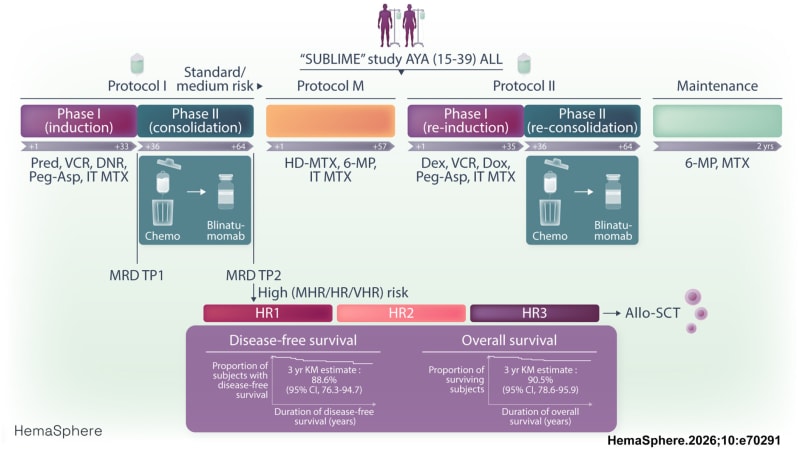
The ALLG ALL09 "SUBLIME" study followed 55 patients aged 15 to 39 who received treatment between 2019 and 2022. Instead of enduring all the standard chemotherapy rounds, these young patients got a drug that teaches their immune system to hunt down and destroy leukemia cells on its own.
The results speak volumes. After three years, nearly 89% of patients are still alive and cancer-free.
Associate Professor Matthew Greenwood from Royal North Shore Hospital in Sydney led the trial, with crucial genomic research contributions from Professor Deborah White and her team at South Australian Health and Medical Research Institute. They discovered something equally important: by studying the mutations in each patient's leukemia cells, they could predict who would respond best to treatment.
One group of patients with treatment-responsive mutations saw 100% survival. Even the group with more resistant mutations achieved 80% survival rates, far better than many had hoped.
The Bright Side
What makes this breakthrough especially meaningful is what it spares young patients. Chemotherapy works, but it takes a brutal toll on developing bodies.
The combination approach was generally well tolerated and cleared the disease faster without the extra strain that intensive chemo creates. Many patients in this study had higher-risk genetic features that typically lead to poor outcomes, yet most still responded remarkably well.
Professor White points out this demonstrates real value even in the hardest cases to treat. The work represents a decade of careful planning and collaboration across Australia, with young patients already benefiting from the findings.
Researchers aren't stopping here. They're now exploring ways to combine early immunotherapy with other targeted methods to push survival rates even higher while reducing long-term side effects that can haunt cancer survivors for decades.
For families facing a leukemia diagnosis, this trial offers something that felt impossible just years ago: hope backed by solid science and young lives saved.
More Images



Based on reporting by Google News - New Treatment
This story was written by BrightWire based on verified news reports.
Spread the positivity!
Share this good news with someone who needs it