Australian Scientists Sea-Test Portable Atomic Clock
University of Adelaide researchers successfully tested a portable atomic clock at sea for the first time, proving lab-level precision can work in real-world conditions. The breakthrough could revolutionize navigation and communications when GPS fails.
Scientists have just proven that some of the world's most precise technology can handle the rough and tumble of the open ocean.
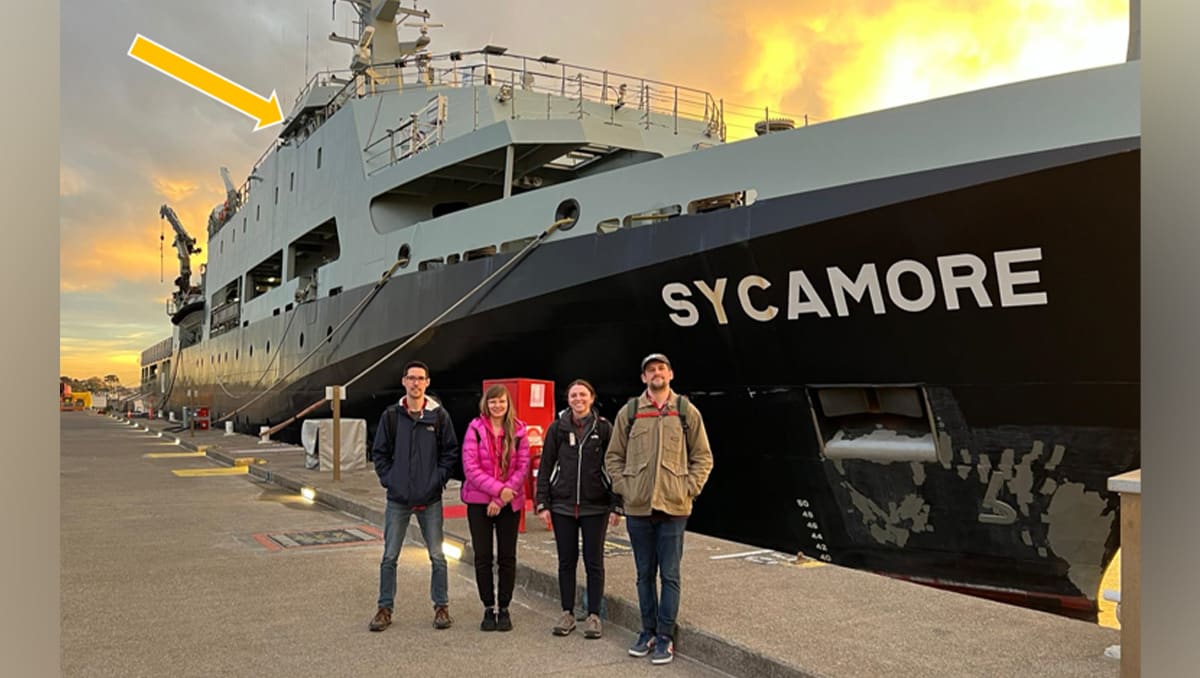
Researchers at the University of Adelaide took their portable atomic clock aboard a Royal Australian Navy vessel in July 2024 and watched it perform flawlessly for days. Despite constant motion, vibration, and changing temperatures, the device maintained the same incredible accuracy it showed in the controlled comfort of their lab.
This marks the first time a laser-cooled optical atomic clock has successfully operated in a maritime environment. The achievement, published in the journal Optica, transforms what was once delicate laboratory equipment into rugged field-ready technology.
Professor André Luiten led the team from the Institute for Photonics and Advanced Sensing. His group built the clock using laser-cooled ytterbium atoms, which allows the device to track time far more accurately than conventional approaches.
Atomic clocks already underpin technologies we use every day. GPS navigation, telecommunications networks, and radio astronomy all depend on their extreme precision.
The difference now is portability without compromise. Previous atomic clocks achieved their best performance only in specialized labs with perfect conditions.
The Ripple Effect
The real-world applications extend far beyond telling time. Ships and aircraft could navigate with pinpoint accuracy even when satellite signals drop out or get jammed.
Telecommunications networks could synchronize high-capacity data transfers with unprecedented precision. Radio astronomers could link telescopes around the globe to observe distant cosmic events.
The Australian government funded the research through the Next Generation Technology Fund, now managed by the Advanced Strategic Capabilities Accelerator. The Defence Science and Technology Group provided additional support, recognizing the technology's strategic importance.
"This trial shows Australia has the capability to develop world-leading precision timing systems with applications across science, industry and defence," Luiten said. The success demonstrates what happens when deep science meets practical engineering and real-world testing.
The research team isn't stopping at one successful voyage. They're already refining the technology and planning additional field trials across different environments and conditions.
Within the next few years, these portable ultra-precise clocks could deploy across commercial shipping, scientific research stations, and national security applications. What once required an entire laboratory now fits on a vessel, opening doors to innovations we haven't even imagined yet.
Australia has joined the small group of nations pushing quantum technologies from theory into practice, proving that scientific excellence and practical application can sail together.
More Images



Based on reporting by Google News - Australia Breakthrough
This story was written by BrightWire based on verified news reports.
Spread the positivity!
Share this good news with someone who needs it