Australia's Red Rocks Could Generate Clean Hydrogen Forever
Scientists discovered Western Australia's iron-rich rocks naturally produce hydrogen gas underground, and they've found a way to boost the process. The vast Pilbara region could become a massive source of clean energy for generations.
Western Australia might be sitting on an enormous clean energy reserve that's been hiding beneath its famous red landscape for millions of years.
Researchers at Edith Cowan University discovered that magnetite, a mineral abundant in the Pilbara's massive iron ore deposits, can naturally generate hydrogen gas when it reacts with hot water deep underground. Even better, they found a way to enhance the process by injecting solutions into the rock formations.
"Australia could be sitting on a massive, untapped energy reserve, and the potential is enormous," said Associate Professor Alireza Keshavarz. "There is enough hydrogen for Australia to benefit for generations, and potentially enough for us to become a major exporter of clean energy to the rest of the world."
The team recreated underground conditions in their lab by placing magnetite samples in water heated to 200°C under high pressure for 60 days. The experiments revealed exactly how natural hydrogen forms within rock and what conditions keep production flowing over time.
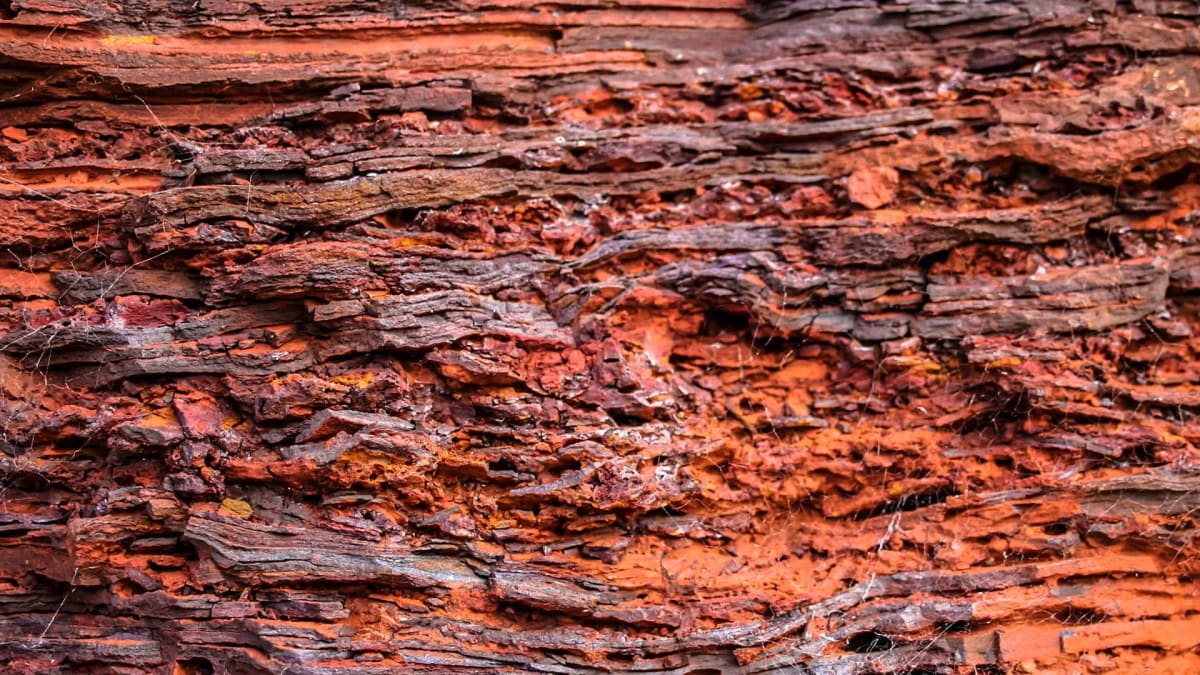
Western Australia's geology makes this discovery particularly exciting. The region contains some of the largest banded iron formations on Earth, sprawling beneath the iconic red landscape that produces much of the world's iron ore.
Lead researcher Kaveh Moghanirahimi sees potential beyond exports. "We even see the potential for Western Australia to strengthen its energy independence during times of crisis through access to this naturally generated hydrogen," he said.
The research revealed an important detail about making this work at scale. The amount of magnetite alone doesn't determine hydrogen output. The rock's structure matters just as much, especially whether water can flow through fractures and pores to reach fresh mineral surfaces.
The Ripple Effect
This breakthrough bridges laboratory science and real-world geology in ways that could transform energy production. Professor Stefan Iglauer noted the findings help scientists understand how hydrogen production might work in actual underground formations rather than just controlled lab settings.
If the process can be scaled up, it could reshape Australia's role in global clean energy markets. The country already exports massive amounts of iron ore from these same formations. Adding hydrogen production could create new industries and jobs while helping the world transition away from fossil fuels.
The technology could also provide a model for other countries with similar iron-rich geology. What works in Western Australia's ancient rock formations might unlock natural hydrogen reserves in regions around the world.
Australia's red earth, long valued for the iron it contains, may hold an even more valuable treasure just beneath the surface.
Based on reporting by Science Daily
This story was written by BrightWire based on verified news reports.
Spread the positivity!
Share this good news with someone who needs it