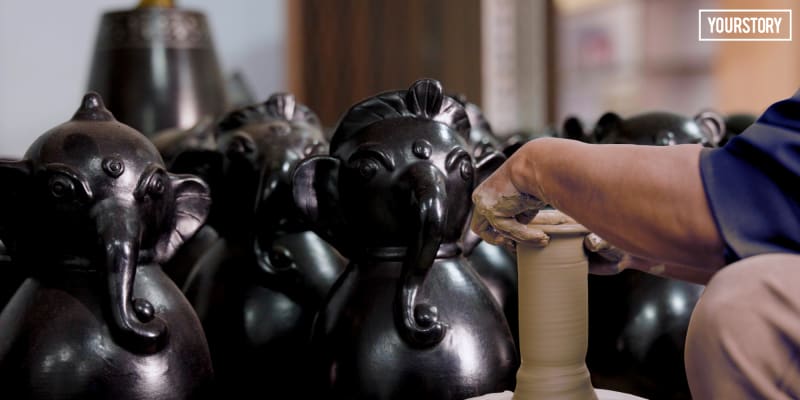
Azamgarh's Black Pottery Gets New Life Through Markets
Ancient black pottery artisans in Azamgarh, India, are thriving again after government support connected their smoke-fired craft to national and international markets. What was once a dying tradition forcing families to migrate for work now sustains communities through their ancestral skills.
For generations, artisans in Azamgarh's Nizamabad region shaped beautiful black pottery by hand, only to watch their craft slowly die from lack of buyers. Many families abandoned their wheels and migrated to cities, carrying skills that seemed to have no place in the modern world.
Today, those same pottery wheels are spinning again. Thanks to Uttar Pradesh's One District One Product program, black pottery artisans like Sohit Kumar Prajapati are reaching customers across India and abroad, transforming a fading tradition into a thriving livelihood.
Black pottery isn't ordinary clay work. Artisans collect local clay from ponds and store it for months, then shape each piece by hand on traditional wheels. After drying and careful refinement, they coat the pottery with natural materials made from local earth and plants, followed by mustard oil for a soft finish.
The magic happens in the firing process. Pieces are placed in closed earthen chambers where controlled smoke from burning dung cakes reacts with the clay surface. Limited oxygen turns the pottery a deep matte black, creating the signature finish that makes each surahi water jug, tea set, or flower pot unmistakably unique.
For years, Prajapati and his fellow artisans had the skill and the finished products. What they lacked was visibility and steady customers. The gap between beautiful craftsmanship and sustainable income forced difficult choices, with many artisans leaving their ancestral villages to find work elsewhere.
The Ripple Effect
Government support through ODOP changed everything by focusing on what artisans needed most: market access. Training programs, improved tools, common facilities, and spots at exhibitions gave black pottery the platforms it had been missing. Artisans who once struggled to find buyers now showcase their work at events across India and internationally.
The program's impact reaches beyond individual families. As black pottery gains recognition, younger generations see a future in their ancestral craft. Villages that were losing artisans to migration are now keeping families together, preserving knowledge passed down through observation and shared tools rather than formal training.
Traditional crafts survive only when markets remain accessible, and Azamgarh's story proves that connection matters as much as skill. The same hands that shape clay and carve designs with fine iron tools now shape sustainable futures for their communities.
The kilns of Nizamabad are burning bright again, transforming local clay into elegant pieces that carry centuries of tradition into modern homes.
Based on reporting by YourStory India
This story was written by BrightWire based on verified news reports.
Spread the positivity!
Share this good news with someone who needs it