Baby Clownfish Shed Stripes Early to Climb Social Ladder
Young clownfish speed up losing their "baby stripes" when adults are watching, revealing a surprising strategy to secure their place in the group. Scientists discovered the fish use their changing appearance to navigate a strict underwater hierarchy.
Baby clownfish are rushing to grow up when surrounded by adults, and it's written all over their stripes.
Scientists at the Okinawa Institute of Science and Technology have discovered that young tomato anemonefish shed their extra white stripe faster when older fish are present. The finding reveals how even tiny fish navigate complex social worlds with surprising sophistication.
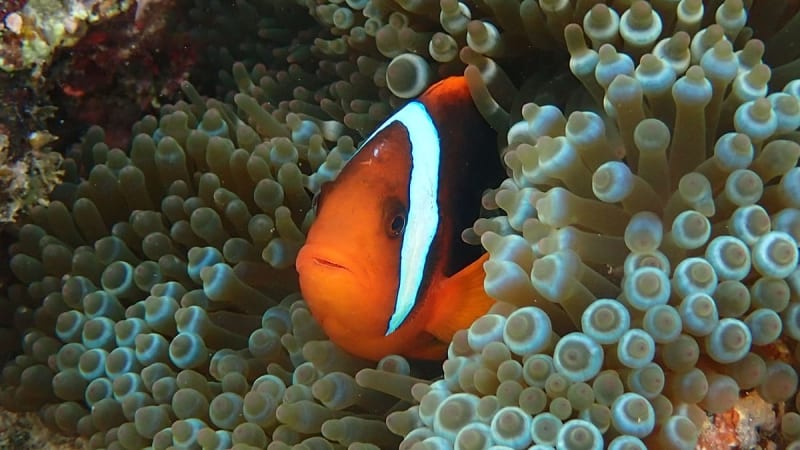
Clownfish live in strict hierarchies within their host anemones, typically allowing just one breeding pair. Younger fish are easily identified by their smaller size and one or two additional white vertical stripes that mark them as subordinates.
Dr. Laurie Mitchell and her team used cameras to observe juveniles in different situations: anemones with adults, empty anemones, and fake anemones. What they found was completely unexpected.
When adults were present, young fish lost their extra stripe much faster than those living alone. At first, this seemed backwards since extra bars signal lower rank.
The researchers believe they've uncovered a clever survival strategy. After hatching, baby clownfish spend time at sea before finding an anemone home. Their "baby stripes" likely help them appear unthreatening when first encountering resident adults, avoiding dangerous confrontations.
But once they've successfully joined a group, these young fish want to cement their position before new rivals arrive. Shedding their stripes early could signal they're established members of the community.
Fish living in unoccupied anemones kept their extra bars much longer, possibly as an "insurance policy" against eviction if invading adults showed up later.
The physical process itself is dramatic. The white stripes are made of special light-reflecting cells called iridophores. Under a microscope, researchers watched these cells die en masse, shrinking and fragmenting before being replaced by the fish's characteristic orange skin.
Why This Inspires
This research shows us that even the smallest creatures navigate their social worlds with remarkable intelligence. Clownfish aren't just passively changing colors as they age. They're actively responding to their environment and making strategic choices about when to look grown up.
The work also demonstrates how combining different scientific approaches can unlock nature's secrets. By bringing together ecology, evolution, genomics, and developmental biology, the team moved beyond simply describing what happens to understanding why it matters.
"This research helps us better understand how animal colour patterns have evolved to be developmentally flexible to suit unpredictable environmental conditions," says Dr. Mitchell.
The findings remind us that the natural world is far more complex and intentional than we often assume, with even tiny fish making calculated decisions about their appearance and social standing.
Nature continues teaching us that survival isn't just about size or strength but about reading the room and knowing when to fit in.
More Images


Based on reporting by Euronews
This story was written by BrightWire based on verified news reports.
Spread the positivity!
Share this good news with someone who needs it