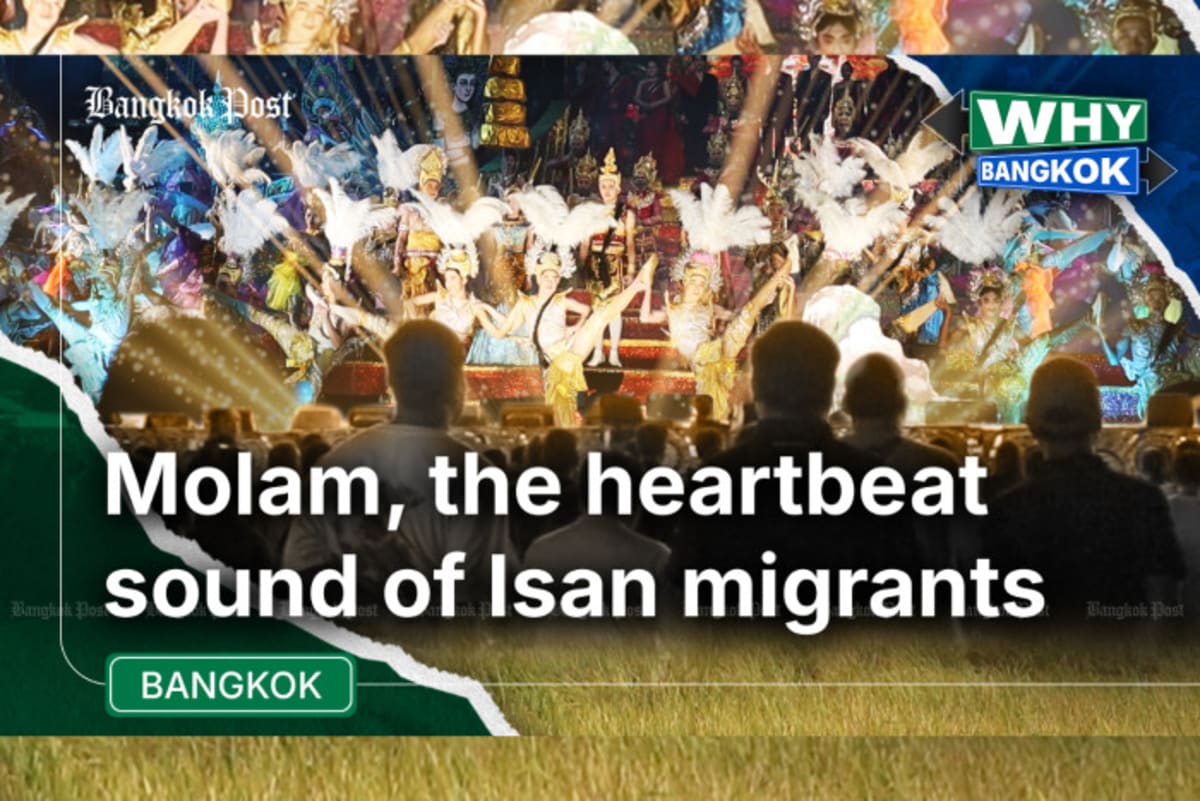
Bangkok Falls for Molam, Isan's Ancient Musical Tradition
A centuries-old folk music tradition from rural northeastern Thailand is captivating Bangkok's urban crowds, transforming from stereotyped "country music" into the city's hottest cultural trend. The migration story behind Molam's rise reveals how millions of Isan workers brought their heartbeat to Thailand's capital.
📺 Watch the full story above
When millions of people from northeastern Thailand moved to Bangkok starting in the 1960s to build the booming city, they packed more than belongings. They brought Molam, the rhythmic folk music that had defined their villages for centuries.
For decades, Bangkok residents dismissed the tradition as unsophisticated rural entertainment. Isan migrants, who now make up the capital's largest migrant community, kept the music alive in their neighborhoods as a lifeline to home.
Today, something remarkable is happening. Molam concerts are selling out across Bangkok, drawing young city dwellers who have never set foot in northeastern Thailand.
The transformation required adaptation. Back in Isan villages, Molam performances at temple fairs run from 9pm until sunrise. In Bangkok, where work schedules rule, shows compress into tight 6pm to midnight windows.
"The band has to adjust the entire script, speeding everything up to engage the audience as quickly as possible," explains Veeraphong Wongsin, founder of Khana Molam Phu Thai. His troupe of 300 performers first came to Bangkok in 2003, when 80% of audiences were Isan migrants seeking a taste of home.
Now those crowds look completely different. Bangkok's middle and upper classes pack venues like the recently closed Studio Lam, which championed young Molam artists for 12 years. DJs spin vintage Molam vinyl at gentrified bars across the city.
The cultural shift reflects a deeper change in how Bangkok sees itself. When the Thai government launched economic development plans in the 1960s, Isan was portrayed as drought-stricken and backward. The region's people came to the capital and took grueling jobs on construction sites, in factories, and behind taxi wheels.
"Acknowledging the stereotypes Bangkok residents held about Isan culture, such reactions were normal when a new and different culture enters a new place," says Arthit Mulsarn, an academic specializing in Isan culture from Yasothon province.
The Ripple Effect
The acceptance of Molam signals something bigger than musical taste. It represents Bangkok embracing the identity of the people who literally built the modern city.
Molam troupes still face challenges. With hundreds of performers traveling for shows, some sleep under trucks or in temporary tents, drawing disapproving stares. But the music keeps evolving, blending with contemporary genres while maintaining its soul.
"There is a saying among Isan people when it comes to food: if it tastes good, we take it all," Arthit explains. That same inventive spirit applies to music, allowing traditional sounds to merge with modern Bangkok without losing their roots.
The tradition that was once dismissed as backward is now going international. What started as village entertainment has become a symbol of cultural pride, carried forward by the same communities once told their heritage wasn't sophisticated enough for the big city.
Bangkok is finally listening to the heartbeat that's been there all along.
More Images



Based on reporting by Bangkok Post
This story was written by BrightWire based on verified news reports.
Spread the positivity!
Share this good news with someone who needs it