Bangkok Launches FoodTech Hub to Feed the World
Thailand is transforming from the "Kitchen of the World" into a global food innovation powerhouse. A new program backed by government and major corporations is helping startups turn scientific breakthroughs into real products that could change how we eat.
Thailand has over 9,000 food factories but almost no deep-tech startups, and a new program called SPACE-F is changing that equation completely.
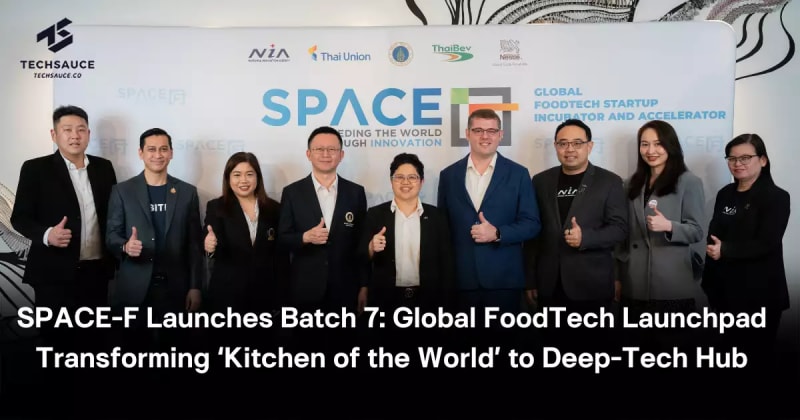
The SPACE-F Batch 7 Roadshow launched in Bangkok this week with a bold mission: transform Thailand from a country that exports ingredients into one that exports game-changing food technology. The program brings together the National Innovation Agency, Thai Union Group, Nestlé, and Mahidol University to give food entrepreneurs something rare—free funding, access to massive factories, and direct connections to global markets.
Dr. Krithpaka Boonfueng from the National Innovation Agency explained the vision simply. "When we nurture a startup, we are nurturing them to grow globally," she said, describing how the program provides grants, mentorship, and international connections without taking equity from founders.
The gap the program fills is huge. Dr. Chris Aurand from Thai Union pointed out the paradox: Thailand has incredible food manufacturing infrastructure but lacked the connections between scientists and business leaders. Now startups can test their innovations in real factories with real production lines, skipping years of expensive trial and error.
The program's "Triple Helix" approach connects three critical pieces. Universities validate the science, government provides funding and special visas, and corporations offer their factories as testing grounds. Previous graduates include companies like Seadling, which is already scaling sustainable seafood solutions.
The Ripple Effect
This model could reshape how developing nations compete in technology. Instead of trying to copy Silicon Valley, Thailand is leveraging its existing strengths—world-class food production and agricultural expertise—to carve out a unique position in the global innovation economy.
Investors are paying attention too. Robert Lomnitz from Xpdite Capital Partners told founders that 2026 demands proof of commercial viability, not just lab results. The SPACE-F model gives startups exactly that proof by letting them demonstrate their technology works at industrial scale before seeking major investment.
The program also tackles a common fear among entrepreneurs: intellectual property theft. Dr. Aurand dismissed concerns bluntly, explaining that large corporations have no incentive to steal ideas when they could simply invest in or acquire promising startups outright.
Bangkok was chosen as the launch location deliberately. The city combines vibrant food culture with massive industrial infrastructure, creating a living laboratory where innovations can be tested in real market conditions. Program leaders want founders thinking globally from day one, using Thailand as a distribution gateway to reach billions of consumers across Asia.
The message to food innovators worldwide is clear: bring your breakthrough to Bangkok, and the factories, funding, and pathways to market are ready and waiting.
More Images

Based on reporting by Regional: thailand innovation (TH)
This story was written by BrightWire based on verified news reports.
Spread the positivity!
Share this good news with someone who needs it