Baseball Pitchers Can Save Elbows Without Losing Speed
University of Waterloo researchers discovered pitchers can reduce elbow injury risk by adjusting throwing mechanics without sacrificing velocity. The breakthrough computer modeling shows arm angle and torso position hold the key to protecting careers.
Professional baseball pitchers might finally have a way to protect their elbows without giving up the speed that makes them elite.
Researchers at the University of Waterloo built a detailed digital skeleton complete with muscles, ligaments, and joints to study what happens during a 93 mph fastball. What they found could change how the sport approaches one of its most devastating injuries.
The ulnar collateral ligament, a small band of tissue on the inside of the elbow, tears frequently in pitchers due to extreme, repetitive motion. Recovery requires Tommy John surgery and months of rehabilitation, with some players never returning to their previous form.
"Our goal isn't to tell pitchers to throw softer," said Cedric Attias, who led the study as a graduate student in mechanical engineering. "It's to help them throw smarter."
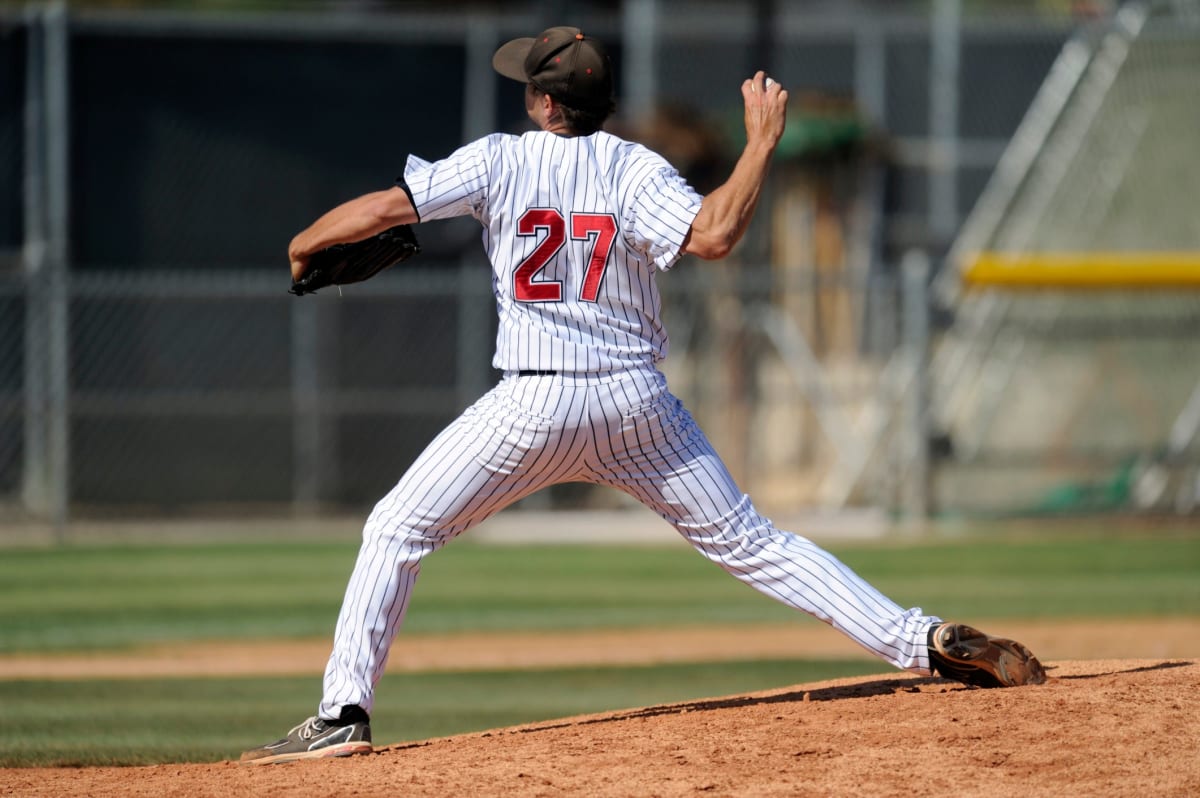
The computer model revealed two main culprits putting the most stress on this vulnerable ligament. A high arm slot angle and tilting the torso away from the pitching arm during delivery create the most strain on the UCL.
The research showed that one pitcher throwing 93 mph with controlled, upright mechanics puts meaningfully less stress on the elbow than someone using extreme technique to reach the same speed. This means pitchers have room to adjust their delivery without losing competitive advantage.
The Ripple Effect
The implications reach far beyond professional baseball. Researchers hope their modeling tool can teach safer pitching mechanics to young players before bad habits form.
"This ligament is especially vulnerable because it's small, has a poor blood supply and wasn't designed for movement this extreme or repetitive," said Attias, who now works as a biomechanist for the Seattle Mariners.
The timing couldn't be better, with Toronto Blue Jays pitcher José Berríos recently undergoing UCL surgery. The study confirms that mechanics matter tremendously in preventing these career-altering injuries.
In a fascinating twist, the simulation showed that the delivery minimizing elbow stress while producing the lowest speeds nearly matches Tyler Rogers' extreme submarine pitching style. At the opposite end, an imaginary 110 mph thrower would look more like a cricket bowler than a baseball pitcher.
The research gives coaches and trainers concrete guidance on protecting their players while maintaining the competitive edge that defines elite pitching.
Based on reporting by Google News - Researchers Find
This story was written by BrightWire based on verified news reports.
Spread the positivity!
Share this good news with someone who needs it