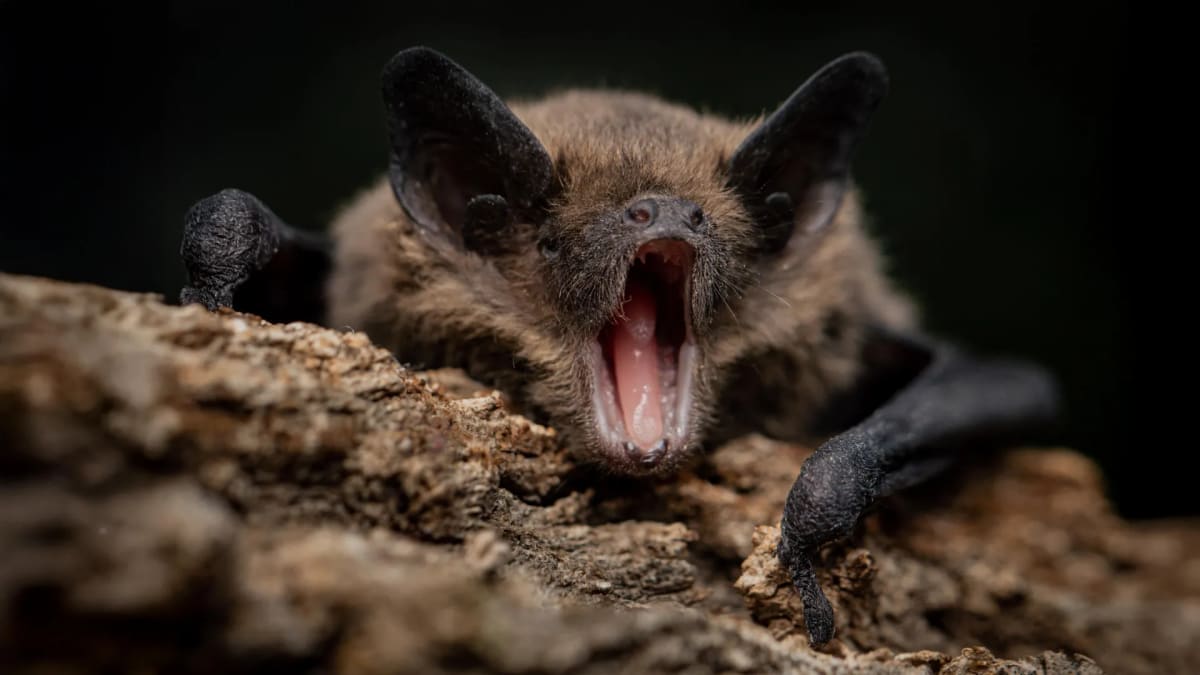
Bats Have 2 Immune Systems Scientists Never Knew Existed
Scientists just discovered that over 500 bat species carry two complete sets of antibody genes instead of one. This never-before-seen mammalian immune system might explain how bats survive deadly viruses without getting sick.
Scientists at Tulane University just solved part of one of nature's greatest mysteries: how bats can carry deadly viruses while barely getting a sniffle themselves.
The answer turns out to be something no researcher expected to find in a mammal. Vesper bats, a family of more than 500 species living on every continent except Antarctica, possess two complete sets of genes for making antibodies instead of the single set found in every other known mammal.
Think of antibodies as your body's security guards, patrolling for threats and calling for backup when they spot danger. Humans, dogs, elephants, whales, every mammal we've ever studied, have one security team. Bats apparently decided two teams were better.
"We've never seen anything like this in a mammal before," said Hannah Frank, associate professor of ecology and evolutionary biology at Tulane University. "This completely changes our understanding of how mammalian immune systems can be organized."
The discovery happened when Frank and her team, working with researchers at Stanford University and the CDC, were studying how bat immune systems work. They found that vesper bats can potentially create a wider variety of antibodies than other mammals, giving them more tools to handle the viruses they encounter.
Scientists have long focused on other parts of bat immunity, but this finding suggests they've been missing a crucial piece of the puzzle. The dual system could help explain why bats are such successful animals, thriving in diverse environments worldwide.
Why This Inspires
This discovery isn't just fascinating science. It opens entirely new doors for understanding how different immune systems can work.
Bats play vital roles as pollinators, seed spreaders, and natural pest controllers. Learning how they coexist peacefully with viruses could eventually help scientists better understand immune responses across species and potentially reduce disease spillover risks.
"We've learned an enormous amount about immunity by studying humans and laboratory mice," Frank said. "But the natural world is far more varied than that. Every time we study a species that has evolved differently, we have the opportunity to discover something entirely new."
The finding reminds us that nature still holds countless secrets waiting to be discovered. Sometimes the answers to our biggest questions come from the most unexpected places, like the tiny flying mammals swooping through the twilight sky.
Every new species we study closely teaches us something we never imagined possible.
Based on reporting by Science Daily
This story was written by BrightWire based on verified news reports.
Spread the positivity!
Share this good news with someone who needs it