Battery Storage System Passes Extreme Safety Test
A massive energy storage system survived an intentional explosion test designed to simulate worst-case battery failures. The breakthrough validates new safety standards that could accelerate clean energy adoption worldwide.
When engineers deliberately triggered a battery explosion inside a shipping container-sized energy storage system, they weren't trying to break it. They were proving it couldn't be broken.
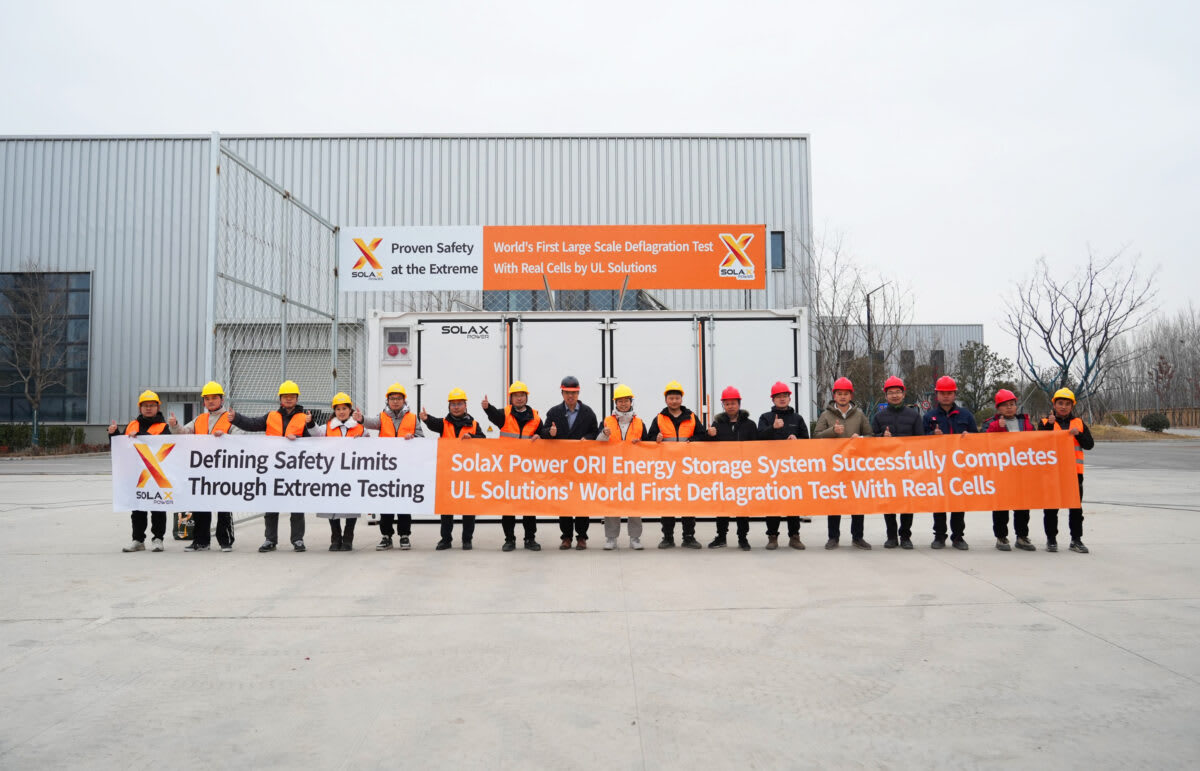
SolaX Power's ORI 5 MWh energy storage system just became the first in the world to complete a full-scale deflagration test under UL's new 2025 safety framework. UL Solutions, the global safety certification leader, designed and monitored every aspect of the extreme trial.
The test pushed boundaries intentionally. Engineers forced real lithium-ion battery cells into thermal runaway, the chain reaction that causes battery fires. They kept emergency vents closed to trap flammable gases inside. Then they watched as pressure built and the inevitable explosion occurred.
The results exceeded expectations. Container doors stayed shut despite the blast. No structural damage occurred. Nothing flew out that could harm nearby workers or equipment. The pressure-relief systems activated exactly as designed, protecting everything around them.
This wasn't just checking boxes on a compliance form. Large-scale battery storage systems are essential for renewable energy grids, storing solar and wind power for use when the sun sets and wind dies down. But safety concerns have slowed their deployment near homes and businesses.
The test location and trigger placement made success even harder to achieve. UL positioned the ignition point where pressure waves and flames would intensify most dramatically, creating the toughest possible challenge for the container's structural integrity.
The Ripple Effect
This validation arrives at a critical moment for clean energy infrastructure. Energy storage systems are multiplying rapidly as countries race toward carbon neutrality, but each installation near populated areas faces community safety questions.
By proving these systems can contain even catastrophic failures, SolaX and UL have created a reproducible testing standard. Other manufacturers can now follow the same rigorous protocol, building public confidence in the technology that makes renewable energy practical 24/7.
The company's approach reflects a shift in how the energy storage industry thinks about safety. Rather than treating testing as a hurdle to clear before shipping products, SolaX views extreme validation as protection for customers who live and work near these systems for decades.
Clean energy's future depends on storage systems people trust in their neighborhoods. This test proved that trust can be earned through engineering, not just promises.
More Images
Based on reporting by PV Magazine
This story was written by BrightWire based on verified news reports.
Spread the positivity!
Share this good news with someone who needs it