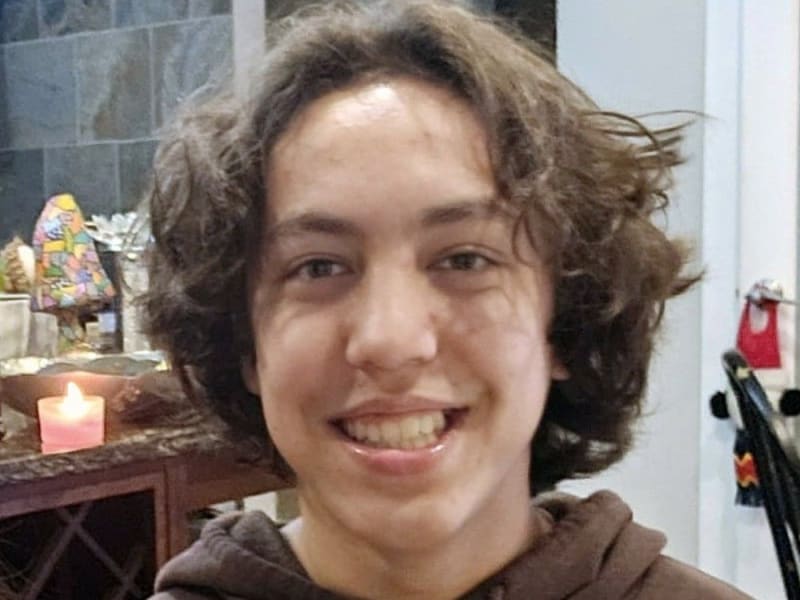
B.C. Teen First Person Ever Cured Through Gene Editing
Ty Sperle, 18, became the first person in the world cured of chronic granulomatous disease through groundbreaking gene editing treatment. His success opens the door for curing countless other rare genetic diseases affecting children everywhere.
For 13 years, Ty Sperle lived with the constant fear that a simple infection could kill him. Today, the 18-year-old UBC student is the first person in the world cured of chronic granulomatous disease through gene editing.
Sperle was just five when doctors diagnosed him with CGD, a rare genetic condition that cripples the immune system. His white blood cells couldn't produce the chemical needed to fight bacteria, leaving him vulnerable to life-threatening infections.
"You can think of it like there was a big hole in his protective armour," said Dr. Stuart Turvey, Sperle's pediatric immunologist at B.C. Children's Hospital. Despite daily antibiotics and anti-fungal medications, Sperle was hospitalized multiple times, including a severe skull bone infection in Grade 6 that took two years to control.
The standard treatment would have been a bone marrow transplant, but doctors couldn't find a suitable match. That's when Turvey saw an opportunity.
When American company Prime Medicine announced a clinical trial in Montreal, Turvey immediately thought of Sperle. The treatment involved extracting blood stem cells, using gene editing to correct the mutation causing CGD, then returning the corrected cells to his body.
"I was kind of nervous about it," Sperle admitted. But he trusted Turvey, who had been his doctor since childhood. "His confidence in the cure helped me."
After several weeks in isolation in Montreal, the treatment worked. Sperle's white blood cells can now produce the infection-fighting chemical his body always lacked. The daily pills are gone. The fear is gone.
Why This Inspires
Sperle's cure represents more than one teenager's victory over disease. About one in three patients at B.C. Children's Hospital have a rare genetic disease, and gene editing could potentially help many of them.
"No one jurisdiction can do it alone," Turvey said. "This work relies on collaboration." The success came from teams across Canada and the United States working together, sharing knowledge and resources.
B.C. Health Minister Josie Osborne called it proof of "the power of public health care, research, and global collaboration." What seemed like science fiction just years ago is now saving real lives.
Sperle has returned to campus at UBC Okanagan, where he's majoring in science. Being "Participant 1" in the New England Journal of Medicine feels a little surreal, he says, but mostly he just feels normal.
And for a kid who spent his entire childhood unable to fight off infections, normal is extraordinary.
More Images




Based on reporting by Google News - Disease Cure
This story was written by BrightWire based on verified news reports.
Spread the positivity!
Share this good news with someone who needs it