B.C.'s First K-12 Class Taught Residential School History
The Class of 2026 will be the first B.C. graduates to learn about residential schools throughout their entire education. Orange Shirt Day founder Phyllis Webstad is inviting all 2026 graduates to celebrate this milestone at BC Place this April.
For the first time in Canadian history, an entire generation of students will graduate having learned about residential schools from kindergarten through Grade 12.
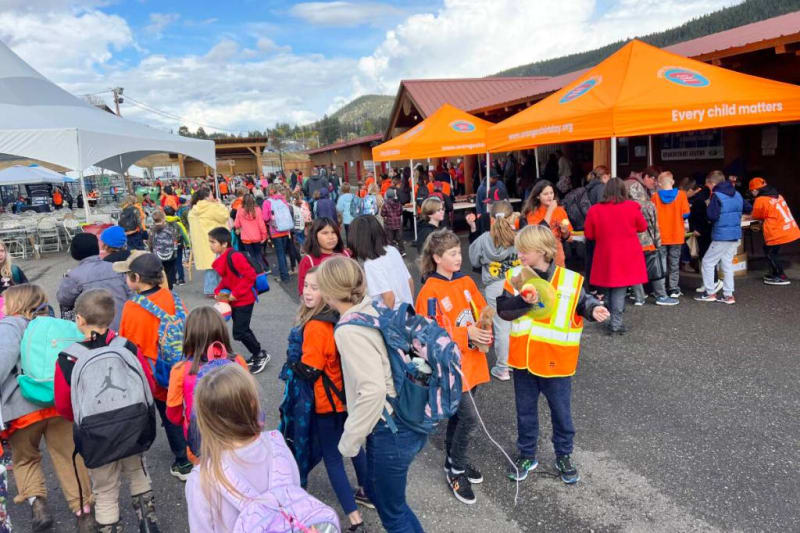
British Columbia's 2026 graduates experienced something no previous class did. They spent their entire school journey learning about the residential school system and Orange Shirt Day, topics that were largely absent from curricula just over a decade ago.
Phyllis Webstad, a St. Joseph's Mission residential school survivor and founder of the Orange Shirt Day movement, is celebrating this turning point. On April 13, she's hosting a historic event at BC Place in Vancouver for all Grade 12 students across the province.
"I'm calling it a stepping stone on the path to truth and reconciliation in Canada," Webstad said. "Students are leaving the school system having learned the history of what happened to us at residential school and they have empathy for what we went through."
The movement started in 2013 when Webstad first shared her story in Williams Lake. Her grandmother had bought her a shiny orange shirt for her first day at St. Joseph's Mission, but it was taken away when she arrived. That simple, painful memory sparked a national movement.
St. Joseph's Mission operated near Williams Lake from 1891 to 1981. Thousands of First Nations children were forced to attend the school, part of a system designed to erase Indigenous culture and identity.
What began as a single day of recognition in Williams Lake has grown into a nationally recognized observance every September 30. Webstad has since written children's books and created educational materials that help teachers across Canada share this history with their students.
The April celebration will include a career and education expo, an artisan marketplace, and an afternoon graduation ceremony. Organizers plan to display the Memorial Cloth, a 60-metre piece bearing the names of thousands of children who died in the residential school system.
Why This Inspires
This milestone represents more than just curriculum change. It's about raising what Webstad calls "historically literate citizens" who understand truth and can recognize ongoing racism.
Webstad acknowledges that some students face confusion when what they learn in school conflicts with what they hear at home. But she's hopeful they'll make their own informed decisions about truth and justice.
"I believe it's the same when the students graduate and go out into the world that they will bring about societal change," Webstad said. She can't fully imagine what positive changes these educated graduates will create, but she's optimistic about their potential impact.
Educators across Canada have thanked Webstad for creating resources that make teaching this difficult history possible. The conversation has shifted dramatically since 2013, though she notes there's still work to do against denialism and racism.
Before she dies, Webstad hopes to witness a generation of truly historically literate citizens shaping Canadian society with empathy and understanding.
Based on reporting by Google News - Education Milestone
This story was written by BrightWire based on verified news reports.
Spread the positivity!
Share this good news with someone who needs it