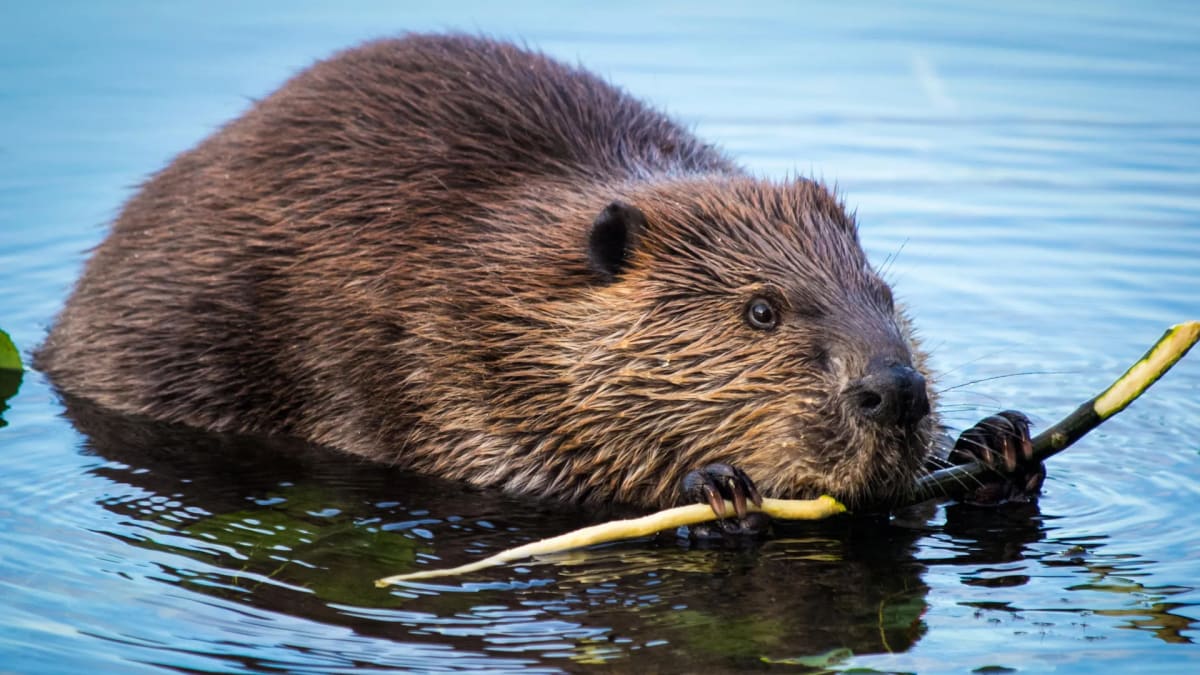
Beavers Store 1,194 Tonnes of Carbon in Swiss Wetlands
A 13-year study in Switzerland reveals that beaver-built wetlands store up to ten times more carbon than similar areas without beavers. These furry engineers could offset up to 1.8% of Switzerland's annual carbon emissions just by doing what they do best.
Nature's most industrious rodents are turning out to be unexpected climate heroes, and the numbers are staggering.
A groundbreaking study led by the University of Birmingham tracked a single beaver-engineered wetland in northern Switzerland for 13 years. The results show these dam-building animals transformed an ordinary stream into a carbon-storing powerhouse that locked away 1,194 tonnes of carbon—equivalent to 10.1 tonnes of CO2 per hectare each year.
That's up to ten times more carbon storage than similar areas without beavers.
Dr. Joshua Larsen, the study's lead author, explains how it works. "By slowing water, trapping sediments, and expanding wetlands, they turn streams into powerful carbon sinks," he said. The dams flood nearby land, redirect groundwater, and capture both organic and inorganic materials that would otherwise flow downstream.
The research team combined hydrological measurements, chemical testing, and greenhouse gas monitoring to create the most complete carbon budget ever developed for a beaver-influenced landscape in Europe. They discovered that sediments in these wetlands contained up to 14 times more inorganic carbon and eight times more organic carbon than nearby forest soils.
Even more impressive: deadwood from riverside forests made up nearly half of the long-term stored carbon. These reserves can remain locked in place for decades as long as the dams stay intact.
Researchers worried that methane emissions—a common concern with wetlands—might offset the benefits. But methane accounted for less than 0.1% of the total carbon budget. During summer months, when water levels dropped and exposed sediment, the wetland briefly released more CO2 than it captured, but across the full year, carbon storage dominated.
The Ripple Effect
The implications extend far beyond one Swiss stream. When researchers scaled their findings to all suitable beaver habitat across Switzerland, the numbers became even more exciting.
If beavers recolonized every appropriate floodplain area in the country, these wetlands could offset between 1.2% and 1.8% of Switzerland's entire annual carbon emissions. No technology required. No ongoing costs. Just beavers doing what evolution designed them to do.
Dr. Lukas Hallberg from Birmingham highlights the speed of transformation. "Within just over a decade, the system we studied had already transformed into a long-term carbon sink, far exceeding what we would expect from an unmanaged stream corridor," he said.
This matters because beaver populations are rebounding across Europe after years of conservation efforts. As they reclaim their historic ranges, they're quietly reshaping how carbon moves through landscapes, one dam at a time.
The study, published in Communications Earth & Environment, represents the first research to measure both CO2 released and captured by beaver activity—giving policymakers solid data for incorporating beaver restoration into climate strategies.
Sometimes the best climate solutions have been swimming in our rivers all along.
Based on reporting by Science Daily
This story was written by BrightWire based on verified news reports.
Spread the positivity!
Share this good news with someone who needs it