Beetles and Plants Strike a Deal That Saves Both
Scientists at Kobe University discovered that Japanese red elder plants drop their fruits not to punish beetle pollinators, but to protect both species in an elegant natural compromise. This finding rewrites what we know about how cooperation works in nature.
A fallen fruit looks like failure, but Japanese scientists just proved it can be the secret to survival for two species at once.
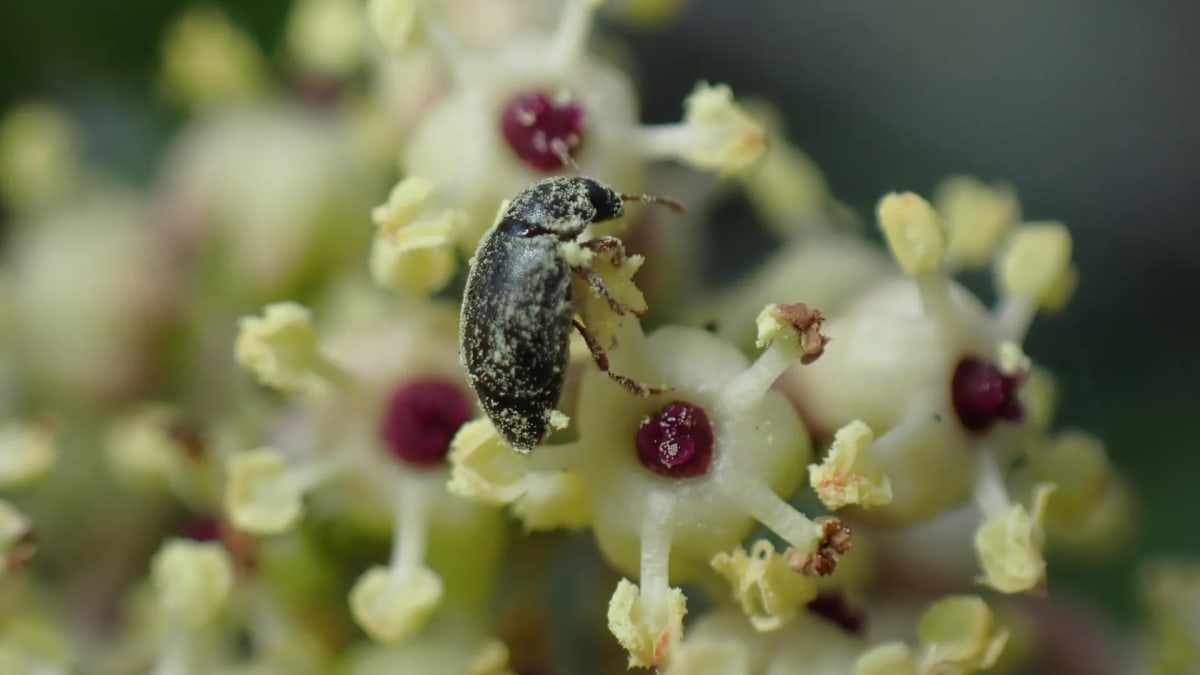
Kobe University researchers uncovered an unusual partnership between Japanese red elder plants and tiny Heterhelus beetles. The beetles pollinate the flowers while laying eggs inside the developing fruit, creating what seems like a problem for both sides.
Here's where nature gets clever. The plant drops nearly all fruits containing beetle larvae, which sounds like punishment. But the larvae don't die when the fruit falls.
Instead, they escape into the soil and continue growing to maturity. The plant saves resources by aborting infested fruits, while the beetle babies survive anyway.
Graduate student Suzu Kawashima spent months tracking this relationship through careful field observations, pollination experiments, and following the insects even after fruit drop. "Many studies stop at one of these steps, simply because doing all of them takes time, patience and logistical commitment," she explains.
The team's experiments confirmed that Japanese red elder depends entirely on these beetles for pollination. Without them, the plants can't reproduce successfully.
This challenges how scientists have understood similar partnerships in nature. Classic examples like fig wasps and yucca moths show plants dropping infected fruits to kill excess larvae and control insect populations.
Botanist Kenji Suetsugu started questioning this explanation after watching swarms of beetles on elder flowers and seeing massive fruit drop. "With such seemingly great losses to both sides, I wondered whether this was really punishment," he says.
The Bright Side
The research reveals that cooperation in nature doesn't always look successful on the surface. What appears wasteful actually maintains a stable relationship between species.
The balance varies across different locations, suggesting environmental conditions shape how the partnership works. Future studies will map where beetles dominate pollination versus where other insects take over.
For Suetsugu, the discovery reinforces an important lesson about nature. "We are only beginning to appreciate how much cooperation in nature is maintained by mechanisms that look, at first glance, like failure."
A fallen fruit isn't always a loss; sometimes it's nature's way of making sure everyone wins.
Based on reporting by Science Daily
This story was written by BrightWire based on verified news reports.
Spread the positivity!
Share this good news with someone who needs it