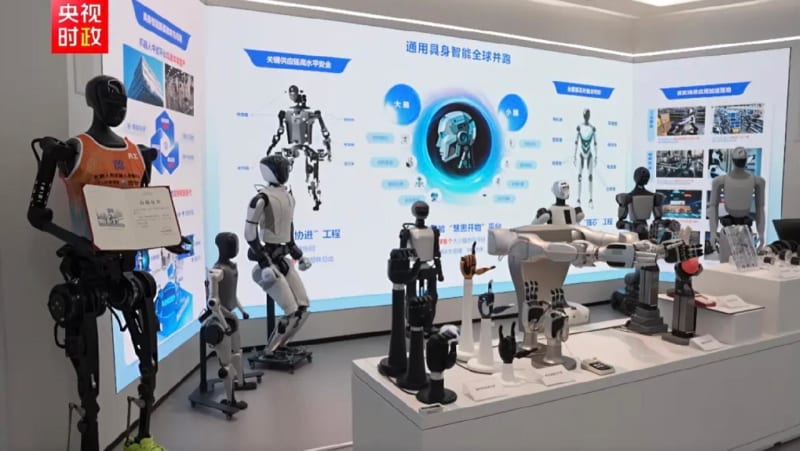
Beijing Robotics Hub Reaches 18,000 Global Robot Shipments
China's robotics industry exploded in 2025, shipping 18,000 humanoid robots worldwide—a 508% jump from the previous year. Inside a Beijing innovation park, robots are now threading needles, running marathons, and transforming how we think about AI's future.
A robotic hand carefully threads a needle with surprising dexterity, while across the room, a humanoid robot celebrates winning a marathon. Welcome to Beijing's National Information Technology Application Innovation Park, where the future of robotics is taking shape right now.
The sprawling complex now houses over 1,000 technology companies focused on artificial intelligence, robotics, and advanced hardware. What started as a domestic tech hub has become a global powerhouse, with Chinese robotics firms capturing the lion's share of worldwide humanoid robot sales in 2025.
The numbers tell an incredible story. Global humanoid robot shipments jumped from about 3,000 units in 2024 to 18,000 in 2025. China alone now boasts more than 140 domestic humanoid robot manufacturers producing over 330 different models.
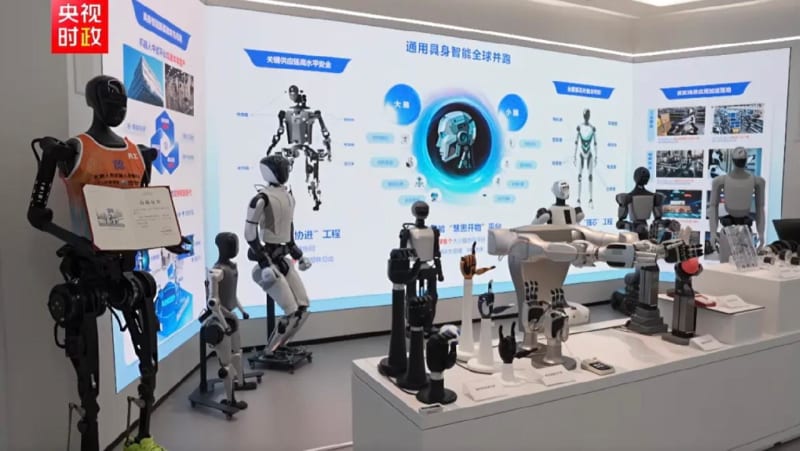
At the park's exhibition center, visitors can watch the Tiangong Ultra robot that made history by completing a half marathon in 2 hours, 40 minutes, and 42 seconds. The achievement showcased not just endurance but the kind of mobility engineers once thought was years away.
Other robots demonstrate equally impressive skills. The Galbot G1 uses spatial intelligence to understand 3D environments and break complex tasks into manageable steps. The L7 handles logistics work like sorting and scanning, while also managing assembly tasks in manufacturing plants.
Perhaps most remarkable is Linkerbot's dexterous hand, which performs delicate tasks like needle threading. With 42 degrees of freedom compared to a human hand's 26, it represents a leap in fine motor control. The company now produces around 1,000 units monthly and claims 80% of the global market share in dexterous robotic hands.
The Ripple Effect
This robotics boom extends far beyond impressive demos. These technologies are solving real workplace challenges in warehouses, factories, and logistics centers. The open-source approach used by companies like the Beijing Innovation Center of Humanoid Robots means smaller firms and researchers worldwide can build on these advances, accelerating innovation globally.
As manufacturing and logistics industries face labor shortages, these robots offer solutions that keep supply chains moving and businesses operating. Cities like Beijing, Shanghai, and Shenzhen are becoming global centers for robotics talent, attracting engineers and researchers from around the world.
The collaborative approach between government policy support and private innovation is creating an ecosystem where ideas move quickly from lab to market. With China's 15th Five-Year Plan prioritizing humanoid robotics development through 2030, investment and innovation show no signs of slowing.
What once seemed like science fiction is becoming everyday reality, one threaded needle and marathon finish at a time.
More Images
Based on reporting by Google: robotics innovation
This story was written by BrightWire based on verified news reports.
Spread the positivity!
Share this good news with someone who needs it