Beijing Robots Run Half Marathon Solo in 2026 Upgrade
Humanoid robots are now running half marathons on their own, navigating city streets without human help in Beijing's upgraded 2026 race. This year's competition adds autonomous navigation and disaster rescue challenges, pushing robot technology toward real-world applications.
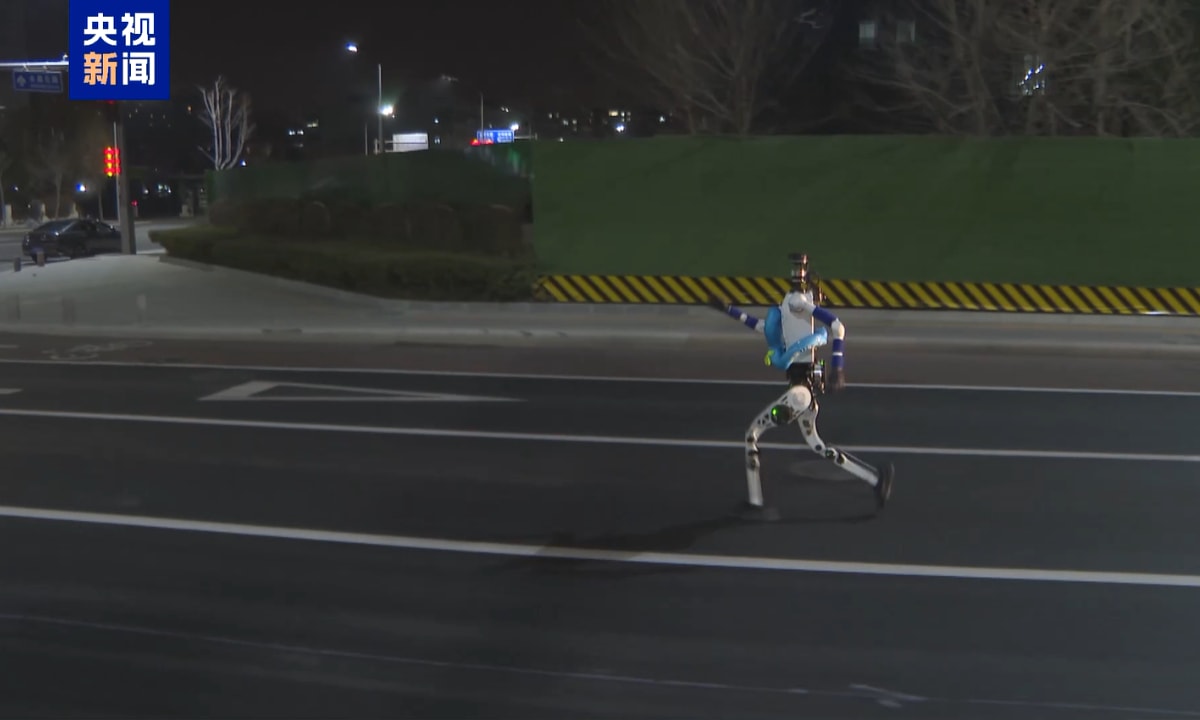
Imagine robots running a half marathon through city streets, making split-second decisions about traffic, slopes, and turns without any human telling them where to go. That's exactly what happened this weekend in Beijing, where over 20 teams tested their humanoid robots for an upcoming race that's rewriting the rules of robotics.
Beijing E-Town hosted the first practice run for its 2026 Humanoid Robot Half Marathon, scheduled for April 19. The event marks a major upgrade from last year's world-first competition, where technicians ran alongside robots to guide them.
This year, robots will navigate entirely on their own using electronic maps. They'll share the same course as human runners but stay in separate lanes divided by guardrails, tackling urban slopes, undulating roads, and ecological park paths without any remote control.
The upgraded course tests what matters most for robots entering the real world: environmental perception, autonomous navigation, real-time decision making, and endurance. One standout participant was "Tiangong," a humanoid robot whose predecessors won last year's championship.
The competition isn't just about racing anymore. A new sub-event called the Robot "Baturu" Challenge simulates emergency rescue scenarios for natural disasters, featuring 17 tasks across four categories testing everything from autonomous decisions to sustained operations in complex environments.
The Ripple Effect
Beijing E-Town has become China's robotics powerhouse, home to nearly 300 robotics companies with an industrial chain exceeding $1.39 billion. The area is building what officials call a world-class hub for embodied-intelligence robotics, and 2026 is seen as the pivotal year for moving humanoid robots from labs into everyday life.
Last year's momentum was impressive. The 2025 World Humanoid Robot Games drew 280 top teams from 16 countries competing in 487 matches across 26 events.
Beijing's government is backing this transformation with support for technological breakthroughs, product development, and real-world applications. Deputy Director Jiang Hongchao of the Beijing Municipal Bureau of Economy and Information Technology emphasized the city's commitment to strengthening the entire robotics ecosystem.
The robots are already venturing beyond race courses. Humanoid robots have recently appeared as police officers on Shenzhen streets and performers at cultural events following the Chinese Spring Festival, showing how quickly this technology is moving from competition to everyday assistance.
As these mechanical athletes prepare to run independently through Beijing's streets next month, they're not just racing for medals but proving that robots can handle the unpredictable challenges of our real world.
Based on reporting by Google: robotics innovation
This story was written by BrightWire based on verified news reports.
Spread the positivity!
Share this good news with someone who needs it