Belgian Town's 'Wedding Flight' Saves Europe's Native Bee
Each summer, 1,000 queen bees take flight over a small Belgian town in an urgent mission to save Europe's endangered dark bee. The annual gathering has become a lifeline for the native species nearly wiped out by commercial breeding.
Every summer in Chimay, Belgium, 1,000 virgin queen bees take to the sky for what beekeepers call the "wedding flight," and it might just save a species.
High above the fields, these queens mate with up to 20 males in midair, storing enough genetic material to build thriving colonies for years. Within days, beekeepers from across Europe arrive to collect their newly fertilized queens and transport them home, sometimes traveling over 300 kilometers.
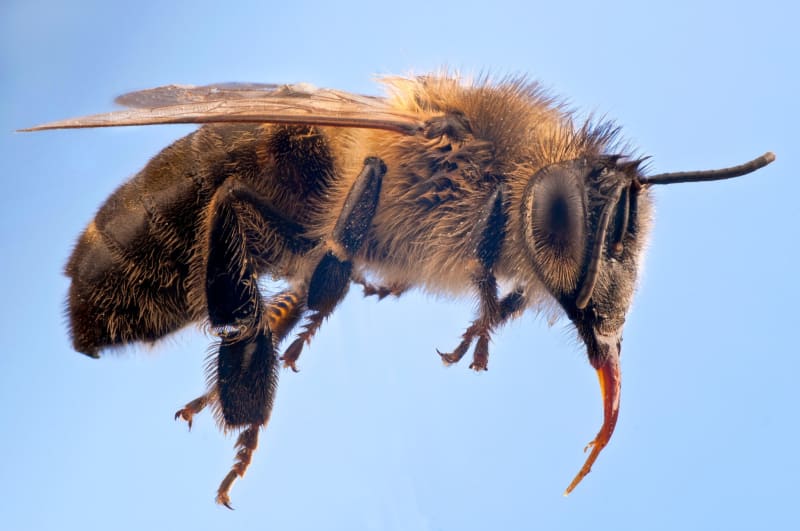
Their mission is urgent. These bees belong to the European dark bee, the native honeybee that evolved alongside northern Europe's flowers and forests for thousands of years. By the mid-twentieth century, beekeepers began importing hybrid bees bred for higher honey yields, and those hybrids interbred with native populations, causing what many describe as irreparable genetic damage.
Dark bees nearly vanished. They were even thought extinct in the United Kingdom until small populations were rediscovered just over a decade ago.
The annual Chimay gathering, launched in 2000, has become one of the species' most important lifelines. At its heart is Belgian beekeeper Hubert Guerriat, who has worked with dark bees for four decades and founded the organization Mellifica to unite conservation efforts across Europe.
Guerriat established a protected zone around Chimay where only dark bees are permitted across 30,000 hectares. The difference between dark bees and hybrids, he says, is like comparing a Scottish highland cow to an intensive dairy cow.
Local beekeeper Isabelle Noé manages over 100 hives painted in different colors to help bees find their way home. She produces about a tonne of honey annually, selling it alongside products like lip balm and candles.
Dark bees produce less honey than hybrids, but they require fewer winter feedings and suffer fewer losses. Their smaller colonies and conservative foraging make them naturally resilient to cold, humidity, and climate swings. Some populations even survived the last ice age in France.
That resilience proved valuable during the rainy summer of 2024, when dark bee colonies weathered conditions that devastated hybrid honey yields. With U.S. beekeepers reporting losses of 60 percent of their colonies in recent years due to parasites and disease, locally adapted bees may offer crucial advantages.
The Ripple Effect
The impact reaches beyond honey production. The western honeybee is the world's most important single pollinator species, yet growing evidence suggests non-native strains can disrupt wild pollinator populations and ecosystem balance.
"Nature is like a high-precision watch," Guerriat explains. "You can't swap in one bee for another. Pollinators are not interchangeable, just like you can't put random parts inside a Swiss watch."
Conservationists are now restoring wild dark bee populations in forests using log hives that mimic natural tree cavities. Protecting the species contributes directly to forest ecosystem resilience, according to conservation biologist Estelle Doumont at the University of Liège.
As climate change and invasive species reshape agriculture, Chimay's wedding flight represents a shift toward working with local biodiversity rather than against it, one queen bee at a time.
Based on reporting by Optimist Daily
This story was written by BrightWire based on verified news reports.
Spread the positivity!
Share this good news with someone who needs it