Bengal's Twice-Fruiting Mango Boosts Farmers Year-Round
A rare Bengal mango variety that fruits twice a year is helping farmers earn premium prices during off-season months when other mangoes disappear from markets. The Dofala mango, preserved by dedicated growers, now connects rural orchards to buyers across India.
Imagine a mango tree that breaks all the rules, fruiting not once but twice a year, delivering harvest when markets are empty and prices soar. In West Bengal, farmers are earning what they call "gold mine" returns from the Dofala mango, a rare variety that refuses to follow summer's calendar.
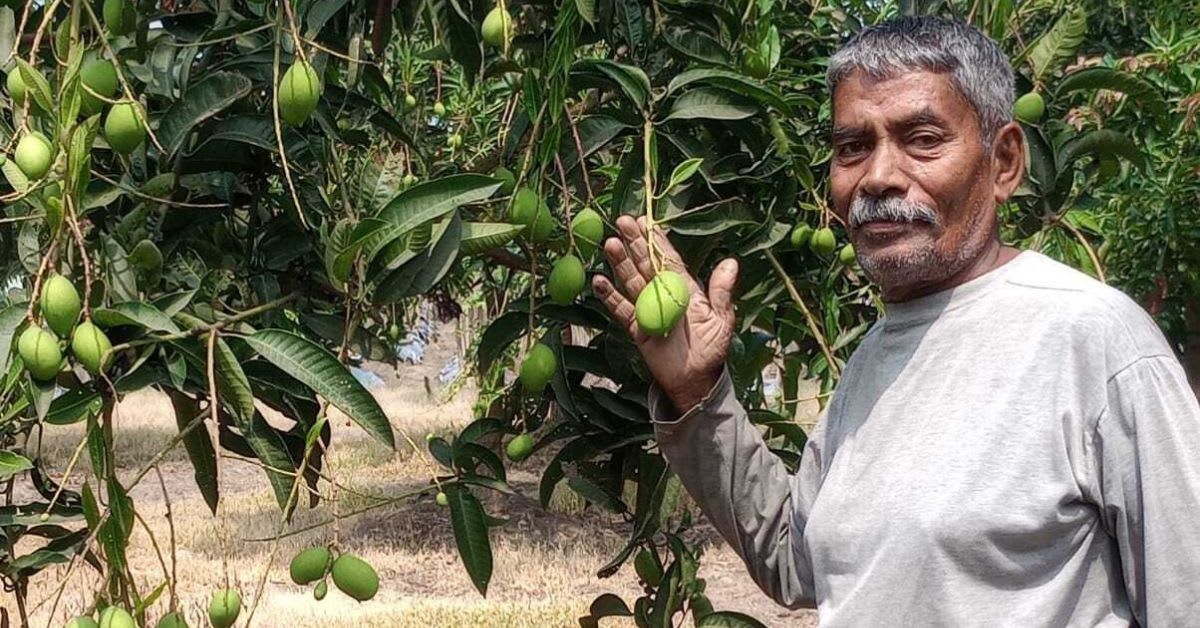
At 70, Anukul Mondal tends his nursery in Nadia like a guardian of living history. He grows four Dofala varieties with poetic names: Bhastara, Shuktara, Sohini, and Nayantara. "The demand is growing. It's our orchard's gift to mango lovers across India," he says, shipping orders he receives through YouTube videos and mobile calls.
The Dofala's story reaches back to Partition, when families fleeing eastern Bengal carried more than belongings. They brought their love for mangoes, preserving hundreds of varieties that might otherwise have vanished. Among them was the Dofala, whose name means "twice-bearing."
In Murshidabad's Raiganj, 55-year-old Abdul Manan Mondol walks his orchard among trees bearing names like Kalibhog and Krishnakali. But his Dofala trees hold special meaning. "We never thought mangoes could grow in October," he says. "Even when rains spoil other crops, these mangoes remind us that nature has its own rhythm."
The trees flower twice yearly: first from December to February, then again in August and September. While the second flush produces fewer fruits, the October-November harvest arrives during festival season when demand peaks.
In Hooghly, grower Haldar tends 3.5 bighas producing 75,000 kilograms of papaya annually, but he lights up when discussing his six Dofala varieties. His Surer Dofala won recognition at the 2011 National Mango Fest in Thiruvananthapuram. "The Chief Minister tasted it," he recalls with pride.
The Ripple Effect
Beyond premium prices, Dofala varieties preserve biodiversity in West Bengal, where over 200 indigenous mango types still grow despite modern agriculture's push toward monoculture. Research from Bidhan Chandra Krishi Viswavidyalaya shows these off-season bearers bridge critical supply gaps, supporting both household needs and local markets across Murshidabad, Nadia, North 24 Parganas, Hooghly, and Malda districts.
The mangoes weave into Bengali culture too. Their tangier, fibrous flesh stars in tok dal, where mango enriches lentils, and in aam chutney and amsatta (mango leather), preserving summer's flavor for winter months.
Digital platforms now connect these heritage orchards with distant buyers, turning local treasures into national delights. As more farmers discover Dofala's reliability and profitability, they're planting hope that grows twice a year.
More Images
%2Fenglish-betterindia%2Fmedia%2Fmedia_files%2F2026%2F06%2F13%2Fdofala-mangoes-2026-06-13-17-00-37.jpg)

%2Ffilters%3Aformat(webp)%2Fenglish-betterindia%2Fmedia%2Fmedia_files%2F2026%2F06%2F13%2Fa-dofala-mango-variety-2026-06-13-17-01-15.jpg)
Based on reporting by The Better India
This story was written by BrightWire based on verified news reports.
Spread the positivity!
Share this good news with someone who needs it