Bengaluru Museum Opens Interactive Exhibit You Can Touch
A new permanent exhibit in Bengaluru lets visitors play a 19th-century version of Snakes and Ladders while exploring 2,000 years of art history. Ancient Buddhist sculptures share space with modern abstract paintings in an exhibit designed for hands-on discovery.
Visitors to Bengaluru's Museum of Art and Photography can now sit down and play a board game that's nearly 150 years old.
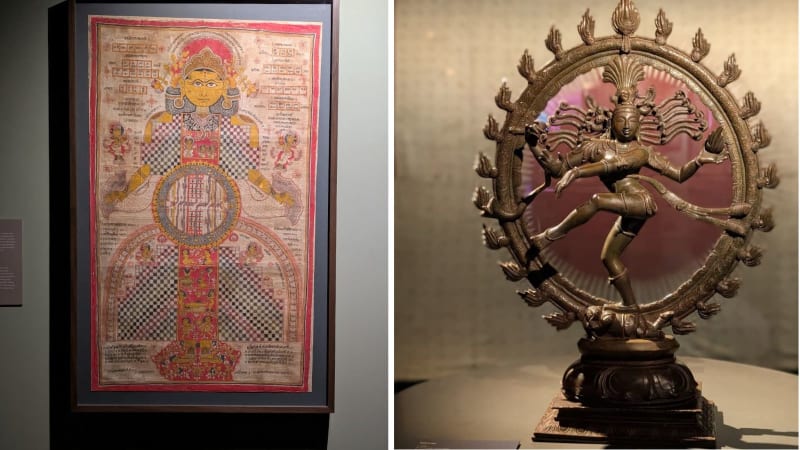
The museum opened its second permanent exhibit called "Beneath the Turning Sky" this past Saturday. Instead of just looking at art behind glass, guests can touch a replica of an 1800s Snakes and Ladders game originally played by Jains during holy days.
The game looks different from the modern version. It focuses on virtues and sins, teaching players about consequences in the afterlife according to Jain beliefs.
But the playable board game is just one part of this sprawling new collection. The exhibit brings together art spanning from the second century AD to the present day, all exploring what it means to be human.
A Buddhist Bodhisattva head carved in Mathura nearly 2,000 years ago sits near abstract paintings by celebrated modern artists S.H. Raza and V.S. Gaitonde. An Indonesian "mata hari" textile hangs behind a bronze Nataraja sculpture, showing how trade connected cultures across centuries.
Many pieces needed serious restoration work before going on display. The museum's own conservation lab repaired a 20th-century wooden sculpture of the love deities Rathi and Kama, made in North Karnataka's Kinnal style. Teams also restored a 17th-century painting depicting Sohni and Mahiwal, tragic lovers from Punjabi and Sindhi folklore.
The Ripple Effect
The museum designed the exhibit around interaction and discovery. Beyond the board game, visitors can explore an engagement hub featuring a climate library and a magnetic wall for creating interactive art.
Written prompts invite guests to respond with their own thoughts, turning the gallery into a conversation rather than a lecture. A digital interface lets people read through a "karni marni" manuscript showing Jain perspectives on sin and virtue.
The exhibit divides its collection into sections exploring wonder, conquest, exploration, and the relationship between past and future. This approach helps visitors connect ancient wisdom with modern questions.
Admission costs a standard museum ticket on most days, but the museum opens all exhibits for free every Tuesday. The new gallery sits on the museum's fourth floor alongside other permanent collections.
By making ancient art touchable and relatable, the museum proves that history doesn't have to feel distant or boring.
Based on reporting by Indian Express
This story was written by BrightWire based on verified news reports.
Spread the positivity!
Share this good news with someone who needs it