Bengaluru Startup Makes Solar Panels That Roll Up Like Paper
A new company in India is turning solar energy flexible, literally. Their bendable solar panels could soon power drones, satellites, and curved surfaces where traditional panels can't go.
Imagine a solar panel you could unroll like a yoga mat and stick onto a curved roof, a car, or even a backpack.
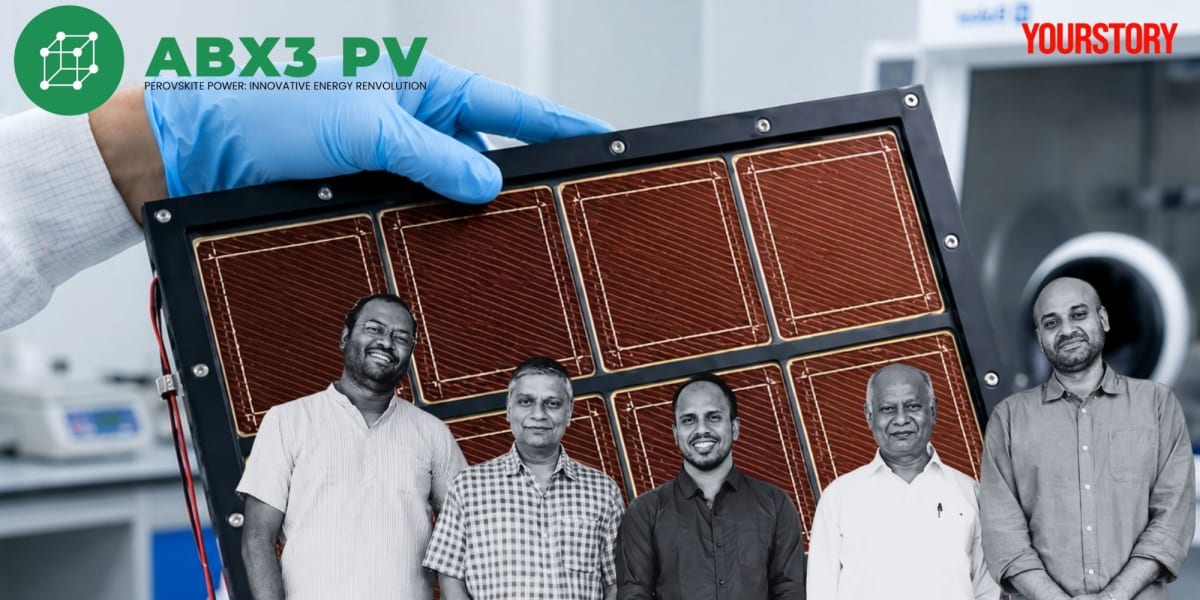
That's the vision driving ABX3 PV, a Bengaluru startup founded in 2023 at the Indian Institute of Science. The company is developing solar panels using perovskite, a material that changes the entire game for where and how we can capture sunlight.
Traditional solar panels are rigid sheets of glass with silicon inside, manufactured at scorching temperatures in a furnace. They're heavy, breakable, and need sturdy mounting structures. That limits them to rooftops and solar farms.
Perovskite works differently. This special material can be deposited from a liquid solution at low temperatures, which means it can be layered onto flexible sheets instead of rigid glass. The result is a solar panel that bends.
The company makes both rigid and flexible versions of their panels. The flexible ones open up possibilities that were science fiction just years ago: solar cells on curved building surfaces, moving vehicles, portable equipment, and spacecraft where every gram of weight matters.
Founded by five scientists including Dr. Laxman Gouda and Prof. Aditya Sadhanala, the company focuses on something crucial beyond just the material itself. They're developing the entire manufacturing process, the equipment needed, and the methods to produce these panels at scale.
That distinction matters because perovskite cells have broken efficiency records in laboratories repeatedly, but almost none of that success has translated to actual production lines. Lab techniques don't always work in factories.
The company is now scaling up to a 500 kilowatt manufacturing line aimed at drone and satellite applications. They've secured over $11 million in letters of intent and won recognition as Best Startup at the IIT Bombay INUP Meet 2024.
The Ripple Effect
Beyond the immediate applications, flexible solar technology could democratize clean energy access. Communities in remote areas could deploy lightweight panels without heavy infrastructure. Disaster relief teams could roll up portable power sources. Electric vehicles could integrate solar skin directly onto their curved bodies, extending their range.
The team brings expertise from Oxford, Cambridge, UC Berkeley, and other international institutions, creating an unusually global bench for an Indian deep tech startup. They're also thinking about sustainability from day one, incorporating recycling and green manufacturing into their approach.
While the company hasn't yet published efficiency figures or specific customer names, their progress represents something bigger than one startup. India is moving beyond just installing solar panels to inventing the next generation of solar technology itself.
More Images



Based on reporting by YourStory India
This story was written by BrightWire based on verified news reports.
Spread the positivity!
Share this good news with someone who needs it