Berkeley Block Party Creates Safer Streets in One Afternoon
A Berkeley neighborhood turned a simple block party into a grassroots experiment that could transform how their street works. By temporarily replacing speeding cars with bike lanes and safety features, residents proved safer streets are possible.
When Hilary Near wanted to make her Berkeley street safer for cyclists, she didn't wait for city hall to act. She threw a block party.
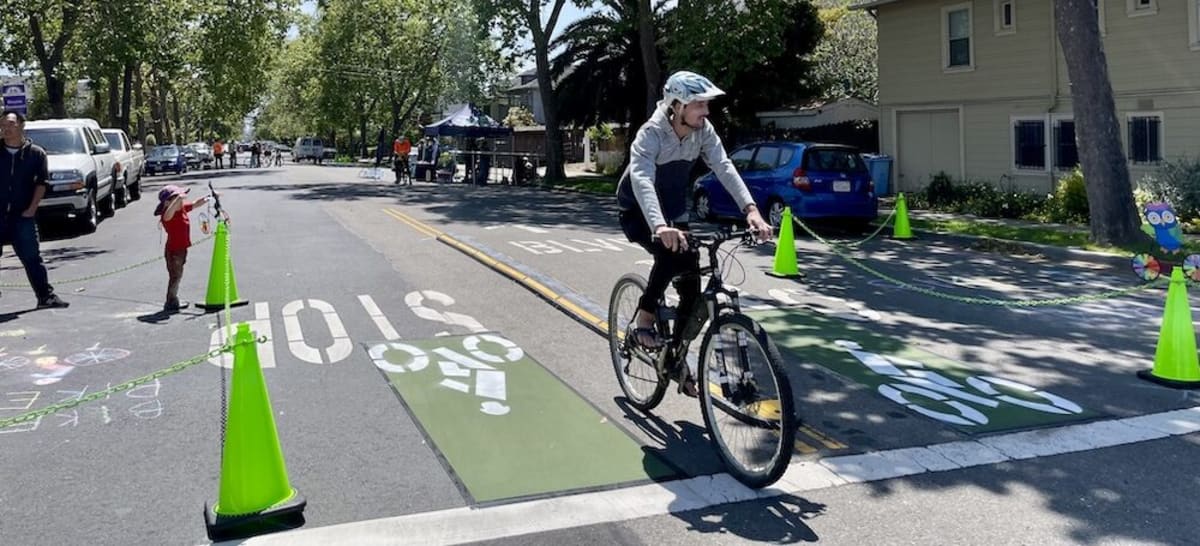
On a Saturday afternoon last April, volunteers transformed one block of Ninth Street from a high-speed car corridor into a protected bike haven. Using nothing but rubber speed humps, traffic cones, and a city block party permit, they created a two-way bike lane that gave neighbors a glimpse of what safer streets could look like.
The "party" included a potluck and free bike repairs. But the real action was watching residents experience their street without dangerous speeding traffic.
"I've experienced the impact of seeing it," says Near, who lives on Ninth Street and organized the event with advocacy group Bike East Bay. Sometimes people can't imagine change until they experience it firsthand.
The pop-up model is gaining traction across the country as cycling booms. Between 2019 and 2022, daily bicycle trips in America jumped 37 percent.
But cycling remains dangerous. Almost 1,000 cyclists die in crashes with motor vehicles each year in the U.S.
Protected bike lanes and traffic calming features save lives, research shows. They make roads safer for everyone, not just cyclists.
Ninth Street seemed perfect for this experiment. The unusually wide street once hosted electric trolleys in the early 1900s and has long been popular with cyclists.
The Ripple Effect
These temporary installations create lasting change. The first pop-up Bike East Bay organized on Oakland's Telegraph Avenue led to permanent bike lanes separated by concrete barriers.
The strategy works because it gives cities the data they need to compete for limited infrastructure funding. Resident surveys and traffic counts from pop-ups strengthen grant applications.
Robert Prinz, advocacy director at Bike East Bay, calls it a chance to "try before you buy." Municipalities can test configurations before committing resources to permanent changes.
His advice for organizing a pop-up? Start small with a single neighborhood street or intersection. Collaborate with local businesses and community groups.
The beauty of the block party permit approach is its simplicity. You don't need special permissions or expensive equipment to show your community what's possible.
Near's afternoon experiment proved that safer streets don't require years of planning. Sometimes all you need is permission to throw a party and the courage to imagine your neighborhood differently.
More Images

Based on reporting by Reasons to be Cheerful
This story was written by BrightWire based on verified news reports.
Spread the positivity!
Share this good news with someone who needs it