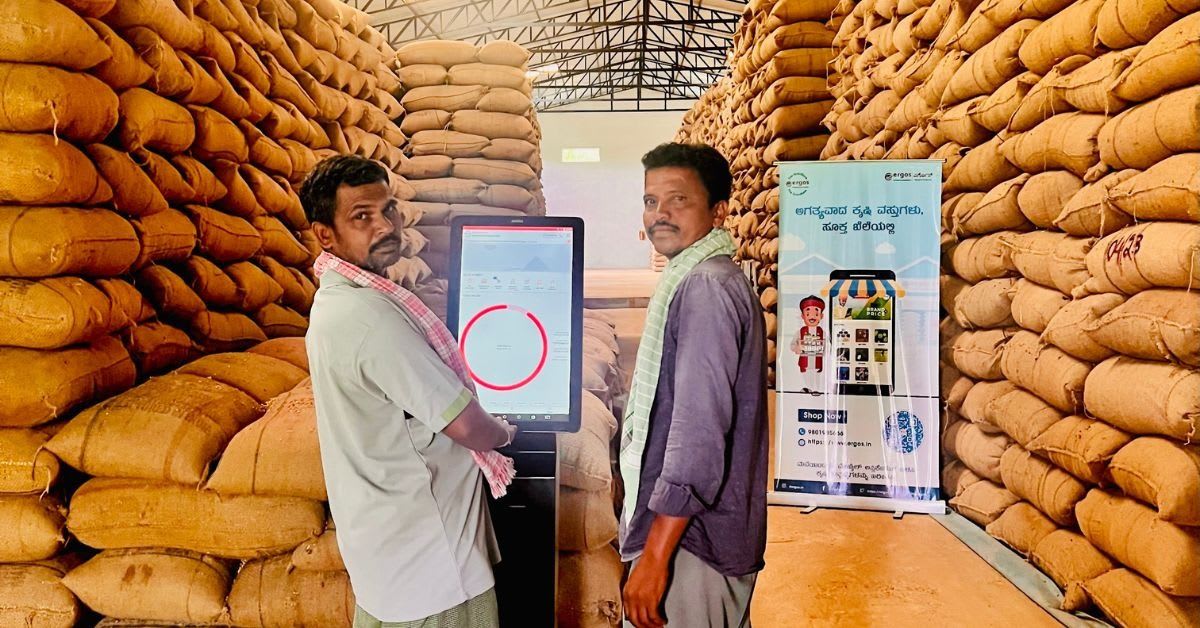
Bihar Grainbanks Help 160,000 Farmers Earn 35% More
A simple warehouse network is letting small farmers in India store grain, track prices on their phones, and sell when rates improve instead of accepting whatever local traders offer. The platform has helped 160,000 farmers break free from middlemen and increase their earnings by up to 35%.
Ajay Kumar Chaudhary, 66, pulls out his phone on a quiet morning in rural Bihar and checks something he never imagined possible: the exact amount of maize he owns, today's market price, and the power to sell whenever he chooses.
For generations, farmers like Ajay had no such control. They harvested grain, loaded it onto tractors, and took whatever price the nearest trader declared. Payment was delayed, weights were manipulated, and selling immediately after harvest meant accepting rock-bottom prices.
That changed four years ago when Ajay discovered Ergos, a platform that turns harvested grain into a digital asset. Founded in 2012 by Kishor Kumar Jha and Praveen Kumar, Ergos builds small warehouses called grainbanks near villages where farmers can store even a single bag of produce.
The grain gets scientifically managed and digitally recorded. Farmers can track their inventory, monitor market prices, and decide when to sell. They can even take loans against stored grain at about one percent interest instead of the 50 to 60 percent that local moneylenders charge.
Ajay remembers how traders used to quietly deduct two to five kilograms from every sack he sold. "Earlier, we didn't even realize it," he says. When market prices dropped even slightly, farmers had no choice but to accept lower rates.
Now he stores his maize at a nearby grainbank and waits for better prices. "If the price is not good today, we can wait," he explains. "Maybe after a few days, the rate becomes better."
The platform has reached 160,000 farmers across India, helping them avoid distress selling when prices are lowest. By storing crops and selling when markets improve, farmers earn up to 35% more than they would have under the old system.
The Ripple Effect
The changes extend beyond individual bank accounts. Ajay's wife is relieved because grain storage no longer fills their home. Women in farming families spend less time managing stored crops and dealing with the mess and pest problems that come with it.
For founder Kishor Kumar Jha, who grew up in rural Bihar watching small farmers struggle, the mission was personal. After years in banking, he noticed that 70% of farmers still relied on informal lenders charging crushing interest rates. They needed credit at different crop stages but had no collateral banks would accept.
Grainbanks solved that problem by making stored crops a recognized asset. Farmers get working capital when they need it without selling their entire harvest at the worst possible moment.
Ajay sums up the transformation simply: "Now there is no middleman. We sell directly and get the value for what we produce."
In a country where most farmers own small plots and live on thin margins, that shift from dependency to control represents something powerful. Technology met tradition, and farmers found their voice in the marketplace.
More Images
%2Fenglish-betterindia%2Fmedia%2Fmedia_files%2F2026%2F03%2F23%2Fergos-2026-03-23-18-39-04.jpg)
%2Ffilters%3Aformat(webp)%2Fenglish-betterindia%2Fmedia%2Fmedia_files%2F2026%2F03%2F23%2Fergos-2026-03-23-18-39-36.jpg)
%2Ffilters%3Aformat(webp)%2Fenglish-betterindia%2Fmedia%2Fmedia_files%2F2026%2F03%2F23%2Fergos-2026-03-23-18-40-15.jpg)
Based on reporting by The Better India
This story was written by BrightWire based on verified news reports.
Spread the positivity!
Share this good news with someone who needs it