Bilingual Moms Bond Just as Strongly in Any Language
Switching between languages doesn't weaken the neural connection between bilingual mothers and their children, groundbreaking brain research reveals. The finding offers reassurance to millions of multilingual families worldwide.
Bilingual parents can breathe a sigh of relief. Science just confirmed what many suspected: the language you speak with your child matters far less than the connection you share.
Researchers at the University of Nottingham studied fifteen mother-child pairs to measure something fascinating called neural synchrony. That's when two people's brains literally light up in similar patterns during social interaction, a key sign of healthy bonding.
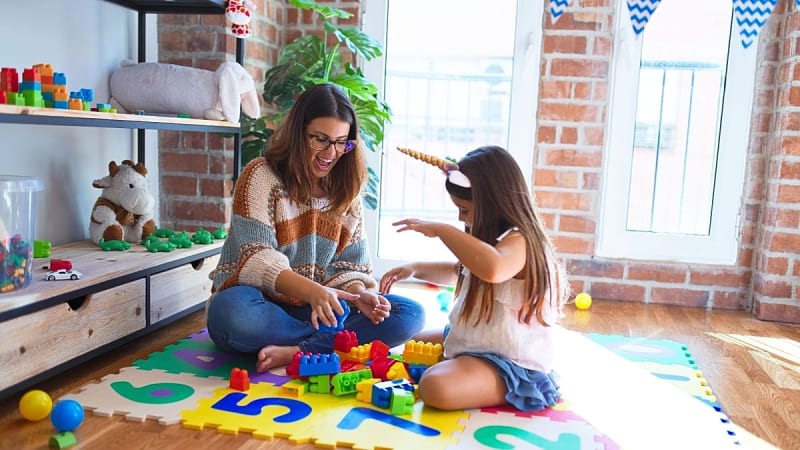
Each mother spoke a different native language but was fluent in English. Their bilingual children grew up with both languages from birth. During 45 minutes of playtime, families switched between the mother's native language and English while wearing special caps that tracked brain activity.
The results surprised even the scientists. Neural synchrony stayed just as strong whether families played in the mother's first or second language. The connection was especially powerful in the brain's frontal cortex, where emotions and decision-making happen.
"Here we show that the brains of bilingual mums and their kids stay just as 'in sync' irrespective of whether they play in the mum's native language or in an acquired second language," said Efstratia Papoutselou, the study's lead researcher.
The only time synchrony dropped? When mothers and children played independently in silence, confirming that interaction itself drives connection, not the specific words used.
The Ripple Effect
This research arrives at the perfect time. Three out of five Europeans can hold a conversation in a language beyond their mother tongue, according to 2024 data. That number keeps climbing as families become increasingly multilingual.
For the 60 percent of European families raising children in multiple languages, these findings remove a major source of anxiety. Parents often worry that switching to a second language for practical reasons might somehow weaken their emotional bond with their children.
The study also opens doors for future research. Scientists want to explore families where parents have lower language proficiency, children who aren't bilingual from birth, and relationships beyond the family unit like teachers and caregivers.
Published in Frontiers in Cognition just in time for International Mother Language Day, the research celebrates linguistic diversity while proving that love transcends vocabulary.
Your brain knows connection when it feels it, no translation needed.
More Images



Based on reporting by Euronews
This story was written by BrightWire based on verified news reports.
Spread the positivity!
Share this good news with someone who needs it