Biologist Camps Under Eagle Nest, Saves Bald Eagles from Extinction
In 1976, 26-year-old Tina Morris spent weeks camping under a 35-foot-high eagle nest to help save America's national bird. One eagle she raised went on to father 70 offspring, playing a crucial role in bringing bald eagles back from the brink.
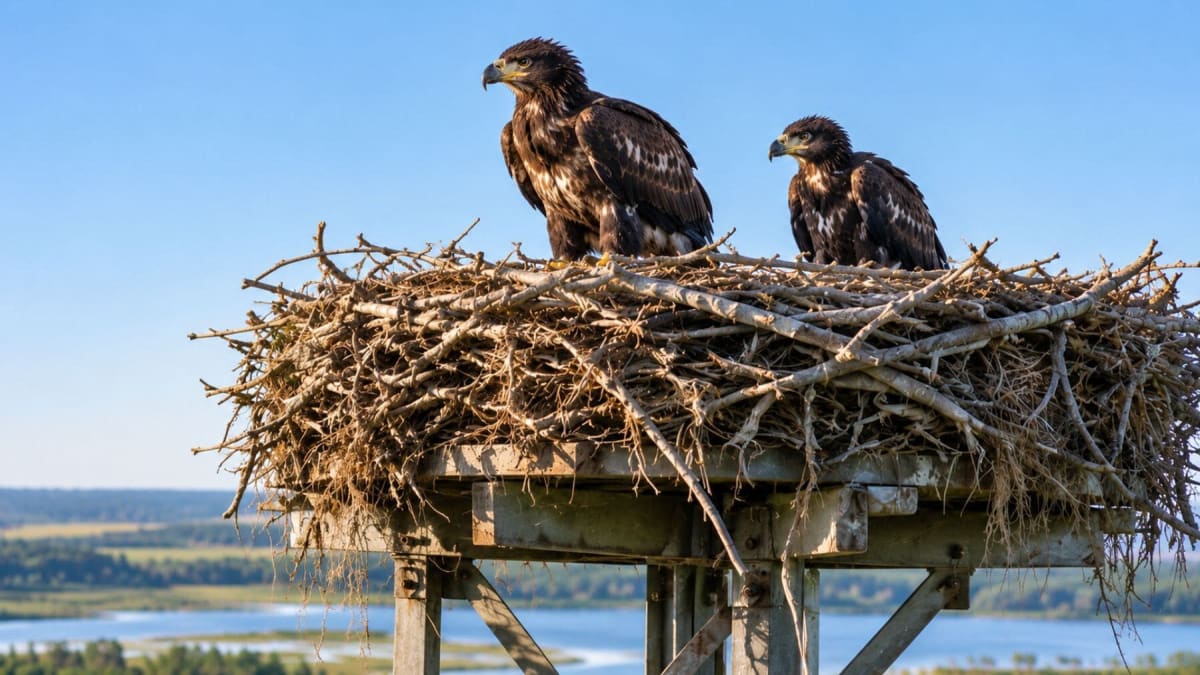
In 1976, Tina Morris pitched her tent under a towering eagle nest in upstate New York with a mission that seemed almost impossible: save the bald eagle from extinction.
The 26-year-old biologist from Cornell Laboratory of Ornithology spent weeks at Montezuma National Wildlife Refuge that summer, caring for young eagles while staying completely out of sight. Her goal was to raise them wild enough to survive on their own, without any attachment to humans.
The challenge seemed simple but was incredibly difficult in practice. Morris had to feed seven young eagles using a long pole to stay hidden, ensuring they never associated food with people.
Among the birds she raised was M3, who would become a conservation superstar. This eagle lived to be 38 years old and fathered around 70 offspring, establishing his legacy across New York's Hemlock Lake region until his death in 2015.
Morris used a technique called "hacking," developed by conservationist Tom Cade and the New York State Department of Environmental Conservation. She introduced eagles to their new environment gradually, starting with W1 and W2 in 1976, then five more the following summer.
These young birds couldn't even fly at first. They had to learn everything from scratch, just like they would in the wild.
The patience paid off. By 1980, W1 and W2 built their own nest and raised their first chick together. The following year, M3 started his own family line that would span decades.
The Ripple Effect
The stakes couldn't have been higher when Morris started her work. In 1963, only 417 bald eagle pairs remained in the lower 48 states. Habitat destruction, hunting, and the pesticide DDT had pushed America's national symbol to the edge of disappearance.
But the Montezuma project, combined with DDT bans and habitat protections, sparked an incredible comeback. By 2007, the population had surged to 9,789 pairs. By 2019, an estimated 71,467 pairs soared through American skies.
What started with one young biologist sleeping under a nest in the summer of 1976 became a blueprint for bringing species back from extinction. Her dedication proved that with the right protection and management, even our most threatened wildlife can not just survive but thrive.
Today, spotting a bald eagle is a common joy across much of America, a living reminder that conservation works when people care enough to camp under nests and feed baby birds with long poles.
More Images



Based on reporting by Google: species saved endangered
This story was written by BrightWire based on verified news reports.
Spread the positivity!
Share this good news with someone who needs it