Birdwatchers' Lucky Photo Solves Chicago River Mystery
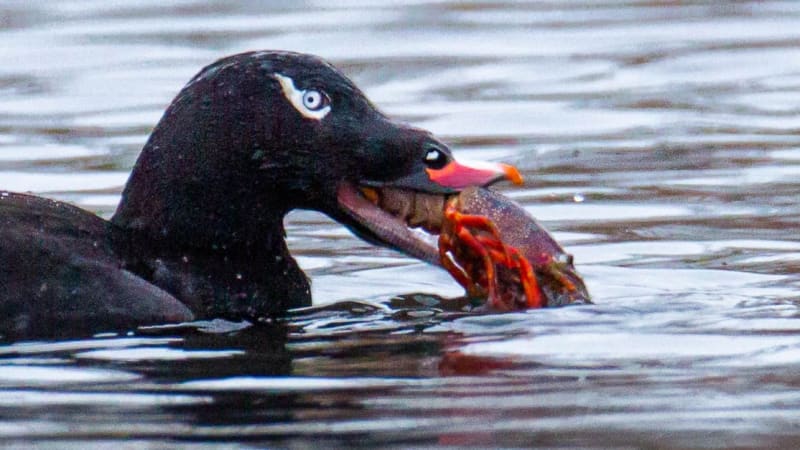
Amateur photographers hoping to catch a rare duck on camera accidentally captured proof of an important scientific discovery about the Chicago River's ecosystem. Their viral photos showed a white-winged scoter eating an invasive crayfish, confirming what researchers had only theorized.
A birdwatcher hoping to photograph an unusual visitor to Chicago's River Park ended up making a scientific breakthrough with a single snapshot.
Mike McCawley was about to give up his search for a rare white-winged scoter when another birder spotted the diving duck on the North Branch of the Chicago River. McCawley watched the bird resurface with something red clamped in its beak: an invasive red swamp crayfish.
"It was certainly a rare and thrilling moment to witness and to capture," McCawley said. He shared the photo on social media like many birders do with their best shots.
That's when Loyola University researchers Reuben Keller and graduate student Tava Oosterbaan saw the images. The timing couldn't have been better.
Oosterbaan had just completed a study on the red swamp crayfish living at River Park, where the North Branch and North Shore Channel meet. While scientists knew fish were eating these invasive crustaceans, they could only guess whether birds were dining on them too.
"We haven't seen a bird with this crayfish in its mouth in our river," Oosterbaan said. "When we got those photos, it was kind of like a 'Eureka.' We can say it because now someone has seen it and taken a photo of it."
The discovery matters because of what Oosterbaan found inside those crayfish. Her research revealed they contain microplastic levels 10 to 300 times higher than any previously recorded in scientific literature.
The plastic fragments, mostly from clothing and fabrics, clump together into "fiber balls" in the crayfish stomachs. Red swamp crayfish are indiscriminate eaters who shovel everything into their mouths, making them extremely efficient at collecting microplastics from their environment.
The Ripple Effect
The accidental discovery opens new questions about how microplastics move through urban river ecosystems. When diving ducks like the scoter swallow these crayfish whole, they're also consuming all those accumulated plastics and fiber balls.
McCawley's photo provides the missing link researchers needed to understand the full picture of how pollutants travel through the Chicago River food web. What started as pure speculation is now documented fact, thanks to a birder with good timing and a camera.
The collaboration between citizen scientists and academic researchers shows how casual nature observers can contribute to important environmental discoveries. Thousands of birdwatchers document what they see every day, creating an enormous database of ecological information.
This story reminds us that scientific breakthroughs don't always happen in labs. Sometimes they happen on river banks, captured by people who simply love watching birds and sharing what they find.
Based on reporting by Google: scientific discovery
This story was written by BrightWire based on verified news reports.
Spread the positivity!
Share this good news with someone who needs it