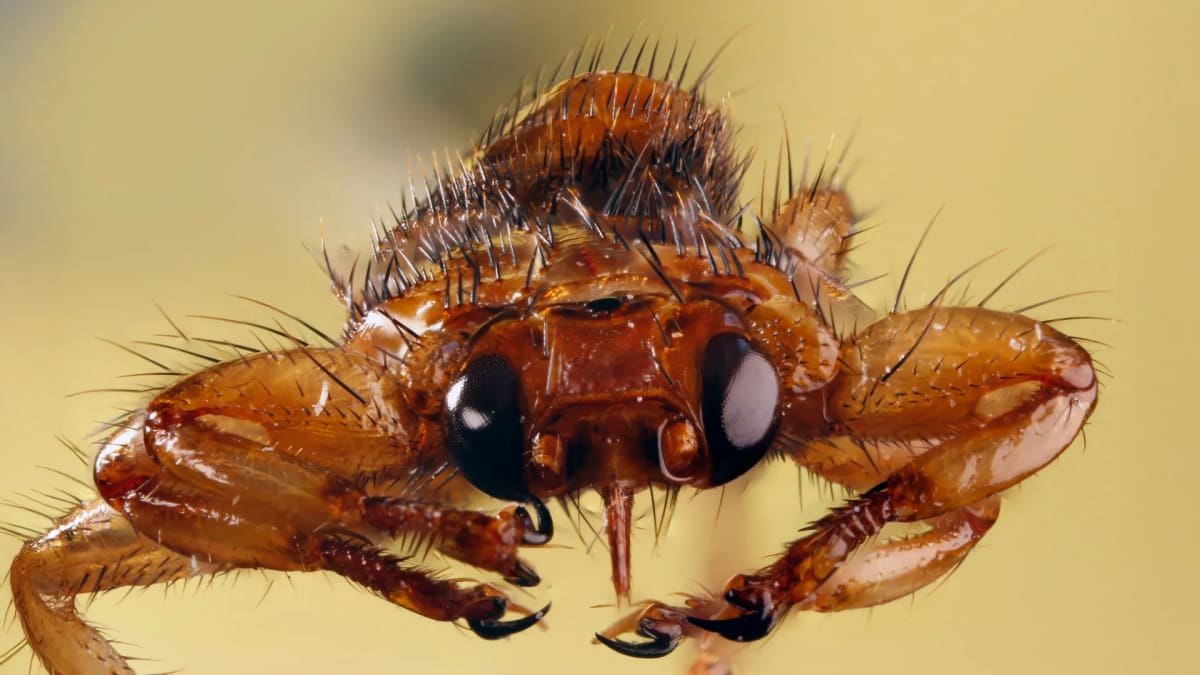
Blood-Feeding Flies Trade Vision for Reproduction
Scientists discovered that deer keds intentionally dim their own eyesight after finding a host, trading sharp vision for energy to fuel reproduction. This remarkable adaptation shows how parasites optimize their bodies for dramatically different lifestyles.
A blood-feeding fly appears to sacrifice its own vision once it finds a home, redirecting precious energy toward making the next generation instead.
Deer keds are unusual insects found across Europe, Asia, Africa, and the Americas. These biting flies start life with wings and keen eyesight, using both to hunt for deer and other mammals from the air.
But once a deer ked lands on its target, everything changes. The fly permanently snaps off its wings and commits to a lifetime of burrowing through fur and feeding on blood.
Now scientists from Aberystwyth University and the University of Florence have discovered something remarkable happening inside these parasites. After settling on a host, deer keds reduce the activity of vision-related genes by about half.
Dr. Roger Santer, who led the research, explains that vision is energetically expensive for any animal. Evolution favors sensory systems that match an animal's actual needs, and a fly living in dense fur simply doesn't need sharp eyesight anymore.
The team studied deer keds at two life stages: winged adults actively searching for hosts, and wingless adults already living on deer. They focused on opsin genes, which control visual sensitivity.
Flying deer keds showed visual systems similar to tsetse flies, famous hunters that track mammals across Africa. But after shedding their wings, deer keds scaled back these same genes to roughly half their previous activity levels.
The flies don't go completely blind. Instead, they appear to downgrade their vision just enough to free up energy for more important tasks like digestion and reproduction.
Why This Inspires
This discovery reveals nature's brilliant efficiency. These tiny flies can reprogram their own sensory systems mid-life, perfectly adapting their bodies to match their new reality.
It's a powerful reminder that organisms constantly make tradeoffs, investing resources where they matter most. The deer ked doesn't cling to abilities it no longer needs.
Understanding how biting flies use their senses could eventually help scientists develop better monitoring and control strategies for parasites. The research, published in the Journal of Experimental Biology, opens new windows into how creatures adapt when their worlds transform completely.
Nature continues proving that flexibility and smart energy management beat holding onto unnecessary capabilities every time.
Based on reporting by Science Daily
This story was written by BrightWire based on verified news reports.
Spread the positivity!
Share this good news with someone who needs it