Bonobo Kanzi Played Make-Believe in Tea Party Study
Scientists discovered that apes can imagine and play pretend, just like human children do. A famous bonobo named Kanzi tracked imaginary juice and grapes in groundbreaking experiments that reveal our closest relatives have richer minds than we knew.
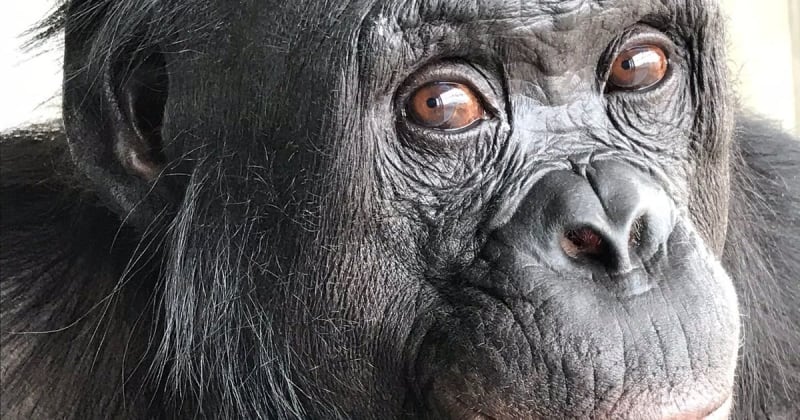
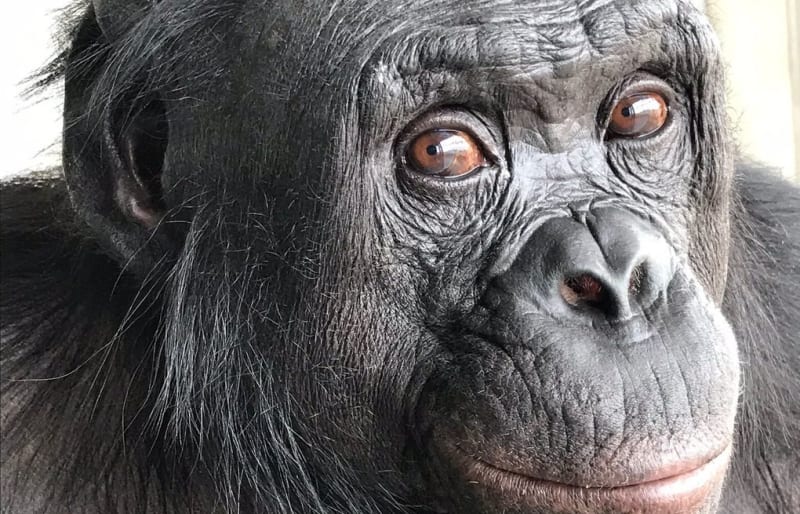
A bonobo named Kanzi just changed what we know about imagination in the animal kingdom.
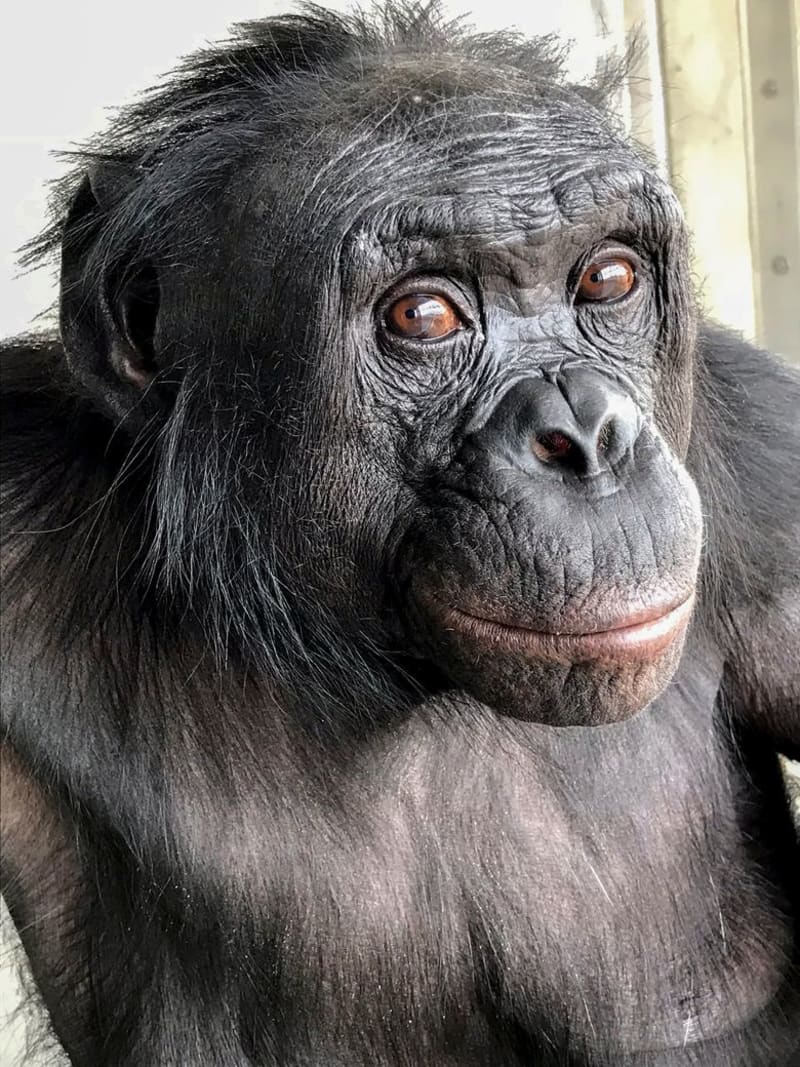
Scientists at Johns Hopkins University and the University of St. Andrews watched as Kanzi, a male bonobo living in Iowa, successfully tracked imaginary juice and grapes through pretend tea parties. The research, published in the journal Science, marks the first study proving that apes can play make-believe.
The experiments were beautifully simple. Researchers sat at a small table with empty cups and an empty jug, then "poured" imaginary juice into each cup. When they poured one cup back into the jug and asked Kanzi "Where's the juice?", he pointed to the cup with imaginary liquid more often than chance would allow.
But the team went further to rule out confusion. They presented Kanzi with one cup of real juice and another with imaginary juice. He chose the real juice, proving he could tell fantasy from reality.
"This kind of finding really shows us that there's much more richness to these animals' minds than people give them credit for," said Christopher Krupenye, the cognitive scientist who led the study.
What makes this discovery so remarkable is that Kanzi wasn't just remembering something hidden. He was holding two views of the world at once: what's real and what's imaginary. That's the same mental skill human children use when they play house or create imaginary friends.
Why This Inspires
This research opens a window into abilities we thought belonged only to humans. Imagination helps us rehearse future situations and solve problems before they happen. Now we know apes likely share this gift.
Martin Surbeck, a Harvard primatologist who studies wild bonobos in Congo, has watched young female bonobos carry sticks on their backs as if caring for babies. This study gives scientific weight to what he suspected: bonobos naturally engage their imagination.
The findings point to something profound about our shared history. Humans, bonobos, and chimpanzees all descended from a common ancestor who lived 7 million years ago. That ancient relative likely passed down the seeds of imagination to all three species.
Kanzi, who understood some spoken English and became famous for his cognitive abilities, died last year at age 44. But his legacy lives on in this breakthrough research that shows the power of curiosity and careful observation.
"Whatever we are, we come from somewhere," Surbeck noted. "And all of our behaviors, they have precursors."
Understanding that apes share our capacity for imagination doesn't diminish what makes us human; it enriches our appreciation for the incredible minds we share this planet with.
More Images
Based on reporting by Google News - Science
This story was written by BrightWire based on verified news reports.
Spread the positivity!
Share this good news with someone who needs it