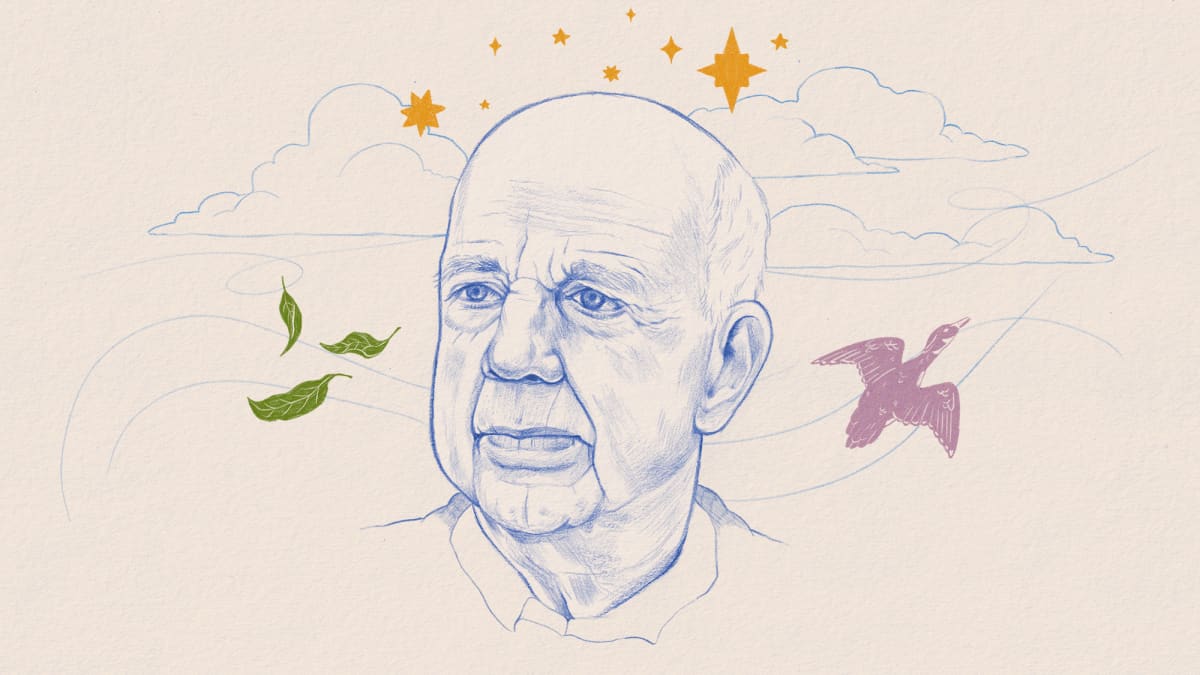
Botanist's Canopy Raft Unlocked Rainforest's Hidden World
A French botanist invented a floating platform that let scientists study the rainforest canopy without cutting down trees, revealing a hidden world of biodiversity. Francis Hallé's simple but brilliant idea transformed how we understand tropical forests.
For decades, scientists studying rainforests had a frustrating problem: most of the life exists high in the canopy, far out of reach from the ground.
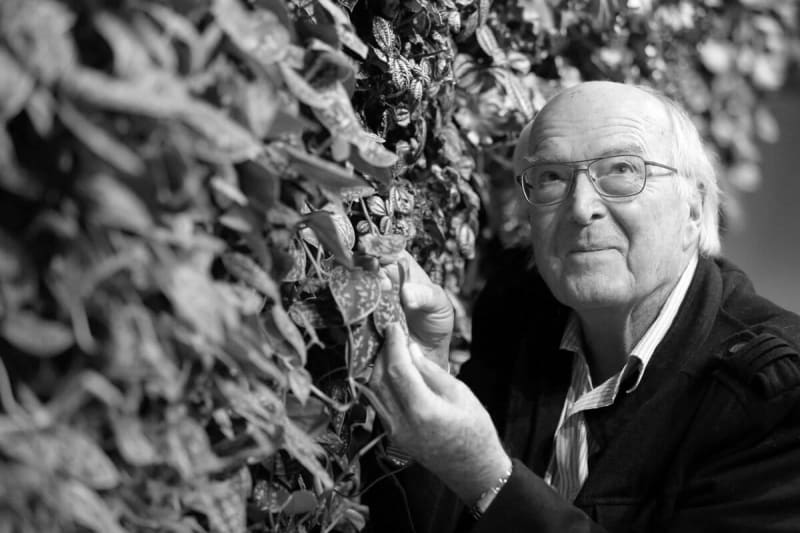
Francis Hallé, a French botanist who died December 31st at his home in Montpellier, solved it with an idea that sounds almost whimsical. He and his team used a hot air balloon to lower a lightweight platform onto the treetops, creating the world's first canopy raft in 1986.
The raft let researchers walk among the crowns of trees, observing and drawing the ecosystem that had been mostly theoretical until then. What they found was astonishing: the canopy wasn't just a roof but a bustling habitat filled with species never seen up close.
Hallé's path to this breakthrough started on a Paris balcony, where a small plant's independence caught his attention as a student. In the 1960s, working in Côte d'Ivoire, he encountered primary tropical forests and realized how much remained invisible from below.
He became an expert in "tree architecture," a method of identifying giants by how they grow and branch rather than by flowers too high to reach. His drawings and clear explanations made complex forest systems understandable to anyone, not just scientists.
The canopy raft expeditions continued for years across French Guiana and beyond, generating months of close observations. The work proved that ignorance about this critical ecosystem was no longer acceptable or necessary.
Hallé paired his gentle teaching style with blunt honesty about threats to these forests. He watched primary forests he once thought invincible disappear during his lifetime, driving him to speak plainly about economic forces treating rainforests as "mere reservoirs of goods."
In his later years, he championed an ambitious vision: creating a large primeval forest in Western Europe that would evolve without human interference for seven centuries. He knew the timeline seemed absurd politically, but insisted that was no reason not to try.
Why This Inspires
Hallé's canopy raft shows how creative thinking can solve problems that seem purely logistical. Instead of cutting down trees to study them, he found a way to meet them where they lived. His approach combined scientific rigor with profound respect for what he studied.
He also understood that knowledge means little without accessibility. By drawing as he worked and avoiding jargon, he invited everyone into the conversation about protecting forests.
His seven-century forest project captures something essential about conservation: it requires thinking beyond our own lifetimes, beyond political cycles, beyond what seems immediately practical. He called it a test of human nature, our ability to invest in futures we'll never see.
For someone who insisted that "life is too short for a botanist," Hallé spent his remarkably well, showing us worlds we didn't know existed right above our heads.
More Images


Based on reporting by Mongabay
This story was written by BrightWire based on verified news reports.
Spread the positivity!
Share this good news with someone who needs it